

Maddy summaryHCR 2029 proposes repealing Arizona's constitutional "right to work" provision (Article XXV), which currently prohibits requiring employees to pay union dues as a condition of employment. If approved by voters, this change would remove a constitutional barrier that prevents employers and unions from mandating union membership or dues. The bill would require voter approval at the next general election, as specified in Arizona's Constitution. This proposal directly affects workers and unions in Arizona by potentially altering labor agreements regarding dues payment. The measure is currently in its first reading stage in the Arizona House of Representatives.
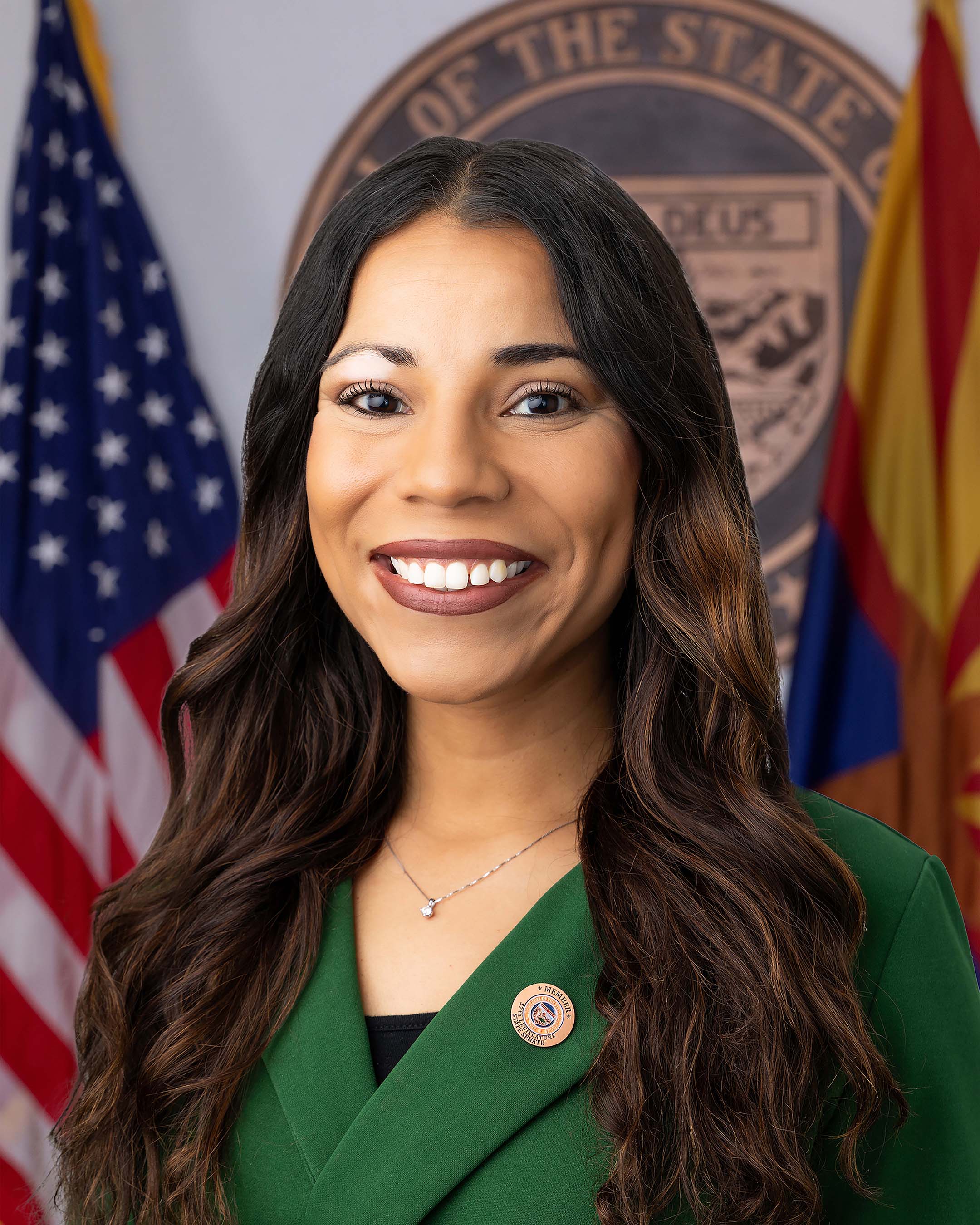
Sen. Analise Ortiz
Sponsored bills
Maddy summaryHB 2493 requires private education providers that accept Arizona empowerment scholarship funds to follow the same financial reporting and audit rules as public schools. These providers must submit financial data using the state's standard system, comply with annual achievement profile reporting, and undergo performance audits conducted by the auditor general. The bill directly affects private schools, tutoring services, or other educational entities receiving scholarship funds, mandating transparency in their financial operations. Key provisions include standardized financial recordkeeping, inclusion in state achievement reports, and specific audit requirements tailored for private businesses. This bill focuses on oversight rather than changing scholarship eligibility or funding amounts.
Maddy summaryHB 2448 updates Arizona's election rules for voting locations. It allows counties to combine polling places for efficiency, establishes procedures for emergency voting centers during elections (including updated voter registration at these sites), and requires school principals to provide written reasons if denying polling space. The bill also mandates that government-owned buildings be made available for voting locations starting in 2026. These changes directly affect local election officials and voters by altering where and how elections are conducted.
Maddy summaryThis bill's title ("landlords; property manager; contact information") does not match its actual content. The bill (SB 1182) creates new rules for construction hours in Arizona. It prohibits municipalities and counties from restricting general construction activities between May 1 and October 15, daily from 5:00 a.m. to 7:00 p.m. on weekdays and 7:00 a.m. to 7:00 p.m. on Saturdays - provided the work has a valid building permit. It also requires that concrete pouring be allowed at least one hour before the regular start time for construction. The law directly affects local governments (municipalities and counties) and construction businesses operating under permitted projects.
Maddy summarySB 1106, titled "Ava's Law," modifies Arizona's public entity liability rules regarding sexual offenses. It clarifies that public entities (like schools or government agencies) generally cannot be held liable for sexual offenses committed by employees against minors or children with disabilities, **unless** the entity violated a duty to check employee backgrounds or failed to report known risks. The law applies only to offenses occurring on or after December 31, 2027, and does not affect liability for vehicle-related incidents or emergency care. This bill focuses on defining specific circumstances where public entities may face liability, not broader policy changes.
Maddy summaryHB 2677 allows Arizona middle school students (grades 6-8) to earn career and technical education (CTE) course credits that count toward both 8th-grade promotion and high school graduation. Schools offering these courses must partner with approved CTE providers, such as career districts, state-approved schools, or community colleges. They must report annually to the state on course offerings and student completions, with a final summary due by December 2028. The law applies only through the 2027-2028 school year and expires December 31, 2036.
Maddy summarySB 1571 establishes a study committee to examine the social and economic impacts of coal industry decline, particularly job losses in communities reliant on coal, with a focus on rural and tribal areas. The committee, composed of bipartisan lawmakers, nonprofit representatives, Navajo Nation officials, and a university expert, must investigate strategies for economic diversification and submit a report by December 31, 2025. It also appropriates $600,000 from the state general fund for the Office of Economic Opportunity to conduct a workforce development study specifically for Coconino County communities affected by the closure of the Navajo Generating Station. The committee and its funding provisions expire on September 30, 2026.
Maddy summarySB 1229 prohibits Arizona municipalities with over 70,000 residents from restricting home buyers' design choices or imposing certain development rules. It bans local requirements for shared amenities (like community pools), screening walls/fences, minimum lot sizes over 3,000 sq. ft. for new single-family homes, larger home size standards than other housing types, and excessive building setbacks (e.g., front setbacks over 10 feet, except for garages). The law directly affects home buyers, developers, and homeowners in qualifying cities by overriding local zoning and design regulations, while exempting building/fire codes, tribal land, and military zones. It applies only to new developments after the law’s effective date and does not affect existing housing or require municipalities to waive utility or safety standards.
Maddy summaryThis bill (HR 2004) is a formal resolution passed by the Arizona House of Representatives expressing condolences for the death of Fred P. Shulski, Jr., a Phoenix pediatrician and community volunteer. It directly extends sympathy to his family, including his wife Melissa and three children. The resolution has no policy changes or legal effect - it simply records the House’s collective expression of regret and respect for Shulski’s life and service. The bill was unanimously approved and transmitted to the Secretary of State on March 24, 2025.
Maddy summarySB 1671 adds traditional healing services as a covered benefit under Arizona's Medicaid program (AHCCCS). This coverage applies only to AHCCCS members who qualify under federal regulations (42 CFR § 136.12) and receive services delivered by or through the Indian Health Service or a tribal facility. The bill explicitly requires federal approval for this coverage and is subject to available funding. It does not alter other existing covered services listed in the statute.