

Maddy summarySB 1397 establishes a state-run health insurance consumer assistance program to help Arizona residents resolve disputes with insurers, including denied claims, appeals, and coverage issues. It requires health insurers to prominently display program information on benefit statements and report denial data to the state. Insurers that wrongfully deny valid claims face civil penalties up to $25,000 per violation, must pay double damages to affected consumers, and could lose their license. The program also mandates annual state reports tracking denial rates and insurer compliance.
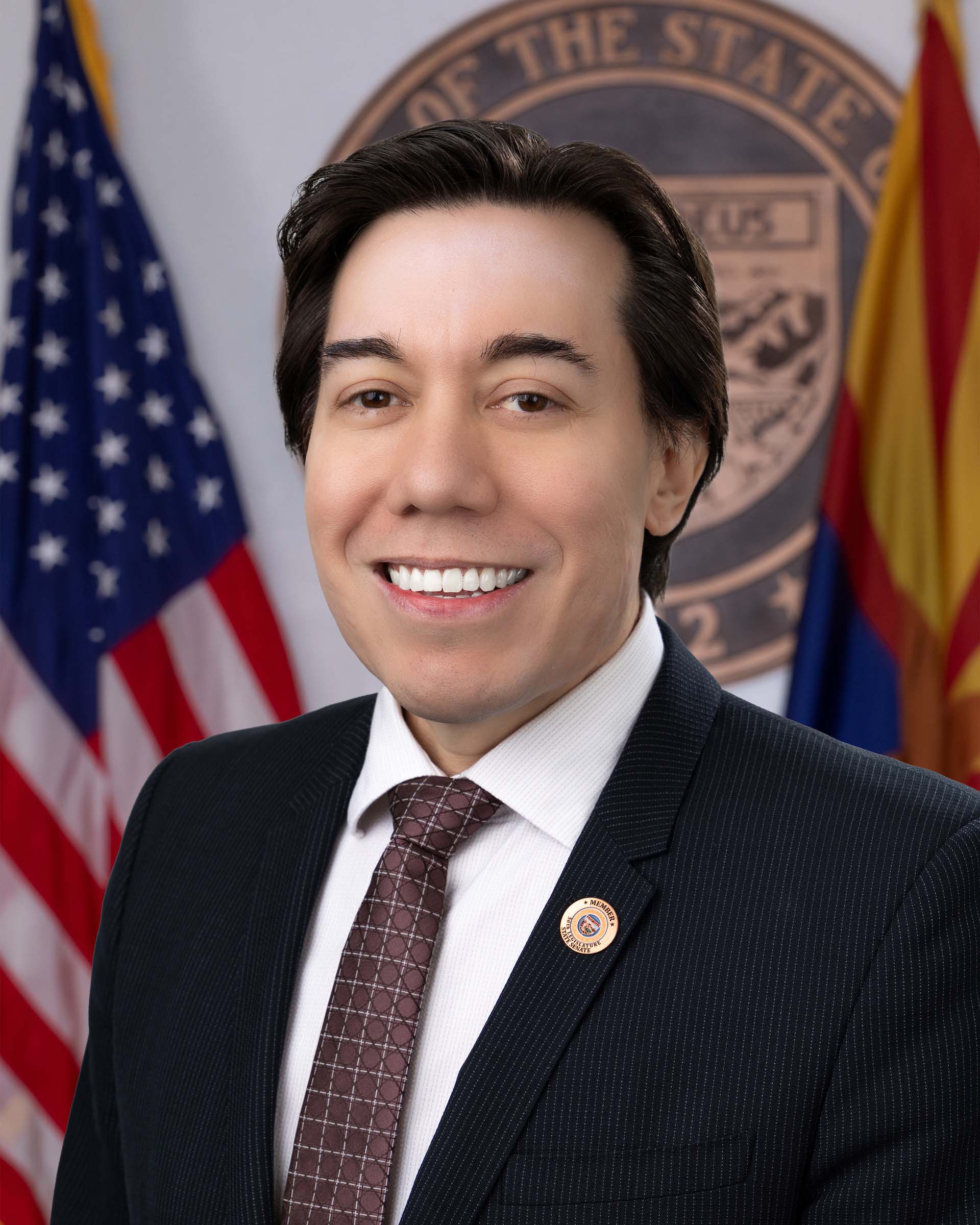
Sen. Brian Fernandez
Sponsored bills
Maddy summaryArizona is allocating $400,000 from the state general fund to help public schools plant low-VOC trees on campuses. The funding prioritizes schools where 75% or more of students qualify for free or reduced-price lunches under federal programs, targeting schools in high-poverty communities. Schools must use the funds by December 31, 2025, and may partner with nonprofits for tree planting. The bill specifies that leftover funds after this date will be distributed to other qualifying schools on a first-come basis.
Maddy summarySB 1401, the "Pregnant Workers Protection Act," requires Arizona employers with 15 or more employees to provide reasonable accommodations for pregnant workers without causing undue hardship. It mandates specific accommodations like modified equipment, more frequent breaks, schedule changes, and private breastfeeding areas, while prohibiting employers from forcing pregnant employees to use vacation or sick leave when accommodations are possible. Employers must post notices about these requirements in employee handbooks and provide written notices at hiring, within 180 days of the law’s effective date, and within 10 days of a pregnancy announcement. The bill directly affects pregnant employees and their employers in covered workplaces, focusing on concrete policy changes to support workplace accommodations.
Maddy summarySB 1400 amends Arizona's drug paraphernalia law to clarify that testing equipment used to detect fentanyl or fentanyl analogs in drugs is not considered illegal paraphernalia. This means fentanyl testing kits, commonly used by law enforcement and harm reduction programs to identify dangerous drugs, will not face criminal penalties or civil forfeiture under this statute. The bill directly affects law enforcement agencies, health organizations, and individuals using these testing tools. The key change removes these specific testing products from the definition of drug paraphernalia, ensuring they are exempt from the law's restrictions.
Maddy summarySB 1338 would allow Arizona to join the National Popular Vote Interstate Compact (NPVIC), an agreement among states to award all electoral votes to the candidate who wins the national popular vote. If enacted and if enough states join to control 270+ electoral votes, Arizona would no longer award votes based on its own state election results but instead assign all electoral votes to the candidate with the most votes nationwide. This bill does not change how Arizona voters cast ballots but alters how the state’s presidential electors are selected, requiring the chief election official to calculate national vote totals and certify electors based on the national popular vote winner. The compact takes effect only when member states collectively hold a majority of electoral votes, and Arizona would remain subject to this system only if the agreement is active.
Maddy summaryThis bill amends Arizona law to require courts to order convicted individuals to surrender their concealed weapons permits at sentencing if their conviction makes them ineligible to possess such permits under state law. It mandates that courts verify permit status, require surrender (or a lost permit affidavit), and notify the Department of Public Safety of revocations. This directly affects people convicted of crimes that trigger prohibited possession status under Arizona law, adding a specific administrative step to the sentencing process. The change applies to all relevant convictions, including those leading to probation or imprisonment.
Maddy summaryHB 2644 creates a state-funded rainwater harvesting grant program in Arizona, providing financial assistance to eligible entities (like nonprofits focused on water conservation) and their partners. It offers two grant tiers: Level 1 reimburses up to $500 for simple systems (e.g., gutters, foundations), while Level 2 covers up to $2,000 for larger systems based on tank capacity (e.g., $0.25/gallon for tanks under 800 gallons). The program funds materials and labor for installation but excludes costs like pumps, landscaping, or unlicensed labor. This bill allocates $________ from the state general fund for fiscal year 2025-2026 to administer the program.
Maddy summaryArizona's SB 1277 prohibits landlords from banning specific dog breeds in rental agreements. The bill directly affects tenants who own dogs and landlords who previously restricted certain breeds. It makes any clause prohibiting specific dog breeds unenforceable in rental contracts, and if a landlord knowingly includes such a prohibited clause, tenants can recover actual damages or up to two months' rent. The law does not change other tenant rights or eviction procedures.
Maddy summaryThis Arizona bill requires employers with 50+ employees to grant up to 16 hours per school year for school conferences or activities involving an employee's child. Employees must have worked at least six months, exhausted other leave types (except sick leave), and work at least half-time to qualify. Employers aren't required to pay for this time off and may deny requests if over 5% of staff request it simultaneously. The law applies to all public and private K-12 schools in Arizona and covers biological, adopted, foster, and stepchildren.
Maddy summarySB 1275 allocates $11.8 million in state funds for the Yuma/La Paz Community College District during fiscal year 2025-2026. The funding supports specific programs: $3 million for HVAC training upgrades, $500,000 for a logistics program in San Luis, $5.3 million for cobalt processing workforce training (including hydrometallurgical techniques), and $3 million for an electric vehicle-focused energy optimization program. This bill directly affects the college district and its students by providing targeted funding for these training initiatives. The appropriations are exempt from standard budget lapse rules under Arizona law.