

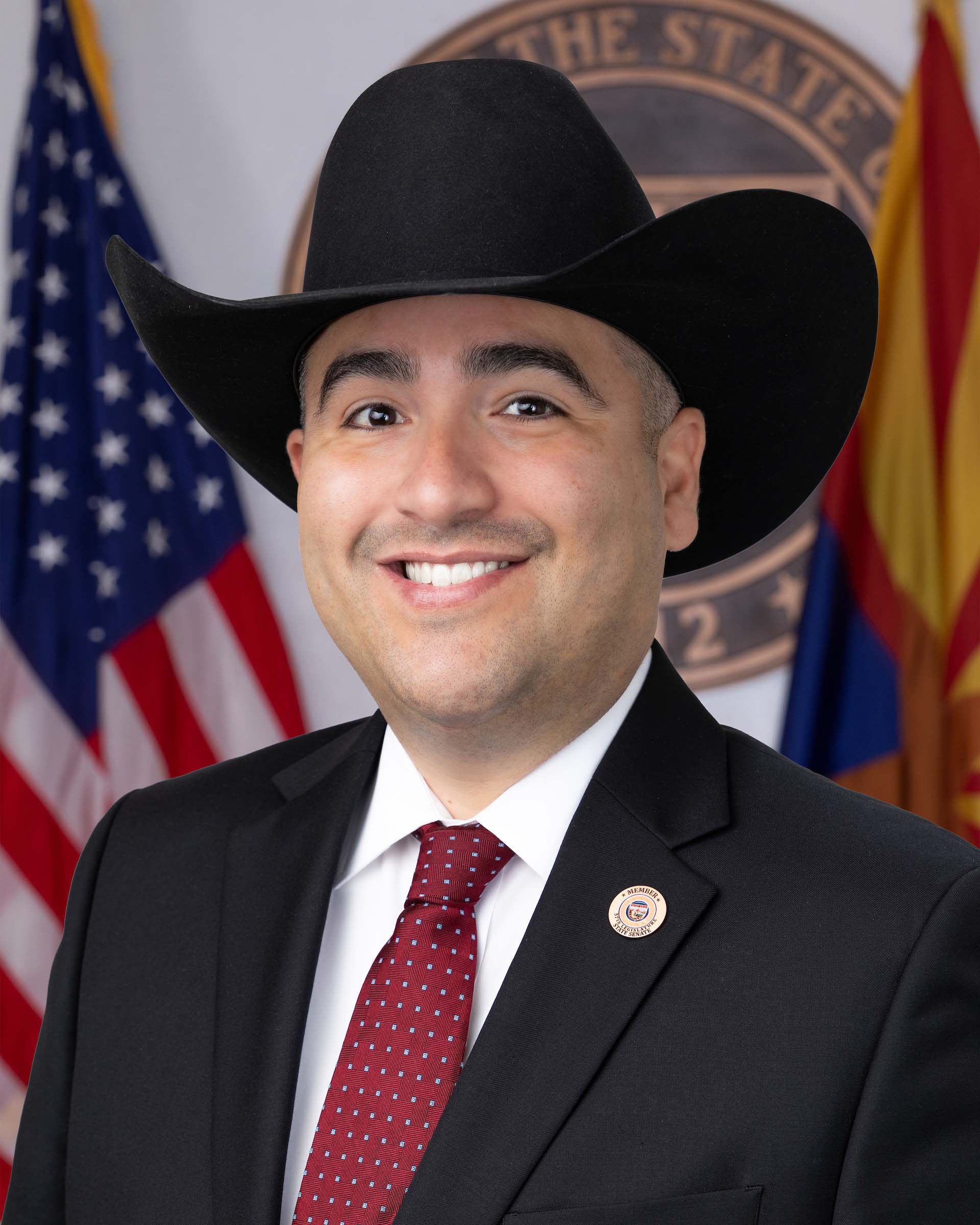
Photo of T.J. Shope
R Arizona Senate · District 16 On the 2026 ballot

Sen. T.J. Shope

Compare
Total votes
5,817
all sessions
Attendance
99%
46 missed
Higher than 93% of chamber peers
With party
98%
of cast votes
Higher than 95% of chamber peers
Bipartisan score
2%
crosses aisle rarely
Lower than 95% of chamber peers
Sponsored
692
bills & resolutions
Near the chamber average
Committees
8
assignments
692 bills and resolutions

Sponsored bills

Total
692
Primary
321
Co-sponsor
371
This page
692
matching current filters
Primary SB 1346
Signed into law · Arizona Senate · Lead sponsor
physical therapists; disability placards

Maddy summarySB 1346 amends Arizona law to allow physical therapists to certify disabilities for disability placard eligibility, expanding the list of authorized medical professionals beyond doctors. This directly affects Arizonans with physical disabilities who apply for permanent or temporary disability placards to use in parking. The bill specifies that physical therapists, along with physicians, physician assistants, or nurses, can now provide the required medical certification confirming eligibility under defined disability criteria. It also clarifies placard validity periods, replacement rules, and application requirements without changing the core eligibility standards.

Signed into law May 12, 2025 0 co-sponsors
Co-sponsor SB 1438
Signed into law · Arizona Senate · Co-sponsor
DCS information; central registry; exceptions

Maddy summaryArizona's SB 1438 establishes a central registry for child abuse and neglect reports, requiring background checks for individuals working with children or vulnerable adults. It directly affects foster homes, adoptive parents, child care providers, behavioral health facilities, and residential care staff by mandating registry checks as a factor in licensing, employment, or certification decisions. Key provisions include limiting registry entries to 25 years, requiring monthly purges of outdated records, and creating an exception process for disqualified applicants. Employees must certify under penalty of perjury whether abuse allegations exist, and agencies must publish disqualifying acts while protecting privacy in shared data.

Signed into law May 12, 2025 1 co-sponsor
Co-sponsor SB 1622
Signed into law · Arizona Senate · Co-sponsor
narcotic drugs; definition

Maddy summarySB 1622 amends Arizona's drug definitions by adding specific chemical names and structural classes to the state's list of controlled substances. It directly affects law enforcement and courts by clarifying which synthetic drugs - such as certain hallucinogens (e.g., MDMA variants, "JWH-018" compounds) and cannabinoid mimetics - are classified as illegal under Arizona law. The bill defines substances through precise chemical descriptions (e.g., "2-(3-hydroxycyclohexyl)phenol" derivatives) to cover new synthetic drugs not previously named. This provides legal clarity for prosecuting drug offenses but does not change penalties or create new policies.

Signed into law May 12, 2025 1 co-sponsor
Co-sponsor SB 1310
Vetoed · Arizona Senate · Co-sponsor
false documents; recording; violations

Maddy summarySB 1310 creates penalties for recording false or forged documents claiming ownership or liens on Arizona real property. Property owners can sue for at least $5,000 or triple actual damages (whichever is greater) plus attorney fees if someone records invalid claims. Individuals who knowingly file such documents and refuse to correct them within 20 days after a written request face $1,000 minimum penalties or triple damages. The bill classifies these violations as class 1 misdemeanors or felonies and was passed by the legislature but vetoed by the governor on May 12, 2025.

Vetoed May 12, 2025 1 co-sponsor
Primary SB 1615
Signed into law · Arizona Senate · Lead sponsor
student athletes; employment status; restrictions

Maddy summarySB 1615 primarily regulates raffles conducted by nonprofit organizations, hospitals, historical societies, and booster clubs in Arizona, with limited connection to student athletes. It establishes strict rules for raffles, including restrictions on who can manage them, limits on annual revenue ($10,000 for booster clubs), and requirements that organizations maintain nonprofit status. The bill’s only direct reference to student athletes appears in Section E, which permits universities assisting student athletes with name/image/likeness (NIL) compensation to conduct raffles under specific conditions - though it does not change student athletes' employment status. The legislation focuses on defining permissible raffle operations, not on classifying athletes as employees or altering their compensation structures. It passed both legislative chambers and was signed into law in May 2025.

Signed into law May 7, 2025 0 co-sponsors
Primary SB 1395
Signed into law · Arizona Senate · Lead sponsor
international medical graduates; requirements

Maddy summarySB 1395 modifies Arizona's medical licensure requirements for international medical graduates (IMGs) who attended unapproved medical schools. It requires these applicants to: demonstrate English proficiency; hold an ECFMG certificate or complete a 36-month teaching role in an approved school; and complete a total of 36 months of clinical training (including an additional 24 months beyond existing requirements). The bill directly affects IMGs seeking licensure in Arizona who graduated from schools not recognized by the state. These changes aim to standardize training and language qualifications for medical professionals entering Arizona's healthcare system.

Signed into law May 7, 2025 0 co-sponsors
Co-sponsor SB 1235
Failed · Arizona Senate · Co-sponsor
health profession regulatory boards; membership

Maddy summarySB 1235 amends Arizona statutes governing membership on three health regulatory boards (podiatry, chiropractic, and dental). It standardizes requirements including mandatory fingerprint-based criminal background checks for all members, specifies composition rules (e.g., requiring some members to be retired practitioners or laypersons), and sets term lengths and vacancy procedures. The bill directly affects the boards themselves by defining who can serve and how appointments are handled, with no changes to patient care standards or licensing requirements. Key mechanisms include requiring criminal checks via state/federal databases, limiting consecutive terms, and clarifying how vacancies are filled. The bill focuses solely on procedural governance of these boards, not on healthcare policy or patient outcomes.

Failed May 5, 2025 1 co-sponsor
Co-sponsor SB 1538
Vetoed · Arizona Senate · Co-sponsor
corporation commission; non-thermal generating unit

Maddy summaryThis bill amended Arizona law to define "plant" as including non-thermal electric generating units (like solar or wind farms) with a capacity of 200 megawatts or more, alongside existing thermal units. It directly affects large-scale energy developers and the Corporation Commission, which regulates such facilities. The change clarifies which projects fall under the Commission's jurisdiction for siting and environmental review, without creating new requirements. The bill passed the legislature in April 2025 but was vetoed by the Governor on May 2, 2025, so it did not become law.

Vetoed May 2, 2025 1 co-sponsor
Co-sponsor SB 1626
Signed into law · Arizona Senate · Co-sponsor
health insurance; surprise billing; disputes

Maddy summarySB 1626 requires Arizona health insurers to include standardized notices about dispute resolution for "surprise" out-of-network medical bills in patient billing statements. It directly affects patients who receive unexpected out-of-network care and healthcare providers billing for such services. The law mandates that insurers provide clear written notices explaining how to dispute these bills, and directs the state department to post online resources about what constitutes a surprise bill and how to resolve disputes. This applies only to bills not covered by the federal No Surprises Act, ensuring Arizona’s process complements existing federal protections.

Signed into law May 2, 2025 1 co-sponsor
Co-sponsor SB 1440
Signed into law · Arizona Senate · Co-sponsor
epinephrine delivery systems

Maddy summaryThis bill allows trained school staff to administer epinephrine auto-injectors to students or adults showing signs of a severe allergic reaction during school hours or school events. Schools must stock at least two juvenile and two adult doses of epinephrine auto-injectors, obtain medical standing orders from qualified providers, and establish clear emergency protocols. It provides legal immunity for school personnel acting in good faith under these provisions, except in cases of gross negligence. The law applies to all Arizona public and charter schools.

Signed into law May 2, 2025 1 co-sponsor
Showing 81 to 90 of 692 bills
Previous 1 … 8 9 10 … 70 Next