

Maddy summarySB 1010 renames Arizona's Loop 202 highway as the "Charlie Kirk Highway" in honor of Charlie Kirk. The bill requires the Arizona Department of Transportation to update all official documents, records, and signage to include this new name while maintaining existing designations. It affects public records and highway signage for Loop 202, with no changes to the highway's physical structure or function. This is a ceremonial designation with no substantive policy changes.
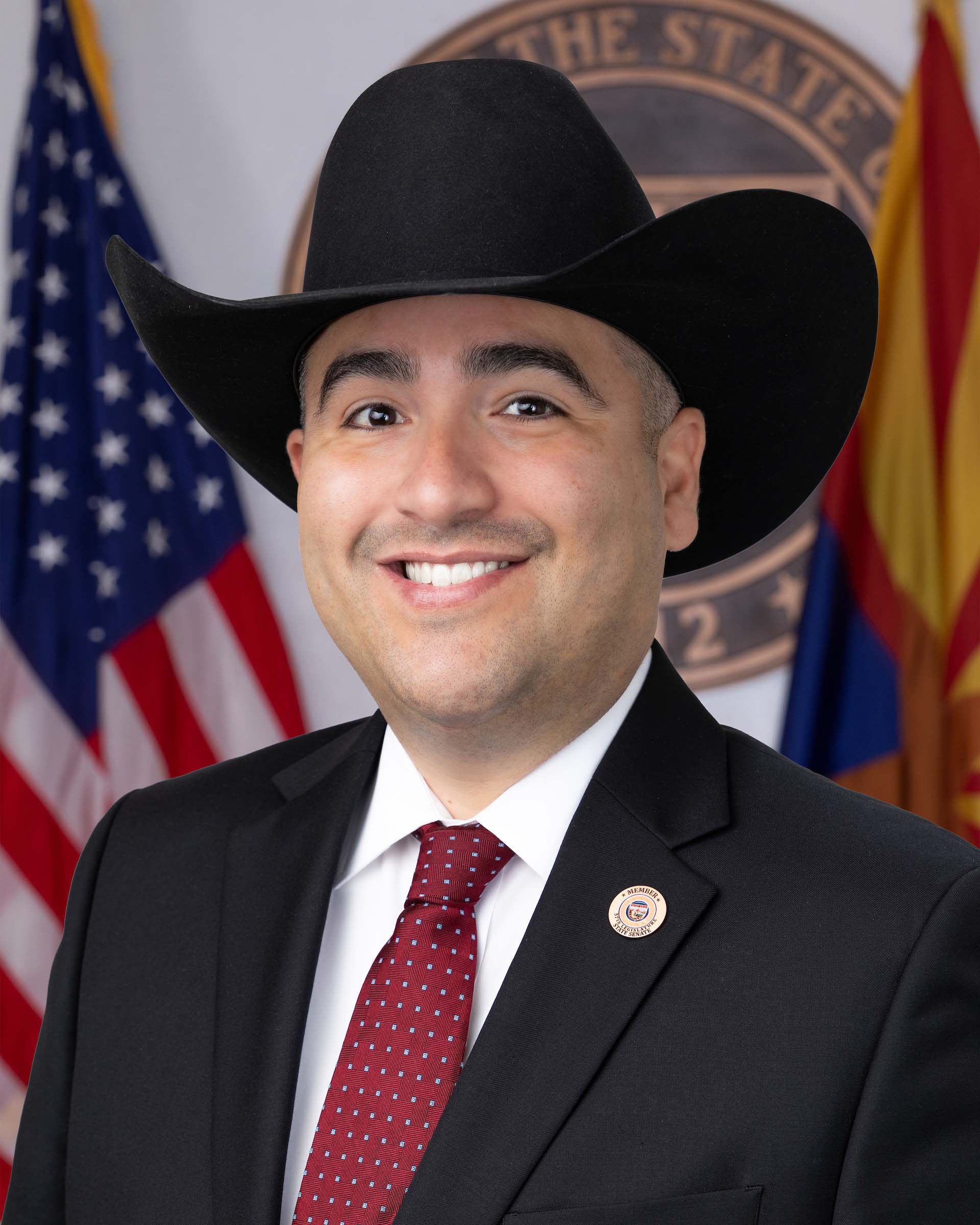
Sen. T.J. Shope
Sponsored bills
Maddy summarySB 1112 amends Arizona law (Section 36-539) to change requirements for mental health hearings where a court may order treatment. It directly affects patients in mental health evaluation proceedings by requiring testimony from at least one non-professional witness who knew the patient personally before the evaluation application, limited to observed facts (not expert opinions). The bill specifies that such witnesses must have observed the patient during the alleged mental disorder period but were not formal participants in the evaluation. Courts may waive this witness requirement if clear and convincing evidence of the need for treatment is provided through other testimony or evidence.
Maddy summaryThis constitutional amendment proposes raising Arizona's mandatory retirement age for judges and justices from 70 to 75. If approved by voters, it would require justices and judges of courts of record to retire upon reaching age 75, directly affecting all current and future judicial appointees in Arizona. The amendment updates vacancy rules to align with the new retirement age and clarifies that retired judges may temporarily return to active duty. It requires voter approval at the next general election to take effect.
Maddy summarySB 1177 prohibits Arizona public funds from being used to cover medical procedures related to gender transition, including surgeries or prescriptions for puberty blockers, hormones, or other pharmaceuticals. It defines "gender transition" as per existing law and specifies that "public monies" includes any state funding, reimbursements, or health insurance coverage through state programs. Violating this prohibition by a public official would be deemed a misuse of public funds under Arizona law. The bill directly affects state agencies, health programs, and public employees who manage or distribute state-funded healthcare services.
Maddy summarySB 1120 requires hospitals, outpatient surgical centers, and other healthcare facilities performing real-time X-ray procedures (such as cardiac catheterization) to equip at least half of their relevant procedure rooms with radiation protection systems by July 1, 2027. These systems must provide shielding equivalent to a 0.25mm lead-equivalent apron and include real-time dosimetry to measure radiation exposure for staff during procedures. The bill directly affects healthcare institutions conducting interventional medical procedures involving ionizing radiation. It mandates specific technical standards for radiation protection, focusing on staff safety during common medical imaging procedures.
Maddy summarySB 1115 prohibits Arizona Health Care Cost Containment System (AHCCCS) employees from working remotely as their primary arrangement. The bill directly affects all AHCCCS employees by requiring them to report to the agency's physical worksite regularly, rather than working from home or other remote locations. It defines "work remotely" as having a primary worksite outside the agency's location and mandates that employees not be expected to work remotely on a regular basis. This policy change applies specifically to AHCCCS, Arizona's Medicaid program, and amends the state statutes governing the agency.
Maddy summarySB 1249 establishes a coordinated state program to address Alzheimer's disease and related dementias in Arizona. It designates the Department of Health Services as the lead agency responsible for developing and updating an Alzheimer's Disease State Plan by September 2027, which must assess current services, identify gaps in care, and make recommendations to improve access to care, support for caregivers, and data collection. The bill appropriates $600,000 from the state general fund for the program's implementation and requires annual stakeholder engagement sessions with people living with dementia, caregivers, and relevant organizations. The plan must be updated and submitted to state leadership every three years, with the full plan published online. This legislation directly affects people living with Alzheimer's disease or related dementias, their unpaid caregivers, and state agencies providing related health and support services.
Maddy summarySB 1248 requires counties operating juvenile detention centers to provide education programs for all school-age youth held there, with county school superintendents and juvenile court judges agreeing on program delivery. It establishes state standards for these programs and creates a funding mechanism: counties receive a base amount ($100,000 for 2019-2020) plus variable funding based on the number of instructional days (240+ minutes daily) each youth receives, with additional support for youth with disabilities. The bill also extends similar education program requirements and funding rules to county jails for minors under 21 without high school diplomas. This directly affects juvenile detention/jail facilities, youth in custody, and county school systems managing these programs.
Maddy summarySB 1740 establishes Arizona's "turquoise alert" system to quickly notify the public about missing persons under 65 years old in suspected danger. Law enforcement agencies must meet specific criteria - like using all local resources, confirming suspicious circumstances, and having recovery-assisting information - before requesting an alert. The bill requires all law enforcement agencies to train relevant staff (including dispatchers and supervisors) on the alert system at hire and biannually, focusing on legal criteria and procedures for issuing alerts. This directly affects law enforcement personnel handling missing person cases across Arizona.
Maddy summarySB 1116 requires that appeals for behavioral health claims under Arizona's Medicaid program (AHCCCS) subject to a capped fee-for-service payment schedule must be reviewed by an individual with relevant clinical experience. This applies specifically to disputes over payments for behavioral health services where providers are paid under a fixed, capped rate system. The bill directly affects behavioral health providers and patients involved in payment appeals within AHCCCS. It mandates clinical expertise in the review process rather than non-clinical review, aiming to improve the accuracy of payment decisions for these services.