

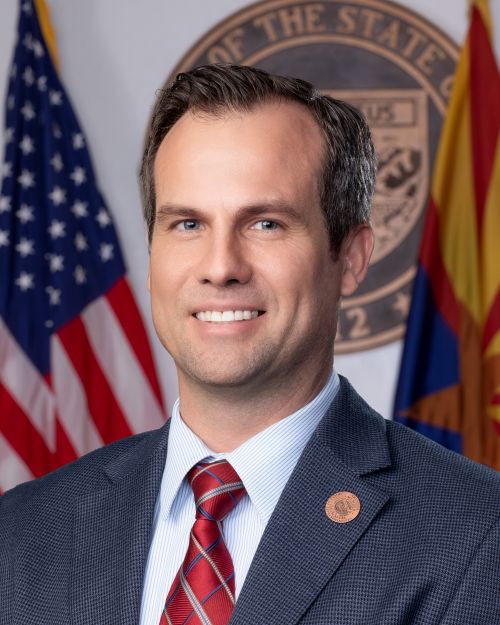
Maddy summarySB 1106 clarifies how Arizona aligns its income tax calculations with the federal Internal Revenue Code. It defines "internal revenue code" for tax years starting in specific periods (e.g., 2023-2024, 2024-2025) as the federal tax code as it existed on a fixed date (e.g., January 1, 2024), including retroactive provisions from certain federal laws enacted in prior years. This directly affects Arizona taxpayers and the Department of Revenue when calculating income tax liability. The bill establishes a consistent reference point for Arizona’s tax code each year, avoiding constant updates to match federal changes.
Sponsored bills
Maddy summarySB 1529 requires Arizona municipalities to establish standardized preapproved housing design plans for single-family residential areas by specific dates (starting July 2026 for single-family homes and accessory units, January 2027 for duplexes/triplexes). It mandates at least three design options per class with defined size ranges (e.g., 800-2,000 sq ft for single-family homes, 200-1,000 sq ft for accessory units) and prohibits municipalities from restricting who can submit plans or conducting discretionary reviews. Municipalities must post approved designs online, allow administrative approval without delays, and maintain contact information for submitters. This bill directly affects local governments and developers seeking to build in single-family zones that permit multi-unit housing types.
Maddy summarySB 1611 amends Arizona's subdivision regulations to clarify water requirements for school site reservations in new developments. It prevents municipalities from requiring school sites within a subdivision plat if the municipality has already pledged sufficient water volume through a certificate of assured water supply (as defined in state water law). This exemption applies when the municipality pledges water equal to the school's estimated use, meets all water certification standards, and does not require developers to pay for that pledged water. The bill maintains standard subdivision approval processes, including mandatory water certification for developments in designated water management areas. This change directly affects developers seeking final plat approval and local governments managing land use.
Maddy summarySCR 1040 is a non-binding resolution celebrating the 50th anniversary of Arizona's State Government Affairs Council (SGAC). It formally recognizes SGAC's work over five decades in fostering relationships between government, businesses, and communities, promoting transparency, and advancing policy through nonpartisan collaboration. The resolution commends SGAC for its role in enhancing communication between public and private sectors and encourages continued support for its mission. As a ceremonial resolution, it does not create new laws or directly affect any individuals or entities.
Maddy summaryArizona's SB 1530 amends groundwater recovery rules to clarify how stored water can be withdrawn from underground facilities. It requires permit holders to apply for a recovery well permit before extracting stored water, with specific location rules: recovery must occur within the "area of impact" of the stored water (determined by the director), or meet conditions for recovery outside that area. The bill specifies that cities, towns, or irrigation districts may recover water on behalf of others under certain conditions, and creates an emergency permit process for short-term water delivery during Central Arizona Project failures. This directly affects water users, storage permit holders, and local water districts managing groundwater resources.
Maddy summaryArizona's HCR 2041 is a state resolution requesting Congress to call a constitutional convention under Article V to propose term limits for U.S. House and Senate members. It asks other states with similar applications to combine their efforts to meet the two-thirds state requirement for such a convention. If Congress fails to act, Arizona and other participating states would proceed with their own convention to draft term limits. This resolution does not create new law but seeks to restart a state-led process for constitutional change, targeting federal congressional representation.
Maddy summarySB 1649 amended Arizona statutes to revise membership requirements for two boards: the Livestock Loss Board (addressing wolf depredation on ranches) and the new Military Affairs Commission (overseeing military installations). It specified how members are appointed - by the governor, legislature leaders, or university officials - and defined their duties, including reviewing military funding applications and advising on installation viability. The bill also established confidentiality rules for sensitive military relocation discussions until federal decisions are final. The legislation passed the legislature in May 2025 but was vetoed by the governor on May 13, 2025, preventing it from becoming law.
Maddy summarySB 1600, titled "Patient Rights; Health Care Services," defines core patient rights for anyone receiving healthcare in Arizona. It establishes that patients have the right to care prioritizing their best interest, avoiding harm, and requiring informed consent for medical decisions (except emergencies). The bill directly affects all patients receiving care from licensed health professionals in Arizona. However, the bill was passed by the legislature on May 7, 2025, but was vetoed by the governor on May 13, 2025, so it did not become law.
Maddy summarySB 1300 amends Arizona law to clarify procedures for claiming unclaimed property held by political action committees (PACs). It establishes that PAC property is presumed abandoned one year after the committee ends if unclaimed, and allows close relatives (parent, spouse, sibling, or child) of the rightful owner to claim it on their behalf. The bill also extends the claim period to 35 years after the department receives the property, overriding shorter time limits in other statutes. These changes specifically affect PACs and their former owners who might seek to reclaim dormant funds or assets.
Maddy summarySB 1586 creates strict liability for healthcare providers who perform gender transition procedures on minors in Arizona. It requires providers to cover all costs of subsequent detransition procedures (reversing gender transition care) for 25 years after treatment begins, and allows minors to sue for medical expenses, damages, and attorney fees up to age 26. The bill prohibits providers from using contracts to waive this liability, stating such waivers violate public policy. The legislation was passed by the Arizona legislature in May 2025 but was vetoed by the governor on May 12, 2025, preventing it from becoming law.