

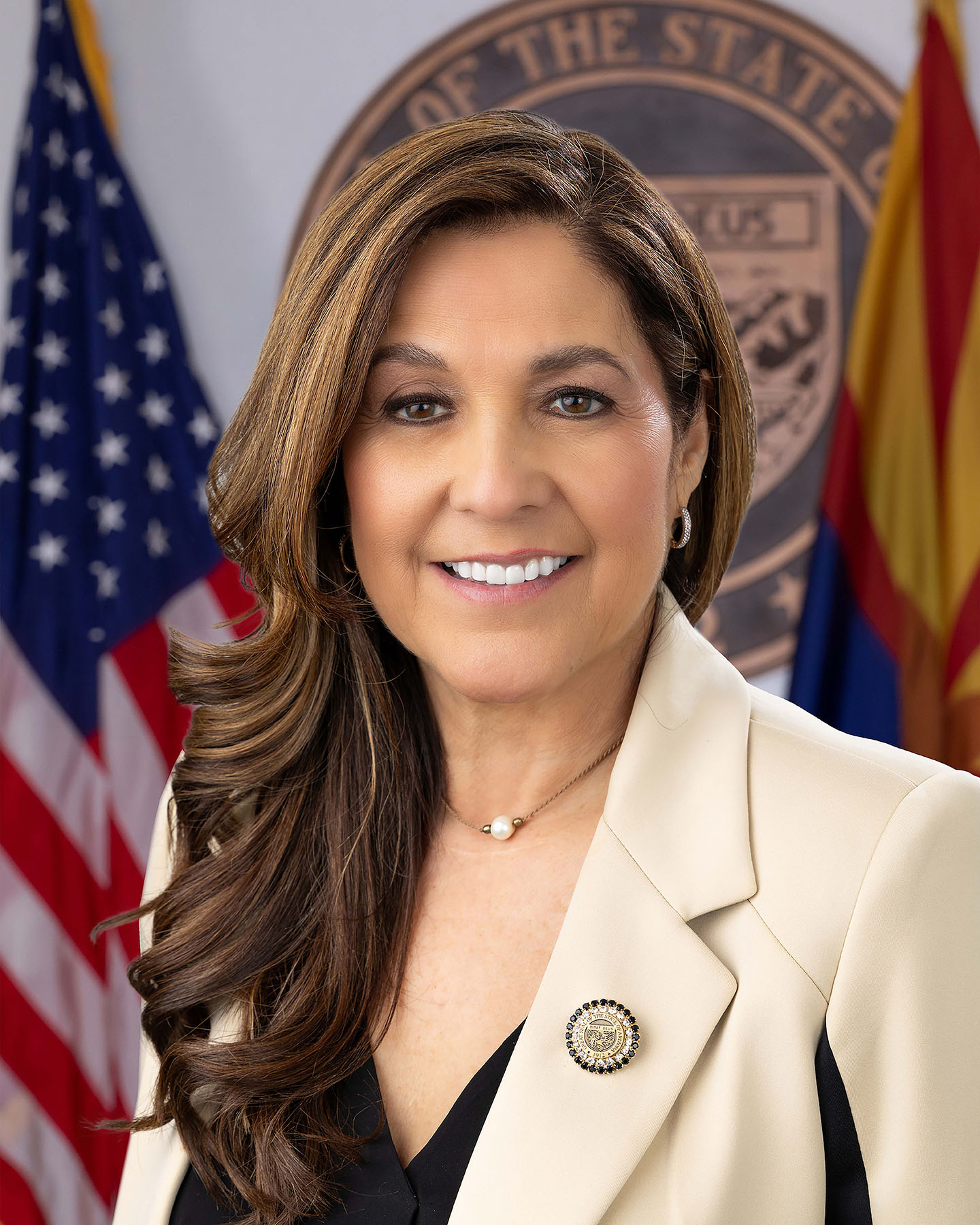
Photo of Catherine Miranda
D Arizona Senate · District 11 On the 2026 ballot

Sen. Catherine Miranda

Compare
Total votes
2,872
all sessions
Attendance
94%
159 missed
Near the chamber average
With party
92%
of cast votes
Lower than 77% of chamber peers
Bipartisan score
6%
crosses aisle rarely
Near the chamber average
Sponsored
476
bills & resolutions
Higher than 90% of chamber peers
Committees
4
assignments
476 bills and resolutions

Sponsored bills

Total
476
Primary
67
Co-sponsor
409
This page
476
matching current filters
Primary SB 1376
In committee · Arizona Senate · Lead sponsor
special plate; civic leadership development

Maddy summarySB 1376 creates a new "civic leadership development" special license plate program in Arizona. To obtain these plates, an individual must pay $32,000 to the state department, design the plate (subject to approval), and may combine it with personalized plate requests. For each plate issued, $17 of the $25 annual fee is directed to a new "civic leadership development special plate fund" instead of the highway fund, while $8 covers administration. This fund will support civic leadership development programs, with the plates intended for owners who contribute the required fee.

In committee Feb 11, 2026 0 co-sponsors
Co-sponsor SB 1690
Introduced · Arizona Senate · Co-sponsor
visually impaired voters; access procedures

Maddy summarySB 1690 (visually impaired voters; access procedures) requires Arizona election officials to provide early ballots to blind or visually impaired voters, voters with print disabilities, and overseas/uniformed service voters through electronic means (like fax or internet) upon request. Voters can choose their preferred method for receiving ballot materials, and officials must send ballots by specific deadlines (no later than 45 days before an election for registered voters). The bill eliminates the need for paper ballots when electronic delivery is used and establishes emergency procedures for national or local crises affecting voting access. This directly affects eligible voters with visual impairments or print disabilities who need accessible ballot delivery options.

Introduced Feb 10, 2026 1 co-sponsor
Primary SB 1685
Introduced · Arizona Senate · Lead sponsor
Arizona Latino affairs; commission.

Maddy summarySB 1685 establishes the Arizona Commission on Latino Affairs, a body tasked with advising state leadership and supporting Latino communities. The commission includes nine voting members (seven Latino, two non-Latino, appointed by the governor) and eight advisory members with expertise in education, health, civil rights, social services, and small business. Its key duties include advising the governor on policies affecting Latinos, developing recommendations for health, education, and economic programs, and producing an annual report to the legislature. The bill also creates a dedicated fund for the commission’s operations and mandates an annual "Latino Legislative Day" to honor community contributions and discuss issues.

Introduced Feb 10, 2026 0 co-sponsors
Primary SB 1795
Introduced · Arizona Senate · Lead sponsor
worker's compensation; database; notice; commission

Maddy summarySB 1795 requires Arizona's workers' compensation commission to create a public database containing employer and insurer details, including policy expiration dates. Employers and insurers must submit policy information, including a QR code linking to the database, and employers claiming "zero exposure" (no employees) must provide written verification. Construction contractors with zero-exposure policies must also give written notice to their clients, who must keep this documentation for three years. The bill applies to new insurance contracts entered after its effective date.

Introduced Feb 10, 2026 0 co-sponsors
Co-sponsor HB 2937
Introduced · Arizona House · Co-sponsor
nuclear power plant; employees; requirements

Maddy summaryHB 2937 requires nuclear power plant contractors and subcontractors in Arizona to use a skilled workforce, mandating that skilled journeymen (experienced workers who completed approved training programs) make up 30% of the workforce by 2027, 45% by 2028, and 60% by 2029. It also requires contractors to pay skilled journeymen at least the prevailing wage for their occupation, which must meet or exceed the minimum wage. The Arizona Industrial Commission will create rules to verify worker qualifications and handle workplace violations. This bill directly affects contractors performing maintenance, repair, or installation work at licensed nuclear power plants in Arizona.

Introduced Feb 10, 2026 1 co-sponsor
Co-sponsor SB 1608
Introduced · Arizona Senate · Co-sponsor
landlords; habitable conditions; temperatures

Maddy summarySB 1608 sets specific indoor temperature requirements for rental properties in Arizona, mandating that landlords maintain rooms at no more than 82°F in warm weather and no lower than 68°F during extreme cold, measured mid-room at 3 feet above ground. It shortens tenant notice periods for heating/cooling failures affecting health to 2 days (from 10 days) and prohibits evictions during weeks with two or more days exceeding 90°F outdoor temperatures. The bill directly affects landlords (requiring compliance with temperature standards and maintenance) and tenants (providing stronger remedies for unsafe conditions and eviction protection). Key provisions include precise temperature measurements, accelerated tenant remedies for critical failures, and a heat-related eviction ban.

Introduced Feb 10, 2026 1 co-sponsor
Co-sponsor SB 1694
Introduced · Arizona Senate · Co-sponsor
charter schools; meeting; reporting; audits

Maddy summarySB 1694 requires Arizona charter schools receiving state funding to develop emergency response plans and conduct school safety assessments every five years using approved providers. It updates transparency rules to mandate posting meeting notices and public records online for all charter schools. The bill also prohibits for-profit organizations from establishing new charter schools after January 1, 2027. These provisions directly affect all Arizona charter schools operating under state funding programs.

Introduced Feb 9, 2026 1 co-sponsor
Co-sponsor SB 1698
Introduced · Arizona Senate · Co-sponsor
ESAs; children with disabilities; evaluations

Maddy summarySB 1698 expands Arizona's Empowerment Scholarship Account (ESA) program to cover specific educational services for students with disabilities. It allows ESA funds to pay for educational therapies, psychological evaluations, assistive technology, and vocational training when a student meets disability criteria under the law. The bill also requires annual education plans for students aged 21-22 to continue receiving funds, with reviews conducted by independent evaluation teams. This directly affects students with disabilities enrolled in the ESA program who qualify under the specified criteria. The policy change modifies allowable expenses under the existing ESA framework to include these disability-related services and extends eligibility through age 22.

Introduced Feb 9, 2026 1 co-sponsor
Co-sponsor SB 1721
Introduced · Arizona Senate · Co-sponsor
prevailing wage contracts; agreements

Maddy summarySB 1721 requires state construction contracts to pay prevailing wages and fringe benefits based on local collective agreements, directly affecting contractors and subcontractors working on state-financed projects. It mandates that contractors post wage rates at job sites, maintain payroll records, and prohibits retaliation against workers reporting violations. The Arizona Department of Administration determines prevailing rates, and violations carry a $5,000 civil penalty or liability for lost wages. The bill ensures workers on state projects receive locally negotiated compensation standards while providing enforcement mechanisms for compliance.

Introduced Feb 9, 2026 1 co-sponsor
Co-sponsor SB 1695
Introduced · Arizona Senate · Co-sponsor
expenditure limitation; school districts; repeal

Maddy summarySB 1695 repeals Section 15-911 and amends Section 15-1285 to exempt school districts and career technical education districts from Arizona's budgetary and spending limits on certain state funds. Specifically, funds received by these districts under a designated chapter are no longer subject to the state's usual expenditure caps, allowing them to use these resources without being constrained by typical budget restrictions. This change directly affects school districts across Arizona by increasing their financial flexibility in managing state funding. The bill also includes minor amendments to unrelated statutes but focuses primarily on easing budgetary constraints for school districts.

Introduced Feb 9, 2026 1 co-sponsor
Showing 21 to 30 of 476 bills
Previous 1 2 3 4 48 Next