

Maddy summarySB 1823 revises Arizona’s funding rules for state-sponsored charter schools. It clarifies that school districts aren’t financially responsible for these charters and sets their funding using the state’s student formula, with special rules for small schools and enrollment counting. Charter schools must adjust student counts after initial estimates (based on registration) and report changes by May 15, while ensuring students enrolled in both charters and traditional public schools aren’t double-counted for funding. The bill also allows charters to accept supplemental grants but requires reducing their base funding if federal/state grants cover operational costs. This directly affects all charter schools sponsored by the state board, universities, or community colleges in Arizona.
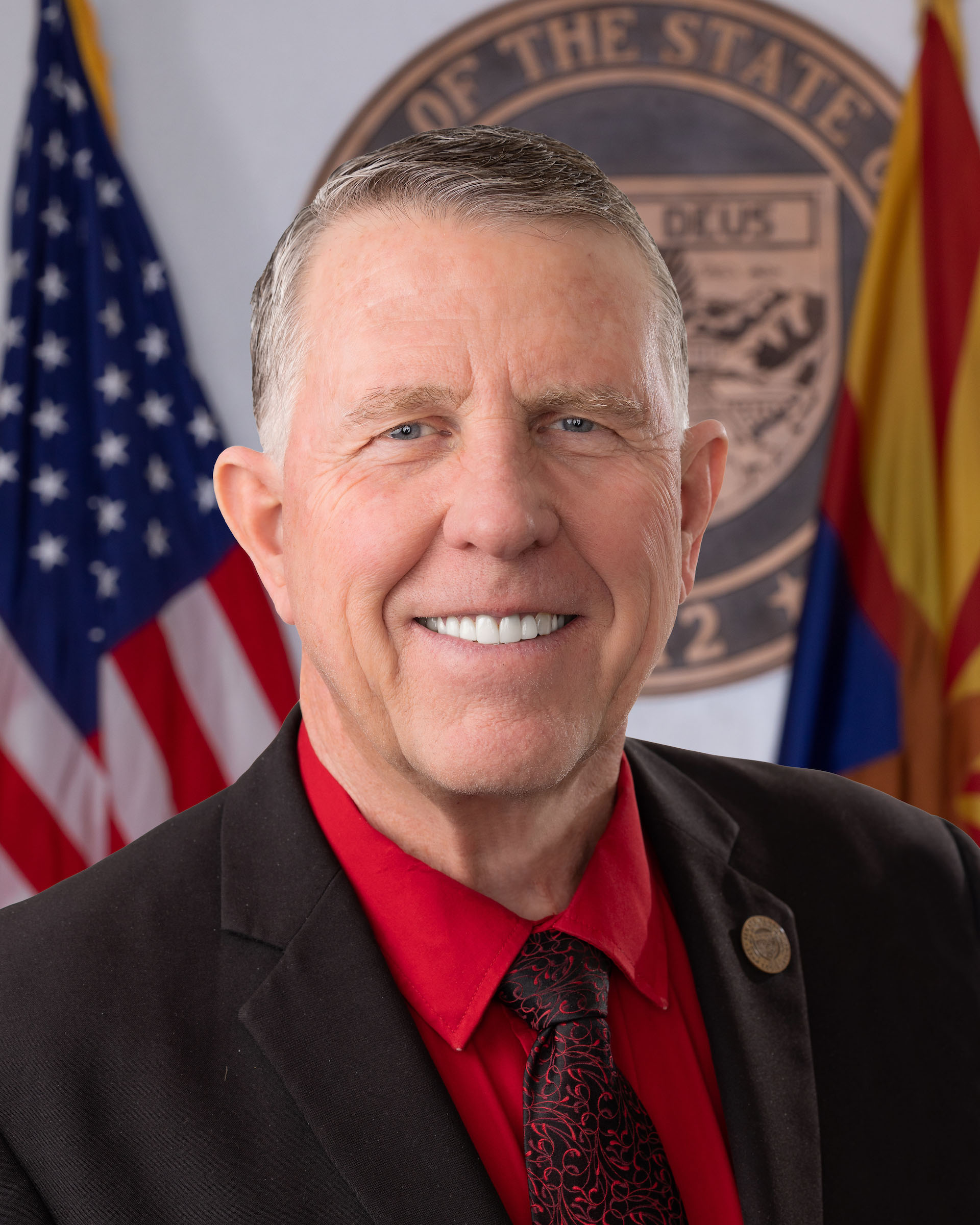
Sen. Dave Farnsworth
Sponsored bills
Maddy summarySB 1816 sets a requirement for Arizona school districts: if their actual building space meets or exceeds 110% of a calculated "optimal" square footage based on student enrollment (including leased space for charter schools), they cannot hold bond elections for new bonds or changes to approved capital projects. The bill mandates annual calculations of this ratio by the state board, posting the results online and notifying districts and county officials when the ratio hits 110% or higher. This directly affects school districts with sufficient existing facilities, restricting their ability to seek voter approval for new bond funding. The key mechanism is using a specific enrollment-based formula to determine eligibility for bond elections, with the threshold set at 110% of optimal space.
Maddy summarySB 1820 updates Arizona's criminal damage and arson penalties by raising the monetary thresholds that determine felony or misdemeanor classifications. For example, damaging property worth $13,800 or more now triggers a class 4 felony (up from $10,000), while damage between $2,800 and $13,800 becomes a class 5 felony (up from $2,000-$10,000). The bill also specifies that damaging utility property or property used for worship/schools with an imminent safety hazard or in amounts over $14,300 elevates penalties. These changes directly affect anyone committing property damage, including those targeting utilities, religious sites, or schools, without altering the underlying offenses.
Maddy summaryThis bill prohibits Arizona municipalities from requiring religious institutions or 501(c)(3) charitable organizations to obtain permits or rezone their own property when distributing free food, goods, or services to the public. It explicitly overrides local laws that might otherwise impose such requirements on these groups. The law defines "religious institutions" as church-operated nonprofits and "charitable organizations" as tax-exempt nonprofits under federal law. This directly affects how local governments regulate these entities' on-site distribution activities without additional permitting or zoning changes.
Maddy summaryThis bill establishes a licensing system for weather modification activities in Arizona, requiring permits for cloud seeding, hail suppression, and other weather control operations. It affects individuals, corporations, and government entities that want to conduct these activities, requiring them to apply to the Department of Water Resources. The licensing process includes a 120-day review period, Department of Environmental Quality approval of chemicals used, public notice, and a public meeting in affected areas. Fees collected will be distributed between the Department of Water Resources and Department of Environmental Quality. The bill creates a regulatory framework for weather modification activities that were previously unregulated in Arizona.
Maddy summaryThis proposed constitutional amendment would change how superior court judges are elected in Arizona. In counties with 250,000+ residents (based on the latest U.S. Census), judges would be elected from legislative districts instead of countywide, and must reside in their district. It also requires judges in these counties to be elected without partisan labels and mandates gubernatorial appointments to fill vacancies until the next general election. The amendment requires voter approval to take effect and does not alter election rules for counties under 250,000 residents.
Maddy summaryHCR 2017 is a proposed constitutional amendment that would create a new property tax exemption for Arizona residents aged 62 or older who own their primary residence without a mortgage and have lived there as their main home for at least two years. If approved by voters, this exemption would apply to tax years beginning after December 31, 2026. The amendment would specifically affect seniors meeting these criteria by eliminating property tax liability on their primary residence. This proposal requires voter approval and is not yet law, as it is currently in the early legislative review stages.
Maddy summaryHB 2316 allows Arizona middle schools (grades 6-8) to offer career technical education (CTE) courses that count toward both 8th-grade promotion and high school graduation. Schools must partner with approved CTE providers like community colleges or state-approved programs, and students must pass courses to earn credit. The bill requires schools to report course offerings and completions annually, with a final report due by 2029, and expires in 2037. It permits CTE districts to fund middle school CTE courses without raising property taxes but prohibits counting middle school students in district enrollment totals.
Maddy summaryThis bill requires Arizona doctors to inform surgery patients before their procedure about two blood donation options: donating their own blood beforehand (autologous donation) or having a compatible family member or friend donate blood specifically for their use (directed donation). Doctors must then help arrange the necessary paperwork with blood banks in a timely manner. It directly affects all patients scheduled for surgery in Arizona who may wish to use their own or a designated donor's blood. The law focuses on ensuring patients receive this information early in the surgical planning process.
Maddy summarySB 1025 requires Arizona public schools teaching evolution by natural selection to also provide concurrent instruction in intelligent design. This bill directly affects public school science curricula and teachers in Arizona. The key provision mandates that evolution instruction cannot occur without simultaneously teaching intelligent design as an alternative explanation. The law overrides other requirements, making this a specific change to science education standards.