

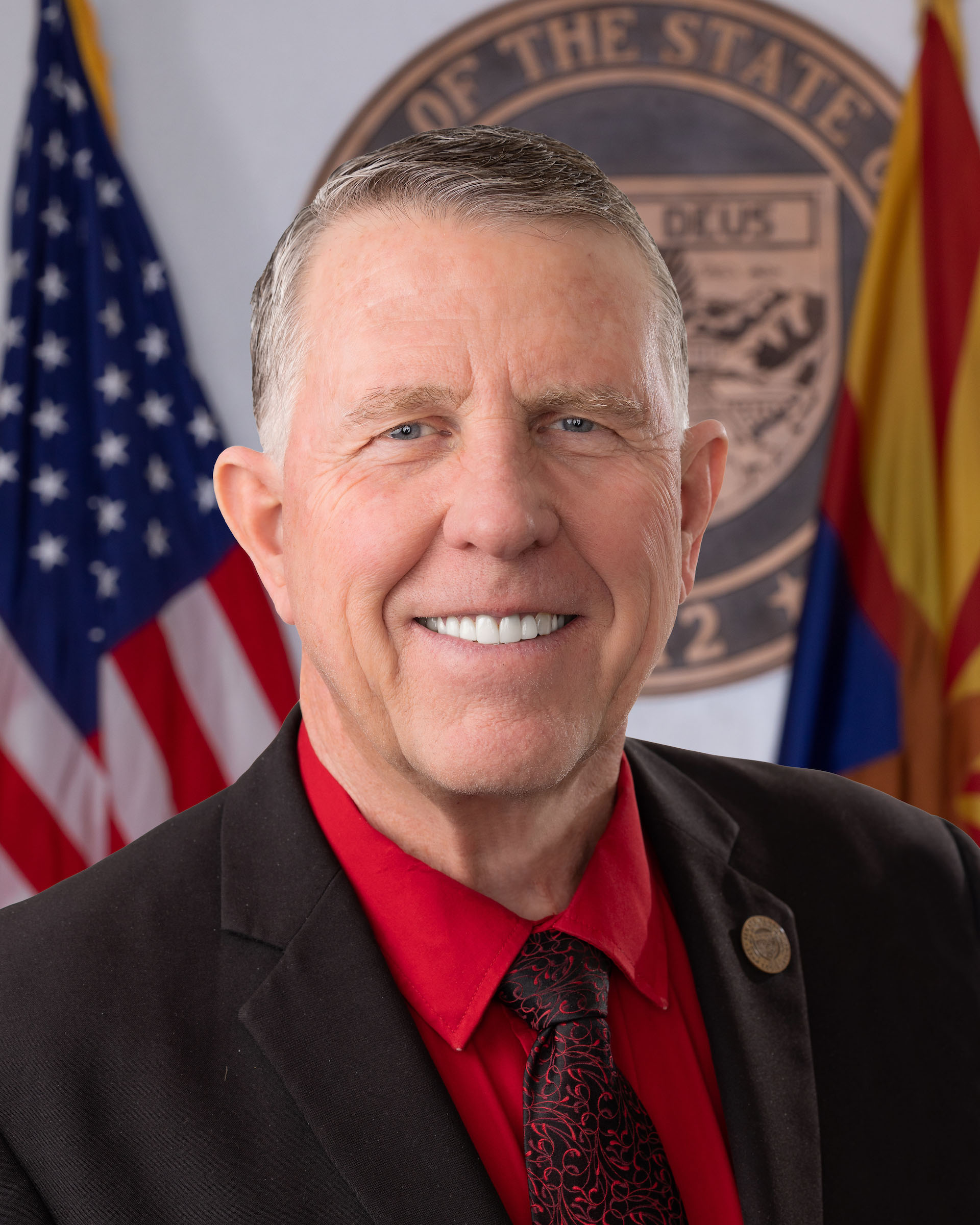
Photo of Dave Farnsworth
R Arizona Senate · District 10 On the 2026 ballot

Sen. Dave Farnsworth

Compare
Total votes
2,872
all sessions
Attendance
100%
2 missed
Higher than 83% of chamber peers
With party
89%
of cast votes
Near the chamber average
Bipartisan score
7%
crosses aisle rarely
Near the chamber average
Sponsored
204
bills & resolutions
Near the chamber average
Committees
8
assignments
204 bills and resolutions

Sponsored bills

Total
204
Primary
112
Co-sponsor
92
This page
204
matching current filters
Primary SB 1825
Passed · Arizona Senate · Lead sponsor
precinct committeemen; vacancy; application

Maddy summaryArizona's SB 1825 amends election law to clarify how vacancies for precinct committeemen (local party representatives) are filled. It requires county boards of supervisors to appoint a replacement within 30 days using a list submitted by party officials, based on the county chairman or legislative district chairman. The bill specifies that only committeemen elected at the primary election before a committee meeting can vote at that meeting. This change directly affects county party committees and local election processes in Arizona, streamlining vacancy procedures without altering voter eligibility or election outcomes.

Passed Mar 18, 2026 0 co-sponsors
Co-sponsor HCR 2064
Passed · Arizona House · Co-sponsor
Barbara Leff; death resolution

Maddy summaryThis is a ceremonial resolution (HCR 2064) expressing the Arizona Legislature's condolences upon the passing of former state legislator Barbara Leff. It honors her 1996-2006 service representing Paradise Valley, her work on HMO reform and economic development, and her contributions to voter information systems. The resolution extends sympathy to her surviving family members (husband, children, grandchildren) and acknowledges her community leadership. It has no policy impact or legislative effect beyond this expression of respect.

Passed Mar 9, 2026 1 co-sponsor
Primary SB 1026
Passed · Arizona Senate · Lead sponsor
alternative schools; continuous operations; requirements

Maddy summarySB 1026 streamlines operations for Arizona's alternative education programs and schools serving students in grades 6-12 who cannot thrive in regular classrooms. It allows these programs to schedule instruction any day of the week, enroll students using electronic withdrawal verification (instead of physical forms), and continue funding for students incorrectly coded as graduates in the state database. The bill also eliminates unnecessary recertification requirements for existing programs while requiring new program applications and closure notices. These changes directly affect school districts, alternative program providers, and students needing specialized educational settings.

Passed Mar 5, 2026 0 co-sponsors
Co-sponsor SCR 1054
Passed · Arizona Senate · Co-sponsor
Mark Brnovich; death resolution

Maddy summaryThis resolution honors the late Mark Brnovich, a former Arizona Attorney General who passed away in January 2026. It formally expresses the state legislature's regret over his death and extends condolences to his family and friends. The document does not create new laws or policies but serves as a ceremonial tribute to his public service career. It acknowledges his contributions as a prosecutor and government official without altering any legal provisions.

Passed Mar 3, 2026 1 co-sponsor
Primary SB 1278
Passed · Arizona Senate · Lead sponsor
solar radiation management; prohibition; enforcement.

Maddy summarySB 1278 prohibits anyone in Arizona from intentionally injecting, releasing, or dispensing materials for solar radiation management (technologies that reflect sunlight to cool the planet) within state borders. It also bans public funding - such as grants from cities, universities, or other entities receiving public money - for developing these technologies. The law allows Arizona residents to file complaints with the Attorney General about violations, who must investigate and can sue violators in court for injunctive relief and fees. This bill directly affects individuals, companies, and public institutions conducting or funding solar radiation management activities in Arizona.

Passed Mar 3, 2026 0 co-sponsors
Primary SB 1819
In committee · Arizona Senate · Lead sponsor
vertiports; design; zoning

Maddy summarySB 1819 requires Arizona's Department of Transportation to create a statewide plan for vertiports (vertically taking off airports) and electric aircraft charging stations by 2026, consulting with airports, airlines, and federal agencies. It designates a department expert to assist local governments and mandates that all new vertiport and charging station projects must be publicly bid with no preference for existing operators. The bill directly affects local governments, airports, and future operators of electric aircraft infrastructure by setting planning and procurement standards. It does not change existing safety rules but establishes a process for developing advanced air mobility infrastructure. The bill focuses on planning and project selection, not on regulating operations or funding.

In committee Feb 24, 2026 0 co-sponsors
Primary SB 1822
In committee · Arizona Senate · Lead sponsor
property owners; adverse possession

Maddy summarySB 1822 amends Arizona's adverse possession laws to clarify when property claimed through long-term use becomes deemed legally owned. It states that a person with a recorded deed who has paid property taxes for at least five consecutive years is deemed the lawful owner of the property, applicable to both city lots (under §12-524) and general real property (under §12-525). The bill explicitly excludes claims based on forged deeds or forged powers of attorney from these protections, ensuring only legitimate claims benefit from the five-year tax payment requirement. This change affects property disputes where ownership is contested based on possession and tax payments.

In committee Feb 18, 2026 0 co-sponsors
Primary SB 1551
Failed · Arizona Senate · Lead sponsor
budget stabilization fund; transportation fund

Maddy summarySB 1551 creates a statewide infrastructure trust fund to finance transportation projects like highway construction and improvements. It automatically transfers money from Arizona’s budget stabilization fund (BSF) to this trust fund when the state’s economic growth exceeds a set threshold, using specific formulas based on personal income and inflation data. The bill also sets rules for when the BSF must return funds to the general state budget if growth is low, and limits the BSF balance to 10% of general fund revenue. This directly affects how the state manages transportation funding and budget reserves, without targeting specific groups or communities. The bill focuses on procedural fund transfers rather than new policy outcomes.

Failed Feb 10, 2026 0 co-sponsors
Primary SB 1547
In committee · Arizona Senate · Lead sponsor
alternative fuel tax

Maddy summarySB 1547 ensures that owners of alternative fuel vehicles (such as electric, propane, or natural gas-powered cars and trucks) pay a tax proportional to conventional vehicles for highway use. It removes the existing use fuel tax on alternative fuels but replaces it with new annual or usage-based fees: $120 yearly for light electric vehicles, $0.0143 per kilowatt-hour for heavy electric trucks, and equivalent fees for other alternative fuels. These fees are calculated to match the tax burden conventional vehicles pay per gallon of fuel (18 cents for light vehicles, 26 cents for heavy vehicles). The bill directly affects all owners of alternative fuel vehicles operating in Arizona, requiring them to pay these fees instead of per-gallon fuel taxes.

In committee Feb 10, 2026 0 co-sponsors
Primary SB 1824
Introduced · Arizona Senate · Lead sponsor
blindness compensatory skills; teaching certificates

Maddy summarySB 1824 requires Arizona teachers providing specific services to blind or visually impaired students to hold approved certifications. It mandates that orientation and mobility instructors have nationally recognized certification (or state-approved equivalent), and rehabilitation/independent living skills instructors must have rehabilitation teaching or vision rehabilitation certification. The bill directly affects blind or visually impaired students by ensuring they receive high-quality, aligned instruction through certified educators. Key provisions establish these certification standards and require the state board to set implementation deadlines for teachers. The bill defines "blind pupil" as one who cannot use vision as a primary learning mode and clarifies that compensatory skills help these students access the general curriculum.

Introduced Feb 9, 2026 0 co-sponsors
Showing 61 to 70 of 204 bills
Previous 1 … 6 7 8 … 21 Next