

Maddy summarySB 1847 is the 2026-2027 General Appropriations Act for Arizona's Department of Corrections, allocating approximately $1.6 billion in state funding to support prisons, community corrections, and inmate healthcare. The bill establishes strict reporting requirements, mandating that the department submit monthly financial updates, annual staffing reports, and detailed bed capacity analyses to the Joint Legislative Budget Committee. It also introduces specific financial controls, such as requiring legislative review before spending on certain inmate healthcare contracts and limiting private prison staff stipends to amounts equal to those paid to state employees. Additionally, the legislation directs that all earnings from specific land funds be used solely to support penal institutions and requires the department to prioritize filling in-state prison beds before using out-of-state provisional beds.
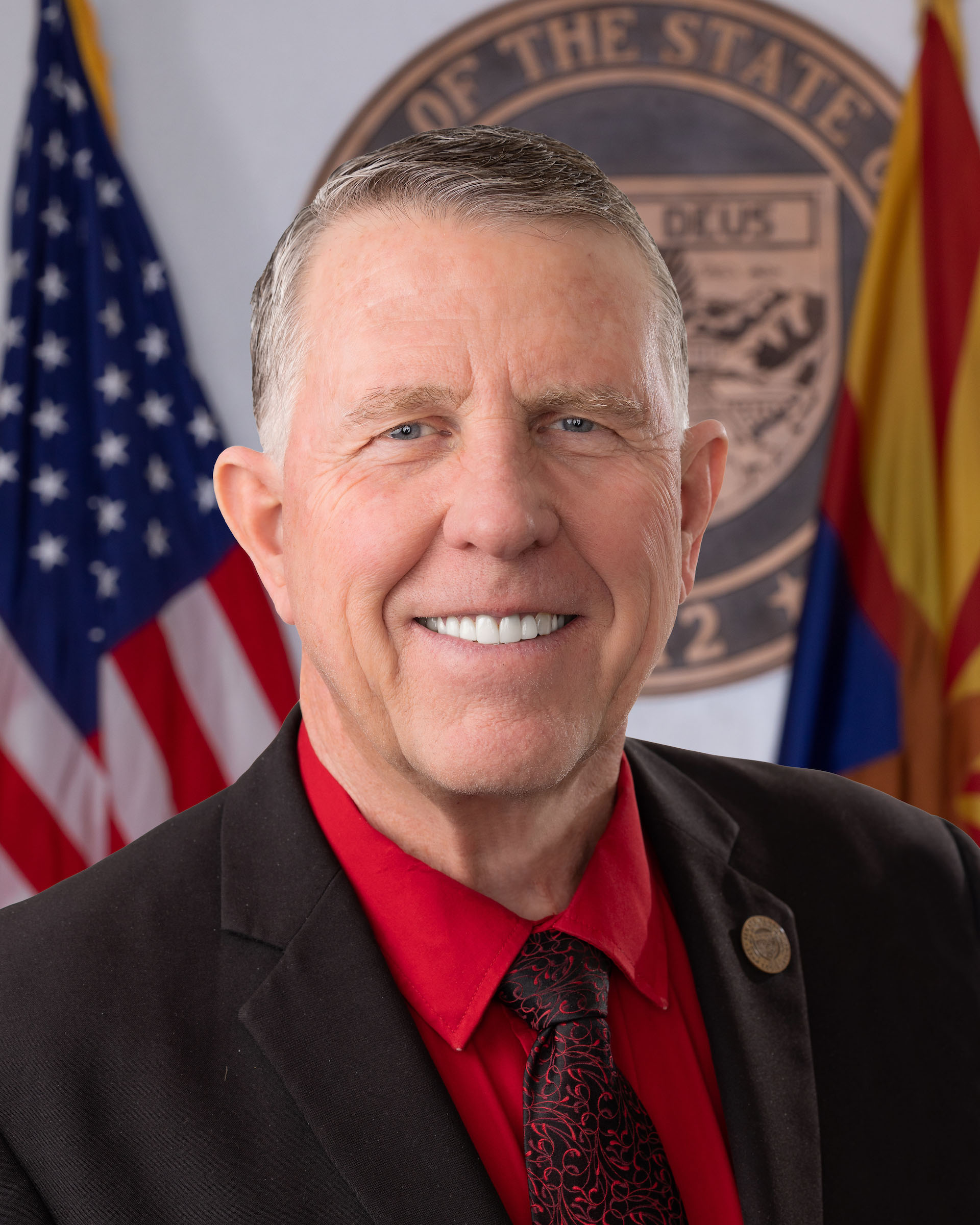
Sen. Dave Farnsworth
Sponsored bills
Maddy summarySenate Concurrent Resolution 1055 is a commemorative measure that honors the life and service of Major General Glen W. 'Bill' Van Dyke, a retired Arizona National Guard leader who passed away in April 2026. The resolution formally recognizes his nearly 38 years of military and public service, including his roles as a pilot, commander of the 162nd Fighter Group, and Adjutant General of Arizona. It expresses the legislature's condolences to Van Dyke's family and friends while acknowledging his contributions to the state and nation.
Maddy summarySB 1817 is a technical correction to Arizona's oil and gas enforcement law (ARS § 27-524). It clarifies that if the oil and gas commissioner fails to act within 10 days to stop a violation, affected individuals or groups can file a lawsuit to enforce the law. The bill also specifies that if a court grants an injunction, the commissioner automatically replaces the person who filed the lawsuit as the plaintiff. This change streamlines enforcement without altering existing requirements for oil and gas operators to plug abandoned wells and cover associated costs.
Maddy summarySB 1277 is a technical correction bill that updates reporting requirements for audits of Arizona's Game and Fish Commission Heritage Fund. It amends the law to require the auditor general to submit performance audit reports directly to the Senate president, House speaker, and committee chairs on natural resources and agriculture (or their successors) every decade. The bill does not change the fund's purpose or funding but clarifies who receives the audit findings. It affects the Heritage Fund's oversight process by specifying the recipients of the audit reports. This is a procedural update to existing audit requirements, not a substantive policy change.
Maddy summarySB 1276 requires Arizona state agencies operating websites that collect online information to publish clear privacy policies. These policies must disclose seven specific details: the services offered, types of information collected, user choices for transactions, how information is used, disclosure practices with other entities, whether third parties collect data through the site, and general security measures. The bill directly affects all state agencies with public-facing websites that gather user data online. It mandates transparency about data practices but does not create new restrictions on how agencies handle information.
Maddy summarySB 1454 is a technical correction to Arizona law that clarifies which businesses are subject to bulk food regulations. It amends Section 36-972 of the Arizona Revised Statutes to explicitly state that the law applies to "any person who displays, sells or offers for sale at retail any bulk food." This directly affects retailers selling bulk items (like grains, nuts, or candy) in stores. The bill makes no substantive policy change - it only corrects the statutory language to ensure clarity for businesses and regulators.
Maddy summarySB 1453 is a technical correction to Arizona Revised Statutes Section 30-202, clarifying how the Arizona Power Authority manages its funds. It specifies that legislative appropriations must be tracked as "appropriated funds" separately from operational funds, and restricts debt reserve funds to only paying bond principal/interest. This directly affects the Power Authority's accounting practices, requiring separate fund classifications and prohibiting use of debt reserves for other purposes. The bill makes no substantive policy changes but ensures precise financial management under existing law.
Maddy summarySB 1431 prohibits Arizona municipalities from requiring homeowner associations for subdivisions or mandating features like gates, walls, or shared amenities that would necessitate such associations. It also blocks cities from restricting home design elements - including colors, roof styles, fencing, or patio layouts - for single-family homes and accessory dwelling units. The bill exempts historical districts, tribal lands, and areas near military facilities, while still allowing municipalities to enforce building codes, fire safety rules, and utility requirements. This legislation directly affects developers, homebuyers, and local governments by limiting municipal control over residential design and community structure. It does not change existing safety or utility regulations but aims to reduce local government oversight of home aesthetics and access features.
Maddy summaryThis Arizona bill (SB 1548) changes parole rules for juveniles (under 18 at crime) convicted of serious offenses like murder. It makes individuals sentenced to "natural life" imprisonment parole-eligible after serving the minimum term (regardless of offense date), and those with 25-year or 35-year sentences parole-eligible after completing those terms. The bill specifically affects juveniles convicted of murder, altering prior rules that barred parole for "natural life" sentences. It sets clear timeframes: 25 years for most life sentences, or 35 years if sentences were consecutive, with parole requiring lifelong supervision unless revoked.
Maddy summaryThis bill amends Arizona statutes to increase fees and assessments related to traffic violations and court fines. It requires a $9 surcharge on all court-authorized diversion programs, such as defensive driving schools, and adds a $4 penalty assessment to every civil or criminal traffic fine. Additionally, the legislation strengthens the court's ability to address nonpayment by allowing judges to issue arrest warrants or order jail time for willful failure to pay fines, fees, or restitution. The bill also mandates annual reporting on the collection rates of these monetary obligations to state officials.