

Maddy summarySB 1427 requires Arizona employers to verify all new hires' work authorization through the federal e-Verify program and maintain records for at least three years (Section A). It directly affects businesses seeking economic development incentives, mandating e-Verify participation as a condition for receiving such grants or loans (Section B). Employers violating this requirement face escalating penalties: probation and quarterly reporting for a first violation (Section C), license suspension for a second violation (Section F), and indefinite suspension for third or subsequent violations (Section G). The bill also establishes that courts must rely on U.S. Department of Homeland Security determinations regarding unauthorized workers and exempts independent contractors and household domestic labor (Sections I, M).
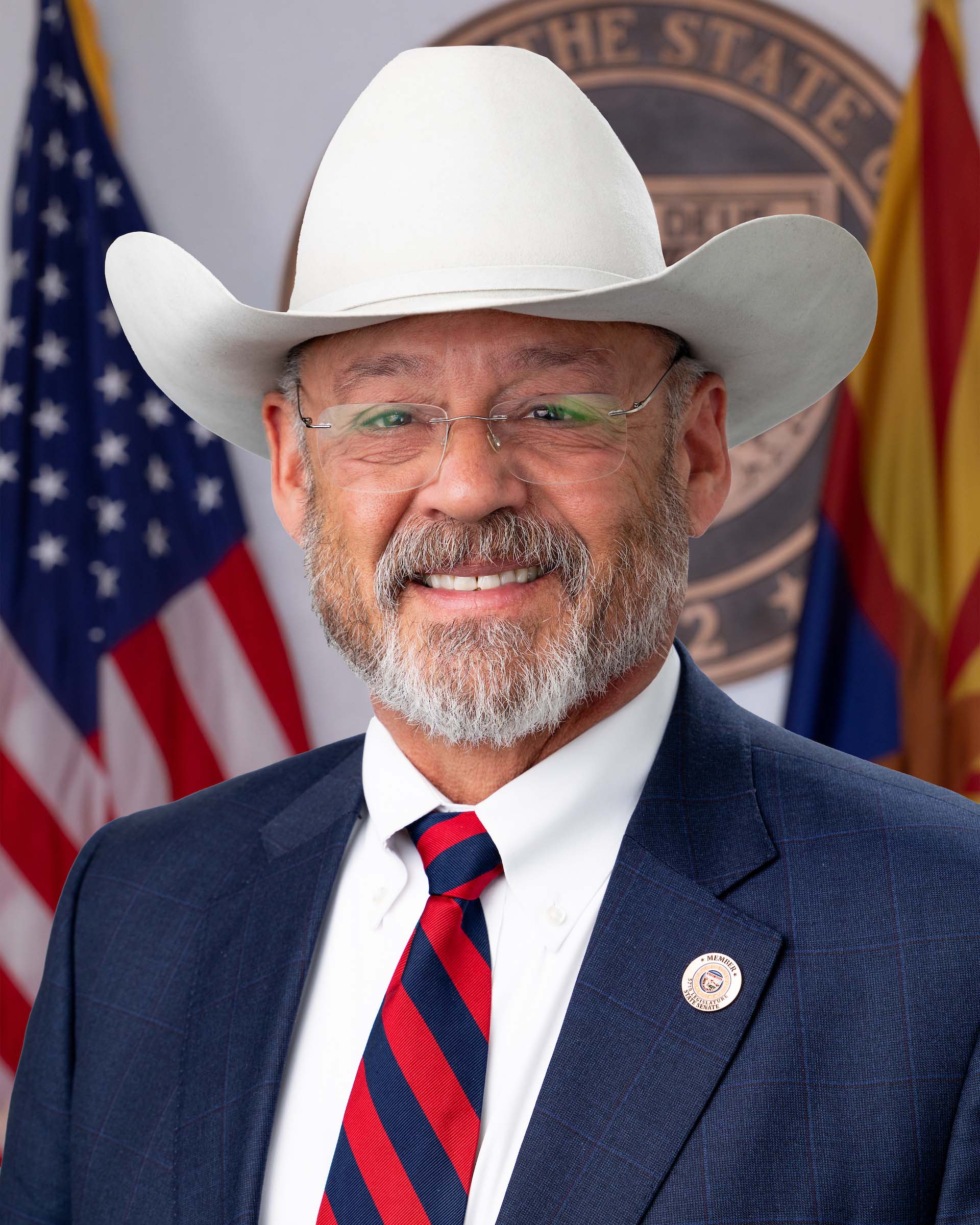
Sen. Mark Finchem
Sponsored bills
Maddy summarySB 1469 allows cities and towns in Arizona with populations over 75,000 to streamline certain development approvals. It permits administrative staff (not elected officials) to review and approve building plans, land subdivisions, and infrastructure projects without public hearings, and creates a self-certification program where licensed architects or engineers can verify compliance with building codes for qualifying projects. The bill exempts historic districts (including nationally registered sites and locally designated areas) from these changes. All approvals must follow objective, measurable standards verifiable by applicants, not subjective judgment by city staff.
Maddy summaryHB 2961 creates "returning warrior" special license plates for Arizona vehicle owners who pay a $32,000 one-time fee to design the plate. The department issues these plates after receiving the fee, with the plate design subject to department approval. Annual fees include a $17 donation to the "returning warrior special plate fund" (established by this bill), while $8 covers administration. This affects veterans or others who choose this plate option, directing funds to the specified fund rather than general state revenue.
Maddy summarySB 1443 amends Section 9-240 of the Arizona Revised Statutes, which outlines the general powers of town common councils. The amendment restates existing provisions allowing towns to regulate nuisances, including specific prohibitions on disruptive noises like amplified sound, ringing bells, blowing horns, and other disturbances that obstruct public spaces. This bill does not introduce new noise pollution rules but updates the statutory language for clarity. It directly affects town governments by reinforcing their authority to enforce local noise and nuisance ordinances under current law.
Maddy summarySB 1444 creates a state-funded deportation task force led by sheriffs' associations to coordinate with U.S. Immigration and Customs Enforcement (ICE) on deporting individuals who entered the U.S. illegally and have: (1) a criminal conviction, (2) been alleged to have committed a crime, (3) been detained based on criminal suspicion, or (4) been detained related to a crime. It defines "law enforcement agency" to include municipal police departments and county sheriff's offices. The bill appropriates funds for the task force's establishment and operation in fiscal year 2026-2027, exempting the funding from standard budget lapse rules. This policy directly affects non-citizens with criminal connections who interact with Arizona law enforcement.
Maddy summarySB 1283 eliminates Division 2 of the Arizona Court of Appeals, which previously handled appeals from counties including Pima, Pinal, and Cochise. The bill reorganizes the court by removing Division 2's structure, transferring any unspent funds from Division 2 to the reorganized court, and allowing current Division 2 judges to continue serving until their terms end. This change simplifies the court's organization without altering the counties covered or the court's jurisdiction.
Maddy summarySB 1150 requires all Arizona family court judges to complete 40 hours of mandatory training on domestic violence, sexual assault, post-traumatic stress disorder, and mental health conditions. This training aims to improve judges' understanding of these issues when handling family court cases. The bill directly affects judges serving in Arizona's family courts by establishing specific educational requirements for their professional development.
Maddy summarySB 1158 creates a formal dispute resolution process for conflicts between homeowners and condominium or planned community associations in Arizona. It allows either party to file a petition with the state department for a hearing, with each petition limited to four specific complaints about violations of community rules or state laws. The bill establishes a $500 maximum civil penalty per violation and requires the filing fee (capped at superior court application fees) to be refunded if the case is dismissed before a hearing. This process does not cover disputes between owners alone or issues related to property construction/sale by developers. The hearing decisions are binding unless appealed through a rehearing process.
Maddy summarySB 1155 provides free or discounted wildlife hunting and fishing licenses for eligible Arizona veterans. It offers free licenses to veterans with a 100% service-connected disability, 25% fee reductions for veterans with service-connected disabilities, and half-price licenses for Purple Heart recipients. To qualify, veterans must have lived in Arizona for at least one year and provide proof of service-connected disability or Purple Heart status. The bill modifies existing license fee structures under Arizona law, directly affecting veterans meeting these criteria and the Arizona Game and Fish Department's licensing program.
Maddy summaryThis bill amends Arizona laws governing homeowners associations and condominiums by updating the definitions used in state statutes. It clarifies terms such as "meeting," "board of directors," and "unit owner" to ensure consistent understanding of how these organizations operate. The changes affect condominium associations and their members by standardizing language used in legal documents and governing rules. This legislative update aims to improve clarity in how these associations manage their affairs and communicate with residents.