

Maddy summarySB 1138 regulates how Arizona law enforcement agencies use automated license plate readers (ALPRs). It specifies that ALPRs may only be used for official purposes like identifying stolen vehicles, human trafficking, or major crime scenes (e.g., homicides), without requiring reasonable suspicion. The bill mandates that collected data must be deleted after 90 days unless needed as evidence, prohibits third-party data storage, requires officer training, and fines unauthorized data releases at $500 per image. These rules directly affect law enforcement agencies operating ALPRs statewide and limit public access to collected data.
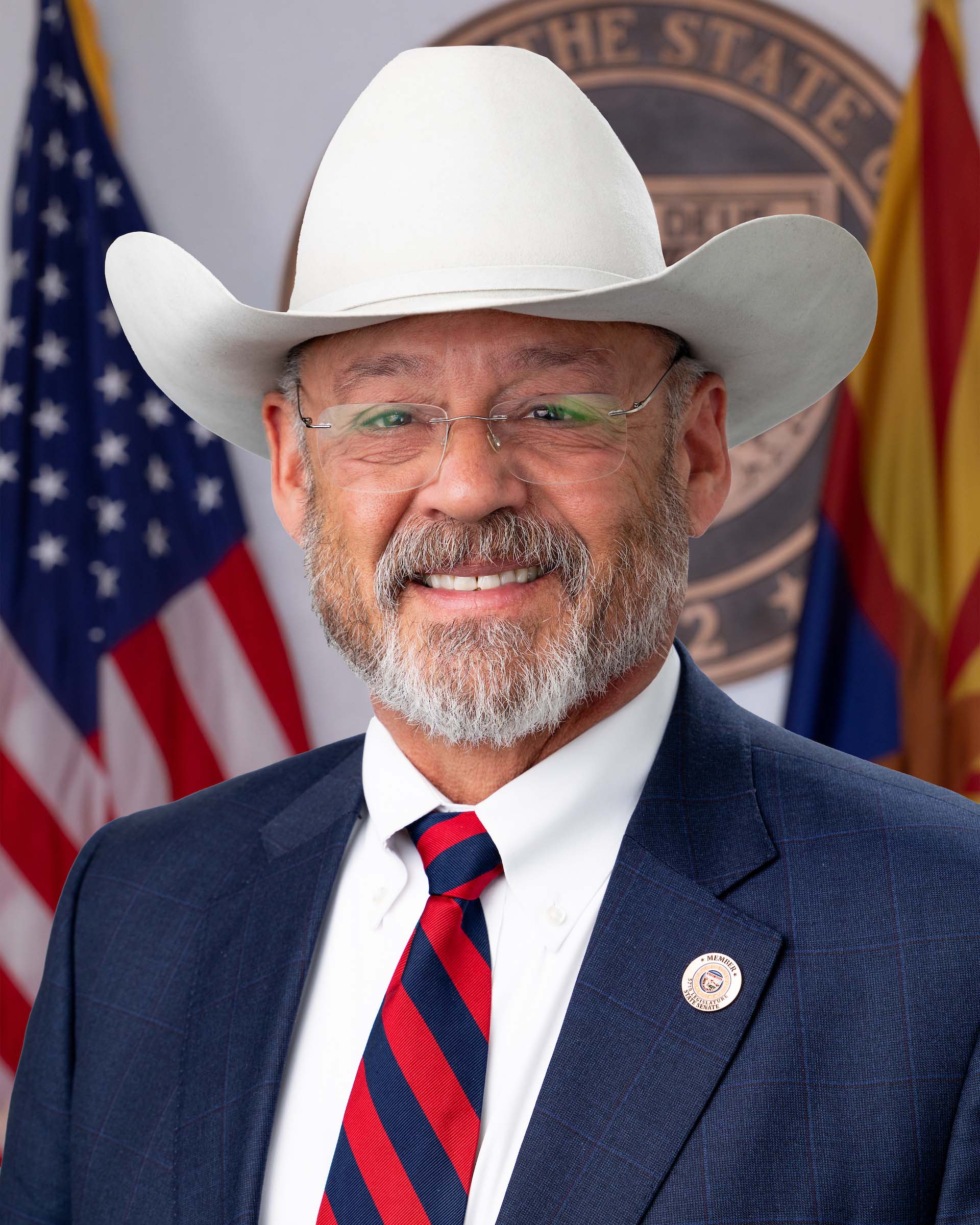
Sen. Mark Finchem
Sponsored bills
Maddy summarySB 1152 requires applicants for Arizona state or local public benefits (such as healthcare or food assistance) to provide specific documents proving lawful U.S. presence, including Arizona driver licenses, birth certificates, or immigration documents. It specifically prohibits individuals with pending asylum applications from receiving benefits until an immigration judge grants asylum. The bill establishes penalties for agency employees who fail to report immigration violations (class 2 misdemeanor) and allows any Arizona resident to sue agencies for noncompliance. Key provisions include requiring sworn affidavits about document accuracy and exempting certain groups like tribal members from standard documentation under federal guidance. This bill directly affects non-citizens applying for public benefits and changes eligibility requirements under Arizona law.
Maddy summarySB 1036 revises Arizona's unemployment benefit rules to clarify disqualification standards for job seekers who refuse suitable work or fail to actively seek employment. It defines "suitable work" as positions paying at least the minimum wage and exceeding the individual's weekly benefit amount, with exceptions for unlisted job offers. The bill also updates requirements for "shared work" programs, mandating employers to submit detailed plans showing how reduced hours prevent layoffs and maintain fringe benefits like health insurance for affected workers. These changes directly impact unemployment claimants and employers participating in shared work arrangements.
Maddy summarySB 1056 requires most Arizona state agencies to annually report vacant full-time positions that have remained unfilled for 150 days or longer, along with detailed staffing and salary data broken down by retirement system and employee tier. Agencies must eliminate these long-vacant positions each fiscal year, adjusting their allocated staff numbers to reflect the reduction. The law applies to state departments, boards, and agencies that handle state funds, excluding the Arizona Board of Regents, universities, community colleges, and the Departments of Corrections and Public Safety. This aims to align state budgets with actual staffing levels by removing unfilled positions that have remained vacant for extended periods.
Maddy summarySB 1650 modifies Arizona's judicial immunity law by creating an exception for judges who knowingly violate civil rights during case handling. It removes immunity for judicial officers who "knew or should have known" their actions in a case violated the civil rights of a litigant or affected person. This change directly affects judges and potential plaintiffs in civil rights cases involving judicial conduct, while leaving other immunity protections intact. The bill does not alter existing civil rights laws but specifies when judicial immunity does not apply.
Maddy summarySB 1755 prohibits Arizona judges from practicing law in the state, directly affecting sitting judges. The bill allows two exceptions: judges may represent themselves in court (pro se), and they may provide unpaid legal advice or draft documents for family members without acting as their lawyer in court. It does not permit judges to accept payment for legal services or serve as counsel for family members in any legal forum. This clarifies existing restrictions on judicial conduct to prevent conflicts of interest. The bill is procedural, focusing on defining judicial boundaries rather than creating new public policy.
Maddy summaryArizona's SCR 1011 is a state resolution applying under Article V of the U.S. Constitution to request Congress call a convention for proposing a constitutional amendment limiting congressional terms. It joins 22 other states that previously sought term limits but were overruled by the Supreme Court. The resolution formally asks Congress to draft such an amendment or allow states to convene a convention themselves, aggregating Arizona's application with similar efforts from other states to reach the required two-thirds threshold. This is procedural - it does not impose term limits but seeks to initiate the constitutional process for doing so.
Maddy summaryArizona's HB 2442 requires able-bodied adults under 60 receiving SNAP benefits to join a state-mandated employment and training program, unless they qualify for specific exemptions. The bill directly affects SNAP recipients who are not exempt, such as those not working 30+ hours weekly, not caring for young children, or not enrolled full-time in school. Key exemptions include being a full-time student, caring for a child under six, participating in addiction treatment, or already working 30+ hours per week. This aligns with federal SNAP work requirements but sets Arizona-specific implementation rules for the program.
Maddy summarySB 1651 allows the lieutenant governor, secretary of state, attorney general, or state treasurer (rotating annually) to be excused from attending specific gubernatorial events, including the governor's State of the State address or official inaugurations. The bill requires the Department of Public Safety to arrange an off-site location for these excused officials during the event, mandating they remain off-site until the event concludes. This procedural bill affects state elected officials' attendance protocols without changing substantive policy or impacting constituents directly. It is currently in early legislative review (Senate First Reading on February 9, 2026).
Maddy summarySB 1425 updates Arizona's election rules by allowing voters who move within the same county to correct their registration at polling places on election day using ID and a signed form, instead of requiring prior notice. It changes the primary election date from August to July for all elections. The bill also standardizes local election dates, requiring most non-federal elections to occur on specific days (like the first Tuesday in November or the first Tuesday after the first Monday in November) and consolidating voting schedules to reduce costs. These changes directly affect voters moving addresses, local election officials, and candidates running for city, county, or school district offices.