

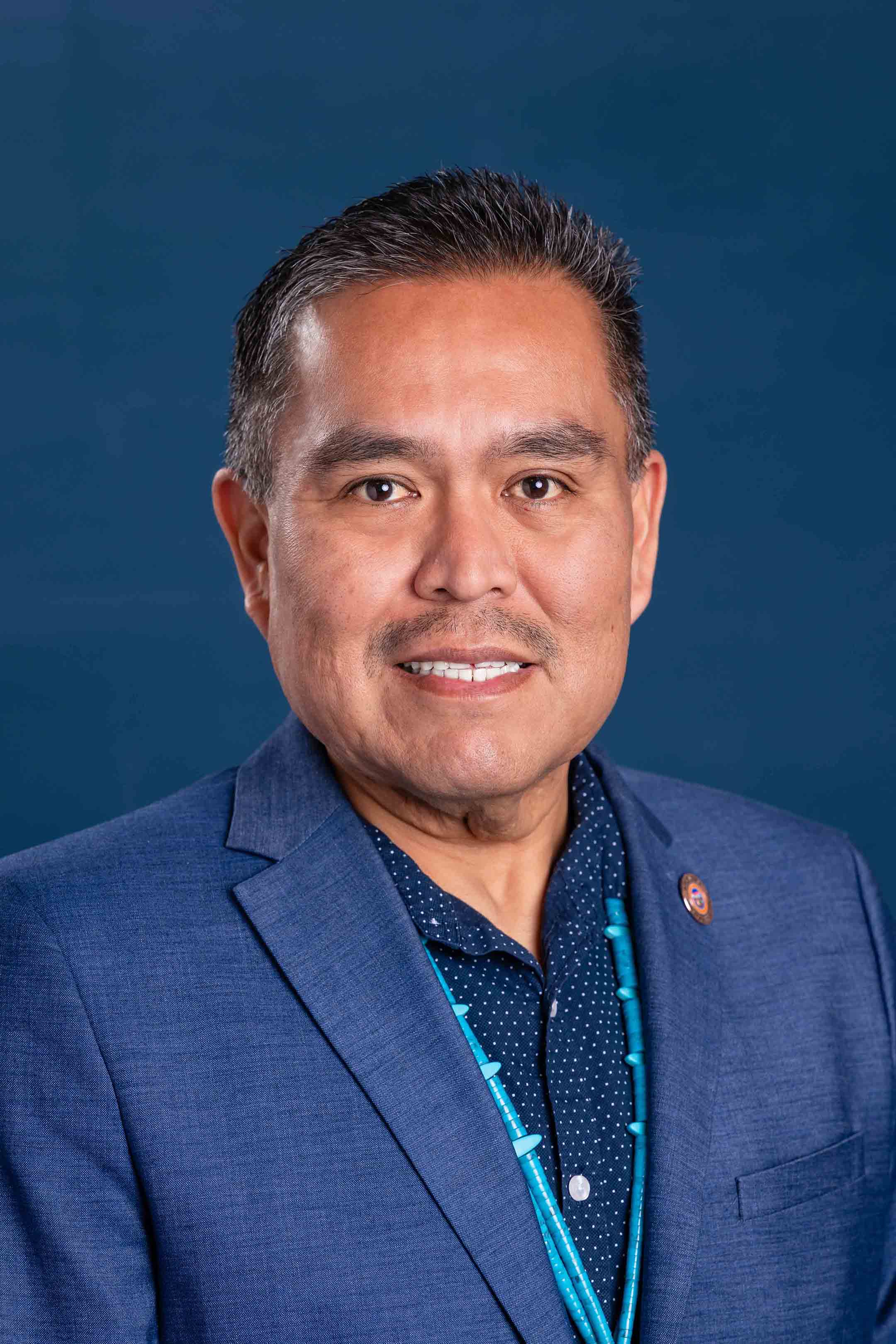
Photo of Myron Tsosie
D Arizona House · District 6

Rep. Myron Tsosie

Compare
Total votes
5,339
all sessions
Attendance
92%
440 missed
Lower than 83% of chamber peers
With party
93%
of cast votes
Lower than 78% of chamber peers
Bipartisan score
5%
crosses aisle rarely
Higher than 75% of chamber peers
Sponsored
671
bills & resolutions
Near the chamber average
Committees
2
assignments
671 bills and resolutions

Sponsored bills

Total
671
Primary
95
Co-sponsor
576
This page
671
matching current filters
Primary HB 2886
Introduced · Arizona House · Lead sponsor
businesses; program; procurement; rules

Maddy summaryHB 2886 establishes a technical assistance program for native business owners in Arizona, directly affecting tribal business owners seeking state contracts. The bill requires the state authority to create rules prioritizing cooperatives, artisans, and rural businesses, and expanding state procurement preferences for native-owned businesses. Key provisions focus on setting up administrative guidelines to improve access to state contracts for these businesses. The bill is currently in early legislative stages (House first/second reading) with no voting record yet.

Introduced Jan 26, 2026 0 co-sponsors
Co-sponsor HB 2393
Introduced · Arizona House · Co-sponsor
alternative products; furnishing underage persons

Maddy summaryHB 2393 prohibits selling or giving tobacco products, alternative nicotine products (like e-cigarettes), vapor products, or related paraphernalia (e.g., hookahs) to anyone under 21 in Arizona. Minors who buy, possess, or falsely claim age to obtain these items face petty offenses with fines starting at $100 or 30 hours of community service. Businesses violating the law face escalating penalties: first violations incur $500-$750 fines plus mandatory education, while repeat offenses can lead to misdemeanor charges, $10,000 fines, or even felony convictions with sales bans. The law exempts religious use of shisha and gifts not intended for minor use.

Introduced Jan 26, 2026 1 co-sponsor
Co-sponsor HCR 2034
Introduced · Arizona House · Co-sponsor
schools; English language learners; requirements

Maddy summaryHCR 2034 is a proposed resolution (requiring voter approval) that would replace Arizona's current rules for English language learners (ELLs) in public schools. It mandates schools to identify students' primary languages, assess their English proficiency, and enroll non-proficient students in structured English immersion programs requiring 120 minutes daily for K-5 and 100 minutes daily for grades 6-12. The bill also creates a budget framework for schools to cover additional costs of these programs using state funds, while requiring the state board to approve research-based instructional models. This directly affects all Arizona public schools and English language learners.

Introduced Jan 26, 2026 1 co-sponsor
Co-sponsor HB 2511
Introduced · Arizona House · Co-sponsor
early ballot collection; limitations; repeal

Maddy summaryHB 2511 modifies Arizona's election laws to restrict ballot handling and strengthen signature requirements for early voting. It amends Section 16-513 to clarify that only voters, family members, household members, or caregivers may handle ballots, and Section 16-547 requires early ballots to include a signed mail affidavit with specific return instructions. Starting in 2026, voters must return ballots with their signature to a county recorder’s office, polling place, or by presenting ID at a polling place by 7:00 p.m. on election day. The bill also amends Section 16-1005 to increase penalties for improper ballot collection, making it a class 5 felony to collect ballots unlawfully or fail to turn them over to election officials. These changes directly affect voters, election officials, and anyone involved in ballot handling.

Introduced Jan 26, 2026 1 co-sponsor
Co-sponsor HB 2635
Introduced · Arizona House · Co-sponsor
full-day kindergarten students; ADM.

Maddy summaryHB 2635 sets standards for Arizona online schools and course providers, focusing on curriculum quality, student safety, and teacher qualifications - not full-day kindergarten as the title suggests. It requires online schools to meet specific criteria (like filtered internet access, virtual learning tools, and partnerships with educational institutions) and mandates probationary status for new programs until academic improvements are proven. The bill also establishes rules for calculating average daily membership (ADM) and funding: full-time online students receive 95% of standard funding, while part-time students receive 85%, with strict limits on how attendance hours can be counted across traditional and online programs. These provisions directly affect Arizona public schools, charter schools, and online education providers participating in the state’s virtual learning programs.

Introduced Jan 22, 2026 1 co-sponsor
Co-sponsor HB 2637
Introduced · Arizona House · Co-sponsor
school districts; aggregate expenditure limitation.

Maddy summaryHB 2637 updates Arizona's method for calculating annual spending limits for cities, counties, and other local governments (not school districts, as the title suggests). It requires the state commission to determine each jurisdiction's expenditure limit using a formula based on population changes since 1979 and inflation adjustments (GDP price deflator), with annual reports to local governing boards. The bill includes specific rules for adjusting limits when jurisdictions annex new areas, split, or form new cities or counties. This directly affects all Arizona political subdivisions subject to the state's constitutional spending cap, ensuring their annual budgets reflect population growth and inflation. The changes apply to how these limits are calculated and reported each year.

Introduced Jan 22, 2026 1 co-sponsor
Primary HB 2883
Introduced · Arizona House · Lead sponsor
small school adjustment; student count

Maddy summaryHB 2883 adjusts Arizona's budget rules for small school districts with very low student enrollment (under 125 students in K-8 or under 160 in grades 9-12). It allows these districts to spend more than standard budget limits without voter approval if they meet specific enrollment thresholds, with a $50,000 cap for districts that previously qualified. For districts that exceed these thresholds after growing, the bill requires a property tax levy and a 5-year limit on budget overrides, calculated using a formula based on their student count. The policy directly affects tiny rural or specialized school districts by altering how they fund operations beyond standard budget constraints.

Introduced Jan 22, 2026 0 co-sponsors
Co-sponsor HB 2882
Introduced · Arizona House · Co-sponsor
law enforcement; identification; masks; prohibitions

Maddy summaryHB 2882 requires Arizona law enforcement agencies to adopt written policies mandating that peace officers visibly display their name or badge number during routine duties, with exceptions for undercover operations, tactical gear, or imminent danger. It also prohibits officers from wearing facial coverings that conceal their identity during enforcement actions, except during undercover work or tactical operations requiring protective gear. Violating these identification rules can lead to civil liability for officers, including $10,000 or actual damages for injuries caused. The bill amends statutes (Sections 13-2411 and 13-2415) to clarify these requirements and increases penalties for impersonating officers, making it a class 6 felony (or class 4 for violent crimes). This directly affects all peace officers in Arizona state and local law enforcement agencies.

Introduced Jan 22, 2026 1 co-sponsor
Primary HB 2896
Introduced · Arizona House · Lead sponsor
ADE; tribal education liaison office

Maddy summaryHB 2896 creates a tribal education liaison office within Arizona's Department of Education. The office will disaggregate student data for Native American students (as defined by federal tribal recognition) and consult with Arizona's federally recognized tribes to develop data policies. It also aims to establish memorandums of understanding with tribes for culturally appropriate data use. This bill directly affects Native American students and tribal communities by improving data transparency and collaboration in education. The policy change requires the state education department to implement these data-sharing practices under federal privacy laws.

Introduced Jan 22, 2026 0 co-sponsors
Primary HB 2885
Introduced · Arizona House · Lead sponsor
cultural impact assessment; state projects

Maddy summaryHB 2885 requires Arizona state agencies to conduct a cultural impact assessment for all state projects before they begin. This assessment must identify and manage effects on community cultural values, resources, and heritage. Contractors who ignore the assessment findings and proceed with a project face a $1,500 civil penalty. The bill directly affects state agencies planning projects and contractors working on those projects.

Introduced Jan 22, 2026 0 co-sponsors
Showing 61 to 70 of 671 bills
Previous 1 … 6 7 8 … 68 Next