

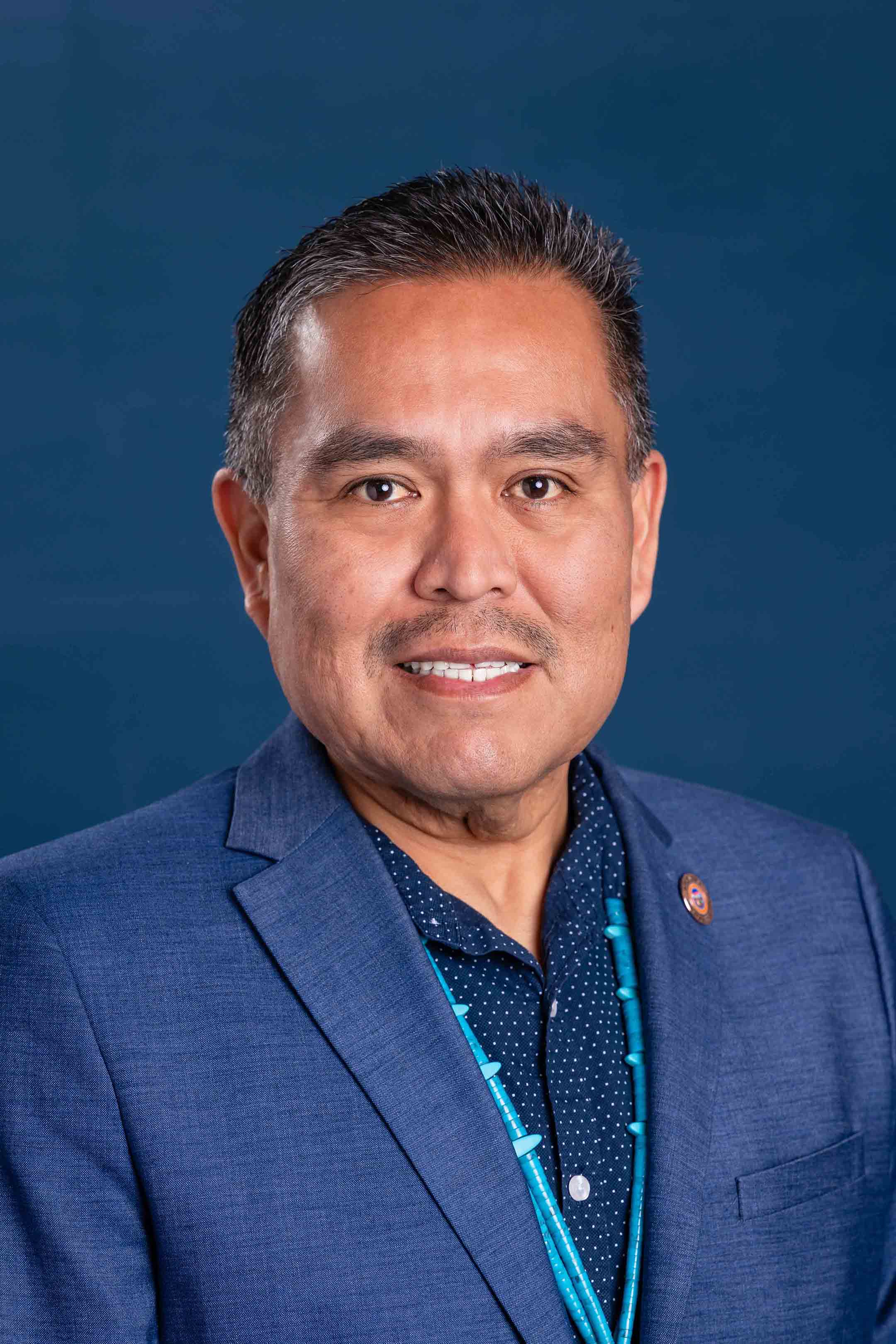
Photo of Myron Tsosie
D Arizona House · District 6

Rep. Myron Tsosie

Compare
Total votes
5,339
all sessions
Attendance
92%
440 missed
Lower than 83% of chamber peers
With party
93%
of cast votes
Lower than 78% of chamber peers
Bipartisan score
5%
crosses aisle rarely
Higher than 75% of chamber peers
Sponsored
671
bills & resolutions
Near the chamber average
Committees
2
assignments
671 bills and resolutions

Sponsored bills

Total
671
Primary
95
Co-sponsor
576
This page
671
matching current filters
Co-sponsor HCR 2041
Passed · Arizona House · Co-sponsor
congressional term limits; convention

Maddy summaryArizona's HCR 2041 is a state resolution requesting Congress to call a constitutional convention under Article V to propose term limits for U.S. House and Senate members. It asks other states with similar applications to combine their efforts to meet the two-thirds state requirement for such a convention. If Congress fails to act, Arizona and other participating states would proceed with their own convention to draft term limits. This resolution does not create new law but seeks to restart a state-led process for constitutional change, targeting federal congressional representation.

Passed May 28, 2025 1 co-sponsor
Co-sponsor HB 2679
Signed into law · Arizona House · Co-sponsor
power; public utilities; UCC; securities

Maddy summaryHB 2679 establishes a new framework for Arizona public power entities (like municipal utilities) to finance infrastructure upgrades by issuing "Transition Bonds." These bonds are secured by future customer payments called "Financing Charges," which become nonbypassable fees added to all customers' utility bills until the costs are fully recovered. The bill creates specific definitions for terms like "Financing Charges," "Qualified Special Purpose Entity," and "Transition Bonds," ensuring these payments cannot be avoided regardless of the customer's service provider or asset ownership. This mechanism allows public power entities to shift financing costs to customers over time rather than relying solely on traditional rate increases.

Signed into law May 13, 2025 1 co-sponsor
Co-sponsor HB 2281
Signed into law · Arizona House · Co-sponsor
missing indigenous person; alert system

Maddy summaryHB 2281 establishes Arizona's "Turquoise Alert" system to quickly respond to missing persons cases. It requires the state department to issue alerts when law enforcement confirms a missing person under 65 is in danger due to suspicious circumstances, after exhausting local resources. The alert system shares critical recovery information with the public and other notification entities. This directly affects missing persons under 65 with unexplained or dangerous situations, including members of federally recognized tribes as defined by the bill.

Signed into law May 13, 2025 1 co-sponsor
Co-sponsor HB 2380
Signed into law · Arizona House · Co-sponsor
rare disease advisory council

Maddy summaryHB 2380 establishes the Arizona Rare Disease Advisory Council within the state department to address the needs of Arizonans with rare diseases. The council, composed of 16 diverse members including patients, caregivers, healthcare providers, researchers, insurers, and industry representatives, will conduct public hearings, research barriers like high treatment costs and insurance coverage gaps, and develop policy recommendations. It must submit annual reports to the governor and legislature by December 1st, detailing its work and suggesting improvements to healthcare access, diagnostics, and coverage for rare disease patients. This council directly serves Arizona residents living with rare diseases, their caregivers, and healthcare providers seeking better treatment options and system support.

Signed into law May 12, 2025 1 co-sponsor
Co-sponsor HB 2880
Signed into law · Arizona House · Co-sponsor
unauthorized encampments; higher education institutions

Maddy summaryHB 2880 prohibits unauthorized encampments on Arizona university and community college campuses, requiring immediate dismantling if established without prior authorization. It mandates that campus officials direct occupants to leave, warn of criminal trespass charges (pursuant to Arizona law), and pursue legal action for removal if refused. Students who refuse to vacate face disciplinary action under their institution's code of conduct, while individuals establishing encampments are liable for all property damage costs and may face criminal prosecution for property damage. The law directly affects students, campus administrators, and anyone attempting to establish protest or temporary housing on campus grounds without approval.

Signed into law May 7, 2025 1 co-sponsor
Primary HB 2852
Signed into law · Arizona House · Lead sponsor
identification driver licenses; Native American

Maddy summaryHB 2852 allows enrolled members of federally recognized Indian tribes in Arizona to have a neutral distinguishing mark on their nonoperating identification license (not a driver's license) that identifies them as Native American. This mark cannot specify a particular tribe or include other personal details from their tribal documents. The bill ensures this identifier is consistent with existing provisions for veterans and other categories while maintaining clear labeling that the license is for identification only, not driving. It affects tribal members seeking state-issued nonoperating IDs, with no change to tribal sovereignty or voting rights.

Signed into law May 2, 2025 0 co-sponsors
Co-sponsor HB 2706
Passed · Arizona House · Co-sponsor
mental health; intensive treatment orders

Maddy summaryArizona's HB 2706 creates a legal framework for court-ordered intensive outpatient treatment for individuals with chronic mental health conditions who have repeatedly resisted standard treatment. The bill allows courts to issue such orders only after finding clear evidence of chronic treatment resistance, requiring a court-approved treatment plan that includes a dedicated case manager, stable housing, transportation, and specific clinical services. Patients cannot be forced to consent to this treatment if the court determines their mental disorder impairs their decision-making capacity. The plan is enforceable by the court, with regular compliance hearings to adjust the plan based on patient progress and safety needs.

Passed Apr 1, 2025 1 co-sponsor
Co-sponsor HB 2259
In committee · Arizona House · Co-sponsor
railroad grade crossing; on-track equipment..

Maddy summaryHB 2259 amends Arizona's railroad crossing safety laws to clarify when drivers must stop and how they must proceed. It requires all drivers approaching a crossing to stop 15-50 feet from the tracks if signals are active, gates are down, trains are visible, or conditions are hazardous. Specific rules apply to commercial vehicles (must ensure space on the other side), school buses (must follow district policy), and heavy equipment (must notify railroads and confirm safety before crossing). The bill also prohibits U-turns on tracks, proceeding around gates, and pedestrians lingering in active crossing zones. These changes directly affect all drivers, commercial operators, and heavy equipment users at railroad grade crossings statewide.

In committee Mar 5, 2025 1 co-sponsor
Co-sponsor HB 2381
Introduced · Arizona House · Co-sponsor
wage claims; employment practices

Maddy summaryHB 2381 allows Arizona employees to file written claims with the Department of Economic Security for unpaid wages up to $15,000 within one year of when the wages were due. It gives the department authority to collect these wages through legal remedies like garnishment and deposit collected funds into a special state fund for direct payment to affected workers. The bill directly affects employees owed small amounts of unpaid wages by their employers, streamlining the process for recovery without requiring a court lawsuit. Key changes include setting a clear $15,000 cap on claims, shortening the filing deadline to one year, and establishing the department as the primary collector and distributor of unpaid wages.

Introduced Mar 4, 2025 1 co-sponsor
Co-sponsor HB 2263
In committee · Arizona House · Co-sponsor
fire protection systems, inspections

Maddy summaryHB 2263 standardizes inspections of smoke and fire dampers in building fire protection systems, requiring local inspections to follow nationally recognized standards. It authorizes the state fire marshal to provide certified inspectors and resources to local authorities upon request. The bill also clarifies county code adoption rules, prohibiting counties from banning fire sprinklers in single-family homes or small residential buildings (up to two units) and preventing fines for not installing them. Additionally, it prevents counties from requiring fire sprinklers as part of fire apparatus access road requirements for single-family properties.

In committee Mar 3, 2025 1 co-sponsor
Showing 111 to 120 of 671 bills
Previous 1 … 11 12 13 … 68 Next