

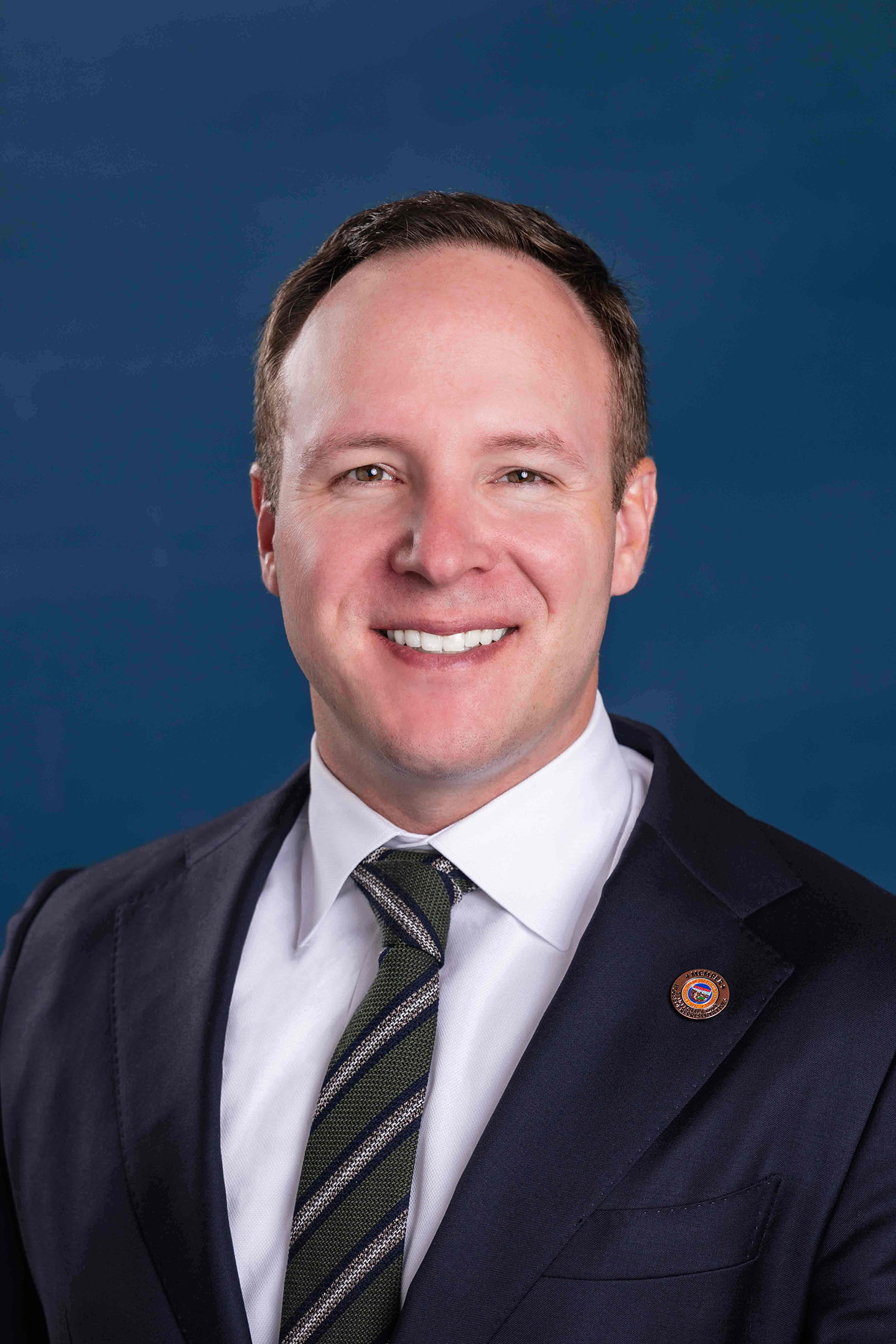
Photo of Matt Gress
R Arizona House · District 4 On the 2026 ballot

Rep. Matt Gress

Compare
Total votes
2,940
all sessions
Attendance
94%
166 missed
Near the chamber average
With party
94%
of cast votes
Near the chamber average
Bipartisan score
5%
crosses aisle rarely
Near the chamber average
Sponsored
356
bills & resolutions
Near the chamber average
Committees
6
assignments
356 bills and resolutions

Sponsored bills

Total
356
Primary
175
Co-sponsor
181
This page
356
matching current filters
Co-sponsor HB 2107
Introduced · Arizona House · Co-sponsor
SNAP benefits; purchases; waiver

Maddy summaryThis Arizona bill seeks a federal waiver to prohibit SNAP benefits from being used for fast food purchases while allowing their use for vitamins. If approved, SNAP recipients in Arizona would no longer be able to buy fast food with their benefits but could purchase vitamins using the program. The state would need to annually request this waiver until approved. The bill is currently in early legislative review stages (prefiled, first reading) and does not change existing SNAP rules until federal approval is granted.

Introduced Feb 12, 2026 1 co-sponsor
Co-sponsor HB 4073
Introduced · Arizona House · Co-sponsor
gestational surrogacy; agreements

Maddy summaryHB 4073 sets new requirements for gestational surrogacy agreements in Arizona. It mandates that surrogates and intended parents complete medical and mental health evaluations by specific licensed professionals, obtain independent legal counsel, and sign agreements transferring parental rights immediately at birth. The agreements must disclose financial responsibilities, confirm no parental claims by surrogates or their spouses, and include specific acknowledgments of parental duties. These provisions apply to all surrogacy arrangements where at least one party is an Arizona resident or the birth occurs in Arizona.

Introduced Feb 11, 2026 1 co-sponsor
Primary HB 2382
Introduced · Arizona House · Lead sponsor
school district superintendents; secondary employment

Maddy summaryHB 2382 requires Arizona school district governing boards to approve any secondary employment by a superintendent in a public meeting before it can begin. This law directly affects school superintendents, who must now seek and obtain board approval for outside jobs. If a superintendent engages in secondary employment without prior approval, they face a civil penalty of up to $1,000 per month, which they must pay personally. The bill also authorizes county school superintendents to report violations to the attorney general for investigation and enforcement.

Introduced Feb 10, 2026 0 co-sponsors
Primary HB 2998
Introduced · Arizona House · Lead sponsor
special plate; youth education

Maddy summaryHB 2998 creates a new "youth education charity special plate" option for Arizona vehicle owners. To implement this, a person must pay $32,000 to the department for plate design and approval, with annual plate fees set at $25 (including a $17 donation to a youth education fund). The department will deposit the $17 annual donation into a dedicated youth education fund, while the $8 administration fee goes to the state highway fund. This bill directly affects vehicle owners who choose to pay for this special plate, with the funds supporting youth education initiatives.

Introduced Feb 5, 2026 0 co-sponsors
Co-sponsor SB 1601
Introduced · Arizona Senate · Co-sponsor
zoning; housing; historic neighborhoods

Maddy summaryThis bill requires Arizona municipalities with over 75,000 residents to permit duplexes, triplexes, fourplexes, and townhomes in two specific areas by January 1, 2026: (1) all single-family zones within one mile of downtown, and (2) at least 20% of new developments over 10 acres. It prohibits local governments from discouraging these housing types through excessive rules, such as requiring more parking than single-family homes or applying commercial building codes. The bill excludes historic districts (per state law), areas without water/sewer services, airport zones, and unincorporated areas. If a municipality fails to adopt these rules by 2026, middle housing becomes allowed everywhere zoned for single-family homes.

Introduced Feb 4, 2026 1 co-sponsor
Co-sponsor HB 2677
Introduced · Arizona House · Co-sponsor
places of worship; unlawful imprisonment

Maddy summaryHB 2677 amends Arizona law to specifically prohibit preventing someone from entering or exiting a place of worship through physical blocking, detention, or force/threats. This directly affects individuals or entities who obstruct access to religious sites, such as security personnel or others blocking entrances. The bill classifies this act as a class 6 felony (unless the victim is safely released before arrest, making it a misdemeanor), adding it as a specific scenario under unlawful imprisonment. It defines "place of worship" per existing law and clarifies that this provision applies to the specific act of hindering religious access.

Introduced Jan 28, 2026 1 co-sponsor
Co-sponsor HB 2920
Introduced · Arizona House · Co-sponsor
software applications; minors; requirements

Maddy summaryHB 2920 requires app stores operating in Arizona to verify the age of users creating accounts and link accounts of minors (under 18, excluding married/emancipated individuals) to verified parent accounts. App stores must obtain parental permission before minors can download apps, make purchases, or access in-app purchases, and re-verify consent after significant app changes like new ads or in-app purchases. The bill mandates that app stores provide clear disclosures about age ratings, data collection, and privacy practices to parents before granting permission. It directly affects app store providers, minors under 18, and their parents within Arizona, with exemptions for preinstalled apps and core device functions.

Introduced Jan 28, 2026 1 co-sponsor
Primary HCR 2023
Introduced · Arizona House · Lead sponsor
expenditure limitation; school districts; 2027-2028

Maddy summaryHCR 2023 is a concurrent resolution proposing to temporarily allow Arizona school districts to exceed the constitutional spending limit for the 2027-2028 school year. It directly affects all public school districts in Arizona by authorizing increased spending beyond the existing cap. The resolution requires approval by at least two-thirds of each legislative house through a roll call vote to become effective. This is a procedural measure, not a permanent change to spending rules, and it would only apply to the single fiscal year 2027-2028.

Introduced Jan 26, 2026 0 co-sponsors
Co-sponsor HB 2553
Introduced · Arizona House · Co-sponsor
federal tax credit; authorization; scholarships..

Maddy summaryHB 2553 authorizes Arizona to participate in a federal tax credit program (under Internal Revenue Code section 25F) that allows individuals to claim a tax credit for contributions to certified scholarship organizations. It requires the Arizona Department of Education to certify nonprofit scholarship organizations meeting federal standards and maintain a public list of certified organizations by January 1 each year. Starting December 31, 2026, these certified organizations may provide scholarships for elementary or secondary education expenses to eligible students, in alignment with federal law. The bill directly affects Arizona residents who contribute to scholarship programs and the nonprofit organizations administering them.

Introduced Jan 26, 2026 1 co-sponsor
Primary HB 2479
Introduced · Arizona House · Lead sponsor
K-5 literacy endorsement; requirements; enforcement

Maddy summaryHB 2479 requires Arizona public school districts and charter schools to ensure at least one K-3 teacher per school has dyslexia training and to develop annual reading improvement plans. It mandates that teachers without a literacy endorsement must obtain one, with funding from the K-3 reading support level weight tied to approved plans focused on improving early reading proficiency. The bill directs schools to use allocated funds exclusively for evidence-based reading instruction, teacher training, and curriculum support for K-3 students. The Department of Education must monitor compliance, review plans, and report annually on reading outcomes and program effectiveness.

Introduced Jan 22, 2026 0 co-sponsors
Showing 81 to 90 of 356 bills
Previous 1 … 8 9 10 … 36 Next