

Maddy summaryHB 2375 requires Arizona cities with over 75,000 residents to allow duplexes, triplexes, fourplexes, and townhomes by January 1, 2026, on single-family lots within one mile of downtown and on at least 20% of new developments over ten acres. It prohibits cities from imposing extra parking requirements, height limits, or special permits that would make these housing types harder to build. The law does not apply to historic districts, airport areas, or rural zones without residential services. Cities failing to comply by 2026 must allow middle housing on all single-family lots without restrictions.
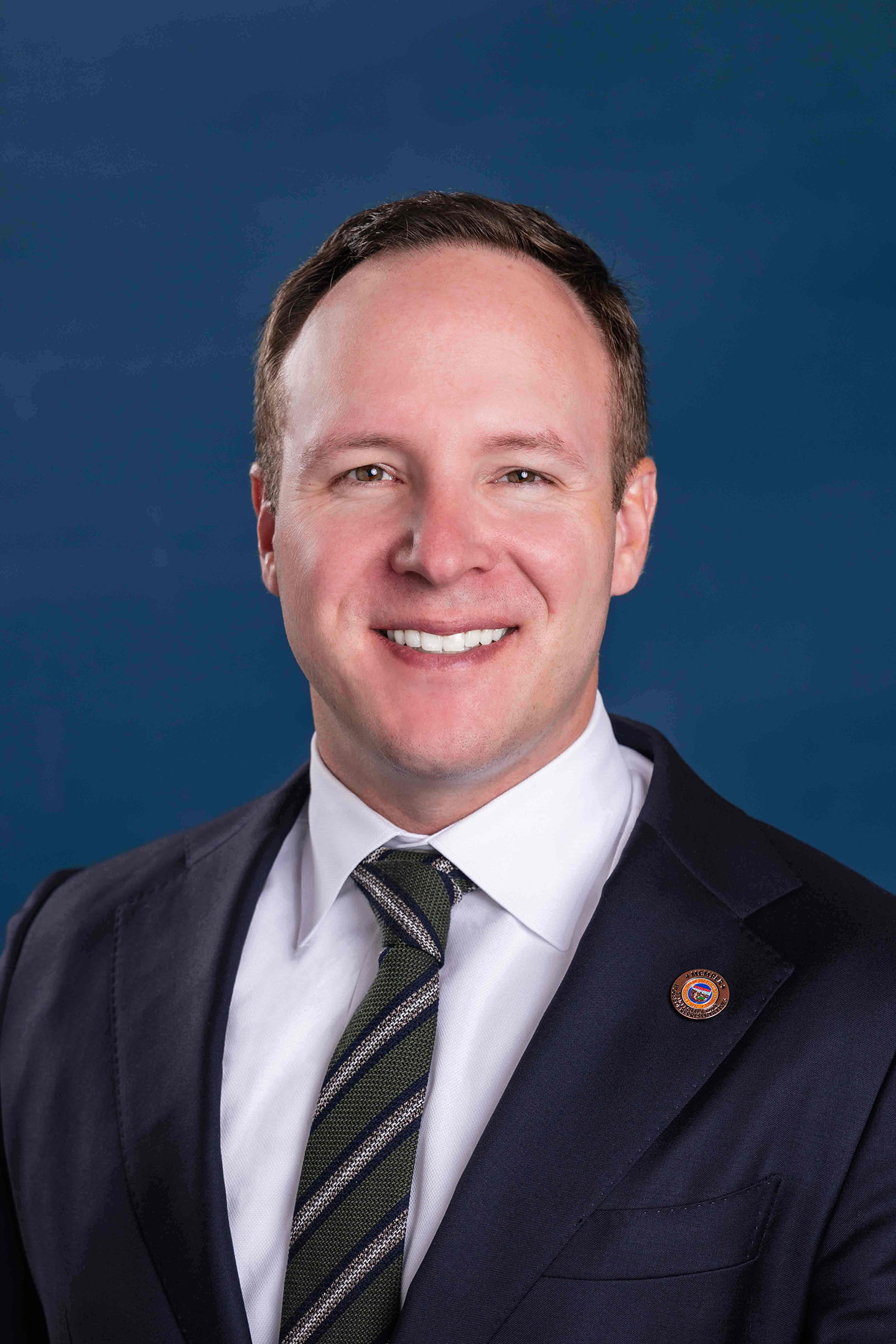
Rep. Matt Gress
Sponsored bills
Maddy summaryHB 2127 creates a new bronze star medal license plate program for Arizona veterans. Eligible veterans who received a Bronze Star medal, or their immediate family members, can obtain these plates by providing proof to the Arizona Department of Transportation. The bill requires a $25 one-time fee (plus standard registration) for the initial plate, with a $5 annual renewal fee, and directs the $25 fee to Arizona's veterans' donations fund. This is a procedural change establishing a new specialty plate type with specific eligibility and funding mechanisms.
Maddy summarySB 1173 requires operators of specific behavioral health facilities in Arizona to obtain a valid fingerprint clearance card by January 1, 2027, as a condition of licensure. This applies to outpatient behavioral health centers, inpatient facilities, residential facilities, counseling centers, substance abuse transitional programs, and specialized behavioral health transitional facilities. The bill mandates that all applicants, licensees, and facility owners must be U.S. citizens or lawfully present in the U.S. to qualify for the required clearance card. The requirement references existing fingerprinting procedures under Arizona Revised Statutes § 41-1758.07. The bill does not alter existing definitions or create new exemptions beyond the specified facility types.
Maddy summaryHB 2207 appropriates $300,000 from Arizona's state general fund annually for the state Department of Corrections' braille transcription program, which provides braille materials to inmates. The bill requires the department to submit annual reports by October 15 each year, detailing the number of Arizona inmates and out-of-state inmates served. This increases the program's funding from $200,000 to $300,000 per year, with the legislature intending this as ongoing annual support. The program directly serves incarcerated individuals who require braille materials for education or communication.
Maddy summaryHB 2384 modifies Arizona school district leasing rules by clarifying when voter approval is required for property leases. It states that school districts may lease property for up to 10 years without voter approval, but leases longer than 10 years must be approved by voters. The bill also lists specific exceptions where voter approval is not needed, such as for low-value properties ($50,000 or less), renewable energy contracts, or transactions using state school facilities funds. This directly affects school districts when leasing buildings, land, or other property for school operations. The changes aim to streamline leasing processes while maintaining accountability for longer-term agreements.
Maddy summarySB 1120 requires hospitals, outpatient surgical centers, and other healthcare facilities performing real-time X-ray procedures (such as cardiac catheterization) to equip at least half of their relevant procedure rooms with radiation protection systems by July 1, 2027. These systems must provide shielding equivalent to a 0.25mm lead-equivalent apron and include real-time dosimetry to measure radiation exposure for staff during procedures. The bill directly affects healthcare institutions conducting interventional medical procedures involving ionizing radiation. It mandates specific technical standards for radiation protection, focusing on staff safety during common medical imaging procedures.
Maddy summarySB 1115 prohibits Arizona Health Care Cost Containment System (AHCCCS) employees from working remotely as their primary arrangement. The bill directly affects all AHCCCS employees by requiring them to report to the agency's physical worksite regularly, rather than working from home or other remote locations. It defines "work remotely" as having a primary worksite outside the agency's location and mandates that employees not be expected to work remotely on a regular basis. This policy change applies specifically to AHCCCS, Arizona's Medicaid program, and amends the state statutes governing the agency.
Maddy summaryHB 4034 amends Arizona law governing career technical education districts (CTEDs) by changing how their governing boards are elected. The bill requires CTED boards to have five members elected from single-member districts (unless an alternative system is approved), with districts drawn to equalize population and follow existing election precinct lines. It sets eligibility rules (e.g., one-year residency, voter registration), prohibits conflicts of interest (like board members working for the district), and specifies that CTEDs must follow certain financial and operational rules from other statutes. This directly affects school districts forming CTEDs and the voters in those districts who elect board members.
Maddy summaryHB 4027 renames Arizona's Loop 202 highway as the "Charlie Kirk Highway" for official records and signage. The bill requires all state documents, records, and transportation department signage to include the new name after enactment, without replacing any existing designations. This is a ceremonial procedural bill with no policy or funding changes.
Maddy summaryHB 2533 establishes the Office of Homeless Services and the Arizona Homeless Services Board to coordinate state homeless programs. The office must manage a shared data system tracking homeless individuals and services, develop annual budgets, and report to state leaders on homelessness strategies. The office and board will terminate on July 1, 2030, with related laws repealing January 1, 2031. This directly affects homeless individuals in Arizona, service providers (who must share data), and state agencies managing homelessness funding.