

Maddy summaryHB 2766 requires Arizona cities and towns to apply municipal sales taxes uniformly to all food items (without differential rates), while exempting most food for home consumption, food packaging, and sales paid with SNAP benefits. It specifically excludes candy, confectionaries, soft drinks, and soda from the general food exemption, ensuring these remain taxable. The bill also exempts low-cost food sales to vulnerable groups (elderly, homeless, disabled) when purchased using SNAP benefits through approved programs. This amendment, effective January 1, 2026, modifies existing tax code to standardize food taxation and expand specific exemptions.
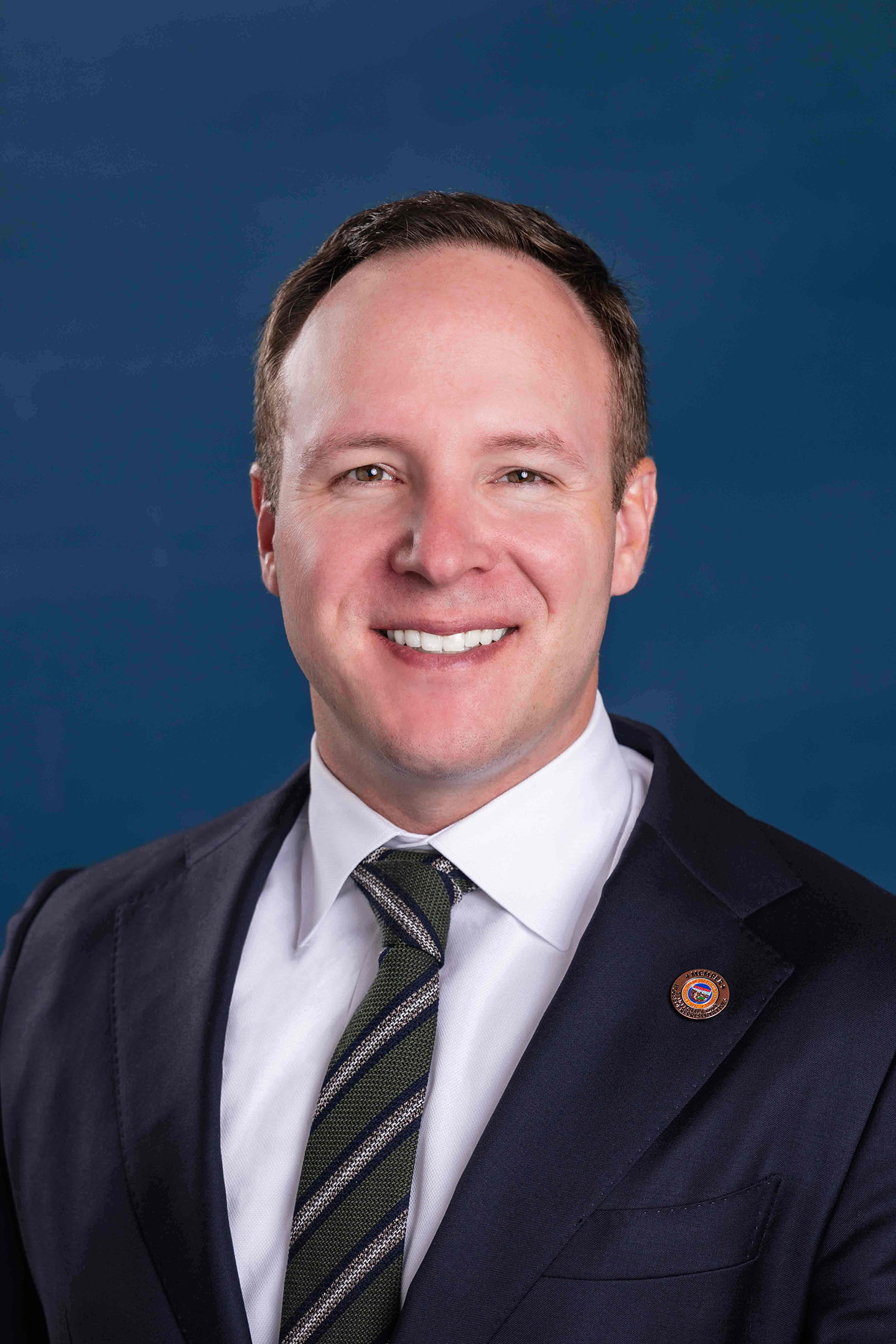
Rep. Matt Gress
Sponsored bills
Maddy summaryHB 2436 amends Arizona's child welfare laws to improve investigations of abuse and neglect reports. It requires DCS investigators to use evidence-informed safety assessments, mandates audio/video recording of child interviews (with limited exceptions), and bans covert voice stress analysis during investigations. The bill also appropriates $3.5 million for recording equipment in 2025-26 and $1 million annually starting in 2026-27. These changes directly affect DCS investigators, children involved in abuse/neglect cases, and families receiving child safety services.
Maddy summaryHB 2707 prohibits health professionals and health care institutions in Arizona from denying care or providing substandard care based on a patient's vaccination status. The bill makes it unprofessional conduct for health professionals to discriminate in this way and bans health care institutions from adopting policies allowing such discrimination. It directly affects hospitals, clinics, and medical providers by requiring them to treat all patients equally regardless of vaccination status. The law changes existing professional standards to explicitly forbid this form of discrimination in healthcare settings.
Maddy summaryHB 2171 creates a $5 million scholarship fund for spouses and dependents (under age 27) of Arizona law enforcement officers. The fund covers tuition and mandatory fees at eligible Arizona public colleges, career technical schools, or participating private institutions, after subtracting other financial aid. Scholarships are awarded on a first-come, first-served basis with funds limited to the annual appropriation, and must be used within four academic years. The Arizona Board of Regents administers the program and reports annually on recipients and participating law enforcement agencies, with the fund set to expire in 2035.
Maddy summaryHB 2383 allocates $8 million from Arizona’s state general fund for fiscal year 2025-2026 to support applied research centers specializing in specific technology fields. It directs $3 million for medical technology centers, $2 million for clean energy/water sustainability tech, $2 million for semiconductors, and $1 million for other beneficial technologies, with centers required to match funds from non-state sources. Centers must collaborate with universities and businesses, report annual expenditures to the legislature, and use funds for workforce training in relevant fields. The funding is exempt from standard budget lapsing rules but requires unspent funds to revert to the state by June 2027.
Maddy summaryThis Arizona House resolution (HM 2001) requests Governor Katie Hobbs to revise and resubmit her 2025 Executive Budget within 10 days. It argues the current proposal fails to balance the state's budget for fiscal years 2027-2028, specifically ignoring $846 million in expected Medicaid cost increases that would create negative fund balances of $192 million (2027) and $390 million (2028). The resolution directs the Governor to submit a financially solvent budget that meets legal requirements for three consecutive balanced fiscal years. This procedural request directly affects the Governor's budget submission process, not the public or specific programs.
Maddy summaryHB 2224 prohibits intentionally feeding wildlife in Arizona counties with over 280,000 residents, except for hunters, wildlife management staff, farmers, or feeding squirrels/birds. In cities with over 100,000 people, violations carry a $1,000 fine instead of a minor penalty. The law targets human feeding that disrupts wildlife behavior or creates safety risks. It directly affects residents, businesses, and visitors in large urban counties and cities.
Maddy summaryHB 2379 allocates $5 million from Arizona's state general fund for home and community-based services and an additional $5 million for senior housing assistance, to be distributed by the Department of Economic Security to area agencies on aging during fiscal year 2025-2026. These funds directly support programs helping seniors age in place and access housing resources through local agencies. The bill establishes specific funding amounts for two distinct senior services categories without changing eligibility rules or creating new requirements. It is currently in early legislative stages, having passed House first and second readings on January 23 and 27, 2025.
Maddy summaryHB 2520 amends Arizona's duress defense law to limit when a defendant can claim they committed a crime due to threats of immediate physical force. Specifically, the defense cannot be used if the defendant intentionally created the situation where they faced duress, or for offenses involving homicide, serious physical injury, or certain violent crimes like aggravated assault or sexual offenses. This change directly affects criminal defendants in cases where they attempt to justify their actions using duress as a legal defense. The bill clarifies that the duress defense is unavailable for the most serious violent offenses, making it harder for defendants to avoid responsibility for those acts.
Maddy summaryHB 2226 requires Arizona's AHCCCS (Medicaid) program to ensure applied behavior analysis (ABA) services for children and families are provided in flexible locations without favoring any single setting, such as clinics over home visits. It prohibits the state from paying different rates for ABA services based on delivery location (e.g., clinic vs. home), though mileage reimbursement for rural travel remains allowed. This directly affects AHCCCS-covered ABA providers and families seeking services for children with developmental needs. The bill aims to remove financial barriers that previously limited service options for families.