

Maddy summaryArizona's HCR 2041 is a state resolution requesting Congress to call a constitutional convention under Article V to propose term limits for U.S. House and Senate members. It asks other states with similar applications to combine their efforts to meet the two-thirds state requirement for such a convention. If Congress fails to act, Arizona and other participating states would proceed with their own convention to draft term limits. This resolution does not create new law but seeks to restart a state-led process for constitutional change, targeting federal congressional representation.
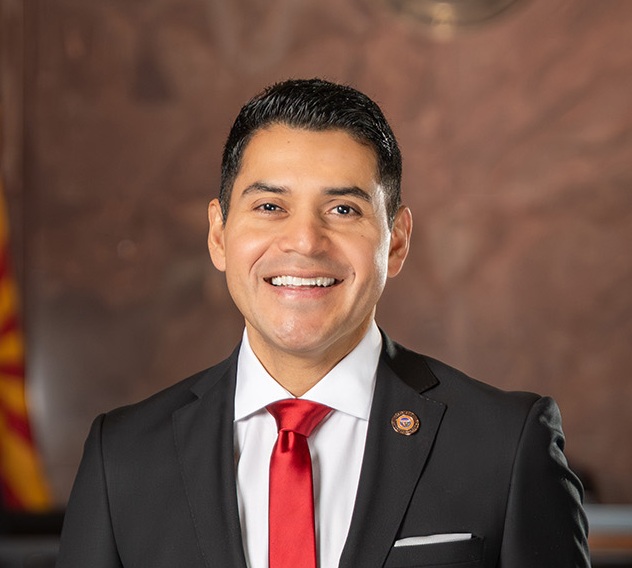
Rep. Steve Montenegro
Sponsored bills
Maddy summaryHB 2679 establishes a new framework for Arizona public power entities (like municipal utilities) to finance infrastructure upgrades by issuing "Transition Bonds." These bonds are secured by future customer payments called "Financing Charges," which become nonbypassable fees added to all customers' utility bills until the costs are fully recovered. The bill creates specific definitions for terms like "Financing Charges," "Qualified Special Purpose Entity," and "Transition Bonds," ensuring these payments cannot be avoided regardless of the customer's service provider or asset ownership. This mechanism allows public power entities to shift financing costs to customers over time rather than relying solely on traditional rate increases.
Maddy summaryHB 2868 prohibits Arizona cities and counties from establishing diversity, equity, and inclusion (DEI) offices, requiring DEI statements or training, or giving preference based on race, sex, color, or ethnicity in employment or programs. The bill directly affects local government entities by banning specific DEI-related policies and mandating disciplinary action for violations. Key provisions define "diversity, equity and inclusion" broadly to include concepts like systemic oppression and gender theory, while allowing limited compliance training approved by legal counsel. This bill was passed by the Arizona legislature in May 2025 but was vetoed by the governor on May 13, 2025, preventing it from becoming law.
Maddy summaryHB 2895 requires cities, counties, school districts, and state agencies in Arizona to publicly post task order contracts (for ongoing services or supplies) on their websites. It mandates that contracts must include the total dollar amount, contractor name, service description, and contract length - these items cannot be redacted. Contractors may redact personal or proprietary information beyond these four required details. The bill was passed by the legislature in May 2025 but was vetoed by the Governor on May 13, 2025, preventing it from becoming law.
Maddy summaryHB 2742 streamlines the process for requesting court-ordered mental health evaluations in Arizona. It requires standardized application forms with specific details about the person needing evaluation (including behavioral evidence, treatment history, and witness information), and mandates that screening agencies process applications within 48 hours. The bill explicitly protects individuals receiving treatment through recognized religious practices from involuntary evaluation unless a court determines they pose a danger to self or others. This affects individuals with serious mental health concerns who are unwilling or unable to seek voluntary care, as well as healthcare providers, law enforcement, and courts handling such cases.
Maddy summaryHB 2112 requires websites and social media platforms hosting over one-third sexual material harmful to minors to implement age verification, confirming users are 18+ using methods that do not transmit or retain personal data to government entities. It prohibits commercial entities from sharing or keeping user identifying information during verification and imposes penalties of up to $10,000 per day for non-compliance or $250,000 if minors access restricted content. The law directly affects commercial online platforms but exempts news organizations, search engines, and internet service providers from liability for content they host but do not create. Violators face civil lawsuits with potential fines and attorney fee recovery for affected minors or parents. It defines "harmful to minors" material as content exploiting sexual acts or prurient interests without artistic/scientific value for youth.
Maddy summaryHCR 2049 is a symbolic resolution passed by Arizona's legislature, not a binding law. It asserts Arizona's sovereignty under the Tenth Amendment by declaring the state will not use state personnel or funds to enforce federal laws or programs deemed unconstitutional by Arizona. The resolution demands the federal government cease "commandeering" state actions and prohibits Arizona from complying with federal mandates that courts have ruled unconstitutionally coercive. It serves as a formal statement sent to federal officials, emphasizing Arizona's position but having no legal effect on federal law or enforcement.
Maddy summaryHB 2121 would have required most working-age Arizona residents (under 60) receiving SNAP benefits to join a state-approved work or job training program, unless they met specific exemptions like caring for young children, being a full-time student, working 30+ hours weekly, or participating in addiction treatment. The bill aligned with federal SNAP rules (7 U.S.C. § 2015(d)) but added Arizona-specific implementation through the Department of Economic Security. Exemptions included parents of children under six, students enrolled half-time, and those already meeting federal work registration requirements. The bill passed the Arizona legislature in April 2025 but was vetoed by the governor on May 6, 2025, preventing it from becoming law.
Maddy summaryArizona's HB 2122 prohibits the state's Department of Economic Security from seeking or accepting federal waivers for SNAP (food assistance) work requirements for able-bodied adults without dependents unless specifically authorized by Arizona state law. It also blocks the department from granting exemptions to these work requirements under federal law without prior state authorization. The bill directly affects how Arizona administers its SNAP program by requiring legislative approval for any waiver or exemption related to work requirements. The bill passed the legislature in April 2025 but was vetoed by the governor on May 6, 2025, so it did not become law.
Maddy summaryHB 2651 would require all voting machines used in Arizona elections for federal, state, and county offices to be 100% manufactured and assembled in the United States by January 1, 2029. It directly affects voting equipment vendors and election officials responsible for certifying machines. The bill mandates that all parts and components of voting machines must be sourced from the U.S., with an exception for machines purchased before January 1, 2028. This rule applies to new certifications but does not affect existing machines already in use.