

Maddy summaryHB 2902 is a symbolic bill that adds a new section to Arizona law affirming the importance of the Electoral College for U.S. presidential elections. It states three reasons: that the Founding Fathers enshrined it in the Constitution, it ensures all parts of the country are involved in selecting the president, and it guarantees certainty in election outcomes. The bill does not change voting procedures, alter electoral rules, or affect any voters or candidates. It is purely declaratory and has no binding effect on election administration. Arizona's legislature is formally expressing support for the Electoral College system through this resolution.
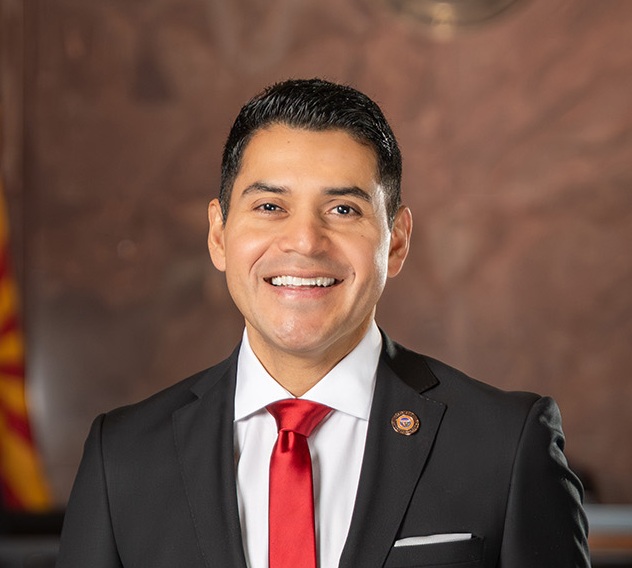
Rep. Steve Montenegro
Sponsored bills
Maddy summaryHB 4027 renames Arizona's Loop 202 highway as the "Charlie Kirk Highway" for official records and signage. The bill requires all state documents, records, and transportation department signage to include the new name after enactment, without replacing any existing designations. This is a ceremonial procedural bill with no policy or funding changes.
Maddy summaryHB 4115 requires circulators gathering signatures for Arizona ballot initiatives to disclose their status as paid or volunteer. Paid circulators must verbally state their first name, state of residence, and that they are paid when approaching potential signers, and wear a visible badge with that information. The bill also mandates that non-resident and paid circulators register with the secretary of state, providing personal details and a notarized affidavit, with signatures collected without proper disclosure or registration deemed void. This directly affects initiative committees, circulators, and the secretary of state's oversight process.
Maddy summaryHB 2993 amends Arizona law to clarify when state agencies can hire their own legal counsel. Typically, agencies must use the Attorney General's office for legal representation, but exceptions allow them to hire outside lawyers if the Attorney General is disqualified (e.g., due to a conflict of interest) or in specific cases like pesticide complaints involving the Department of Agriculture. The bill also requires agencies with their own legal divisions (funded by non-general revenue) to reimburse the state general fund for legal services provided by the Attorney General. This affects all state agencies, including the Department of Public Safety (DPS), by defining their legal representation options and reimbursement obligations.
Maddy summaryHB 2443 requires new applicants for Arizona Class A, B, or C commercial driver licenses (CDLs) to pass an English proficiency test covering reading, speaking, writing, and listening skills. This applies specifically to new applicants, not existing license holders. The test is mandated as part of the knowledge examination process for CDL applicants under amended Arizona Revised Statutes § 28-3223. The bill does not change existing renewal requirements or affect current CDL holders.
Maddy summaryThis is a ceremonial resolution (HCR 2064) expressing the Arizona Legislature's condolences upon the passing of former state legislator Barbara Leff. It honors her 1996-2006 service representing Paradise Valley, her work on HMO reform and economic development, and her contributions to voter information systems. The resolution extends sympathy to her surviving family members (husband, children, grandchildren) and acknowledges her community leadership. It has no policy impact or legislative effect beyond this expression of respect.
Maddy summaryHR 2006 is a ceremonial resolution passed by the Arizona House of Representatives honoring Yvonne Glee Lime Fedderson, who died on January 23, 2026. The resolution expresses the House's sympathy to her family and admirers while recognizing her founding role in Childhelp and her decades of work advancing child welfare programs, including establishing the first national child abuse hotline and advocacy centers. It directs the Secretary of State to transmit copies of the resolution to her family and Childhelp organization. As a non-binding commemorative measure, it does not create new laws or affect any policies.
Maddy summaryHB 2904 declares Arizona's policy that the state must protect itself from drug cartels and federal border security failures, defining "drug cartel" to include human smuggling and fentanyl trafficking, and labeling border fentanyl trafficking a public health crisis. It states Arizona's laws should prioritize state sovereignty against "unlawful invasion" at the border (defined as cartel activities) and requires the state health department to address fentanyl-related overdose deaths. The bill does not create new funding, enforcement, or programs - it makes declaratory statements about policy and definitions. This is a procedural declaration, not a substantive law change.
Maddy summaryHCR 2061 proposes a constitutional amendment to prohibit individuals holding dual citizenship from serving in Arizona state office. It would amend the state constitution to require all state legislators and other elected officials (as listed in Article V, Section 1) to be U.S. citizens at the time of election, explicitly barring those with dual citizenship from eligibility. This change would directly affect candidates running for state legislative seats and other state offices requiring U.S. citizenship. The amendment must be approved by voters in the next general election after being submitted by the Secretary of State, as it is currently in early legislative stages (House first and second readings in February 2026).
Maddy summaryHB 2448 prohibits Arizona's Department of Economic Security from seeking, accepting, or renewing federal waivers that would exempt able-bodied adults without dependents from SNAP work requirements unless explicitly authorized by state law. It also blocks the state from granting exemptions from these work requirements without specific legislative approval. The bill directly affects SNAP recipients who might otherwise qualify for work requirement exemptions under federal rules. This is a procedural measure restricting state authority to bypass federal SNAP rules without clear legislative direction.