

Maddy summaryHB 2715 prohibits charter schools from suspending students for unexcused absences and amends school discipline rules for all Arizona school districts. The bill specifically states that penalties for excessive absenteeism (including failure to pass a course or expulsion) cannot include suspension, with an exception for absences due to illness certified by a licensed medical professional. School districts must also annually report suspension/expulsion data related to illegal substances to the state education department, with aggregated data posted online. This directly affects students facing discipline for absenteeism, school staff implementing discipline policies, and school boards managing disciplinary procedures.
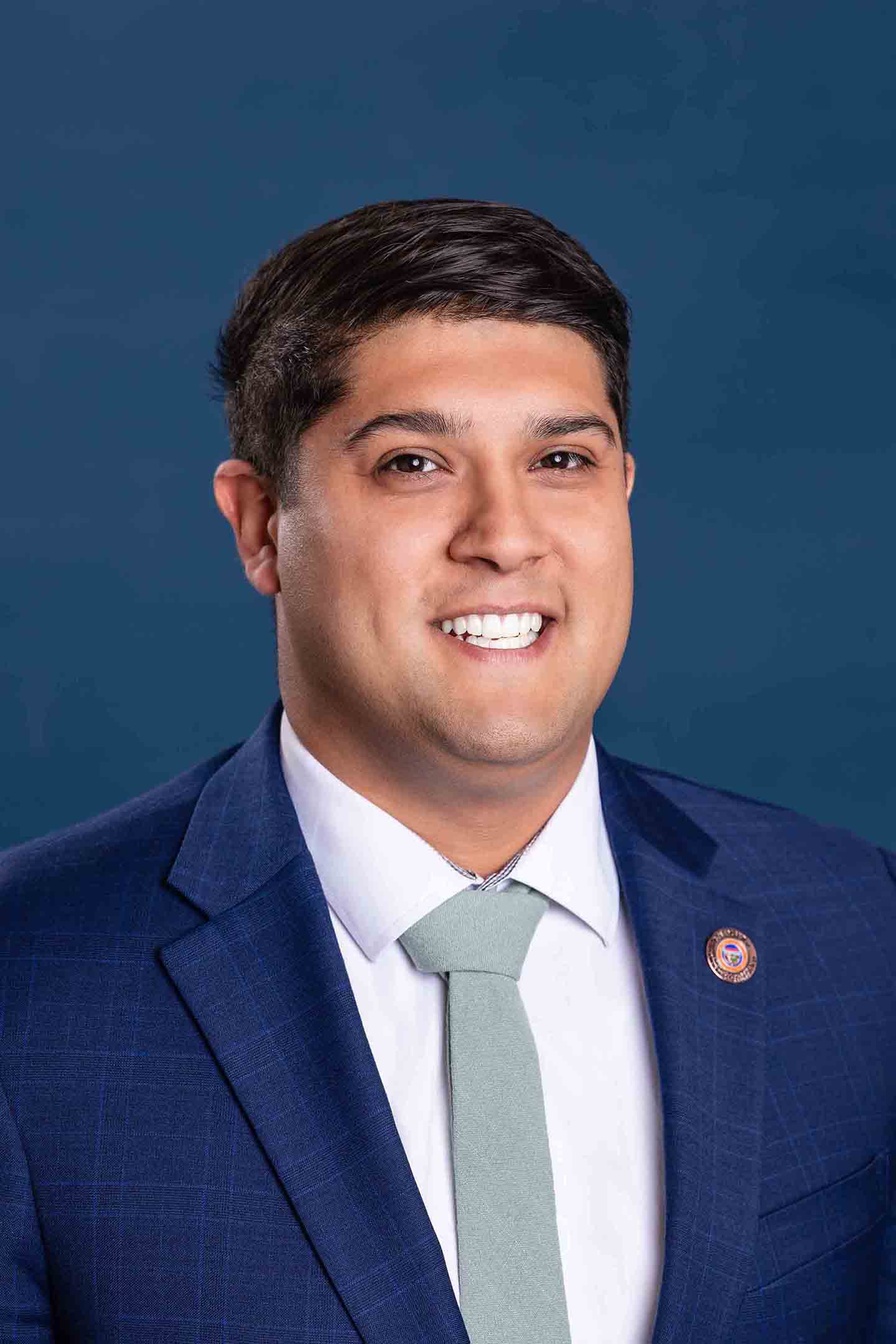
Rep. Cesar Aguilar
Sponsored bills
Maddy summarySB 1451 establishes Arizona Empowerment Scholarship Accounts to provide funding for eligible students' education. Parents must agree to use funds only for specific education-related expenses - including tuition at qualifying schools, textbooks, tutoring, vocational training, college tuition, and approved assistive technologies - while agreeing not to enroll in public schools or accept concurrent scholarships. The bill explicitly allows funds to cover postsecondary education costs at eligible colleges and universities, expanding previous uses beyond K-12. It requires parental agreements outlining permitted expenses and prohibits homeschooling filings while ensuring funds cannot cover non-educational items like entertainment devices.
Maddy summarySB 1469 requires Arizona's Joint Legislative Budget Committee (JLBC) staff to annually submit a report by November 1 to legislative leaders. The report summarizes the state's individual income tax rate brackets, adjustments to taxable income, and deductions/credits claimed by taxpayers from the prior year. This procedural bill affects legislative staff and provides data for future tax policy discussions but does not change tax rates or laws. It mandates an annual review of existing tax structures without altering taxpayer obligations.
Maddy summarySB 1388 repeals a specific provision in Arizona law (Title 49, chapter 1, article 6) that previously prohibited certain greenhouse gas programs. This bill removes a legal restriction affecting how greenhouse gas programs can operate within Arizona. The repeal would allow state agencies or programs to implement greenhouse gas initiatives without the prior prohibition. The bill is currently in early legislative stages, having passed its first two readings in the Senate on February 3-4, 2025.
Maddy summarySB 1314 terminates the governing board of the Arizona State Schools for the Deaf and the Blind (ASDB) on July 1, 2033, and repeals related statutes on January 1, 2034. The bill directly affects the ASDB board of directors and its administrative structure, though it maintains the schools' purpose of providing educational services for sensory-impaired children. Key provisions include setting specific termination dates for the board and related legal sections, ensuring a transition period before full implementation. The legislature states this continuation aims to "promote and maintain educational opportunities of adequate scope and quality" for sensory-impaired students until the board's end date.
Maddy summaryHB 2709 allocates $5,000,000 from Arizona's state general fund for fiscal year 2025-2026 to the Navajo Division of Transportation. The funding specifically supports the installation of a box culvert at the Pueblo Colorado Wash crossing in the Cornfields Chapter area. This bill directly affects the Navajo Division of Transportation and the local community by providing resources for a specific infrastructure project. As a funding measure, it does not create new policy but enables a defined construction activity.
Maddy summaryThis resolution (HR 2002) declares gun violence a public health crisis in Arizona. It cites Arizona's 2020 firearm death toll of 1,265, 2022 data showing firearms as the top cause of death for teens aged 15-17, and statistics linking gun access to increased suicides and homicides. The resolution makes no new laws or funding provisions - it is a symbolic declaration by Arizona's House of Representatives. It focuses on acknowledging the severity of gun violence as a public health issue, based on state-specific data.
Maddy summaryHB 2352 repeals Arizona's state-level registration requirement for scrap metal dealers and clarifies that local cities, towns, or counties retain authority to enforce their own business licensing systems - including those requiring background checks or fingerprinting. The bill directly affects scrap metal dealers and local licensing authorities by shifting registration responsibility from the state to local governments. Key provisions include eliminating statewide registration (repealing Sections 9-500.38 and 11-269.16) while allowing local licensing systems to remain in place for existing license holders. Existing licenses held by dealers before September 13, 2013, remain valid without requiring reapplication, unless local requirements mandate updates for specific events.
Maddy summaryHB 2496 modifies Arizona's licensing rules by prohibiting state agencies from requiring applicants to provide citizenship or alien status documentation when applying for a professional license. It also mandates that agencies accept a federal tax identification number in place of a Social Security number for licensing purposes. This applies to all licenses issued by state or local agencies for businesses or services (like CPAs, contractors, or healthcare providers). The bill directly affects individuals seeking professional licenses who may lack traditional citizenship documentation, such as immigrants or non-citizens. The key change replaces prior requirements in Section 41-1080 with these new documentation standards.
Maddy summaryHB 2591 appropriates $500,000 from Arizona's state general fund for the Arizona Commission of African-American Affairs' operating expenses during fiscal year 2025-2026. This procedural bill provides direct funding to the commission for its administrative costs. It does not establish new policies or affect specific groups beyond the commission's operational needs. The bill is currently in early legislative stages, having undergone House first and second readings.