

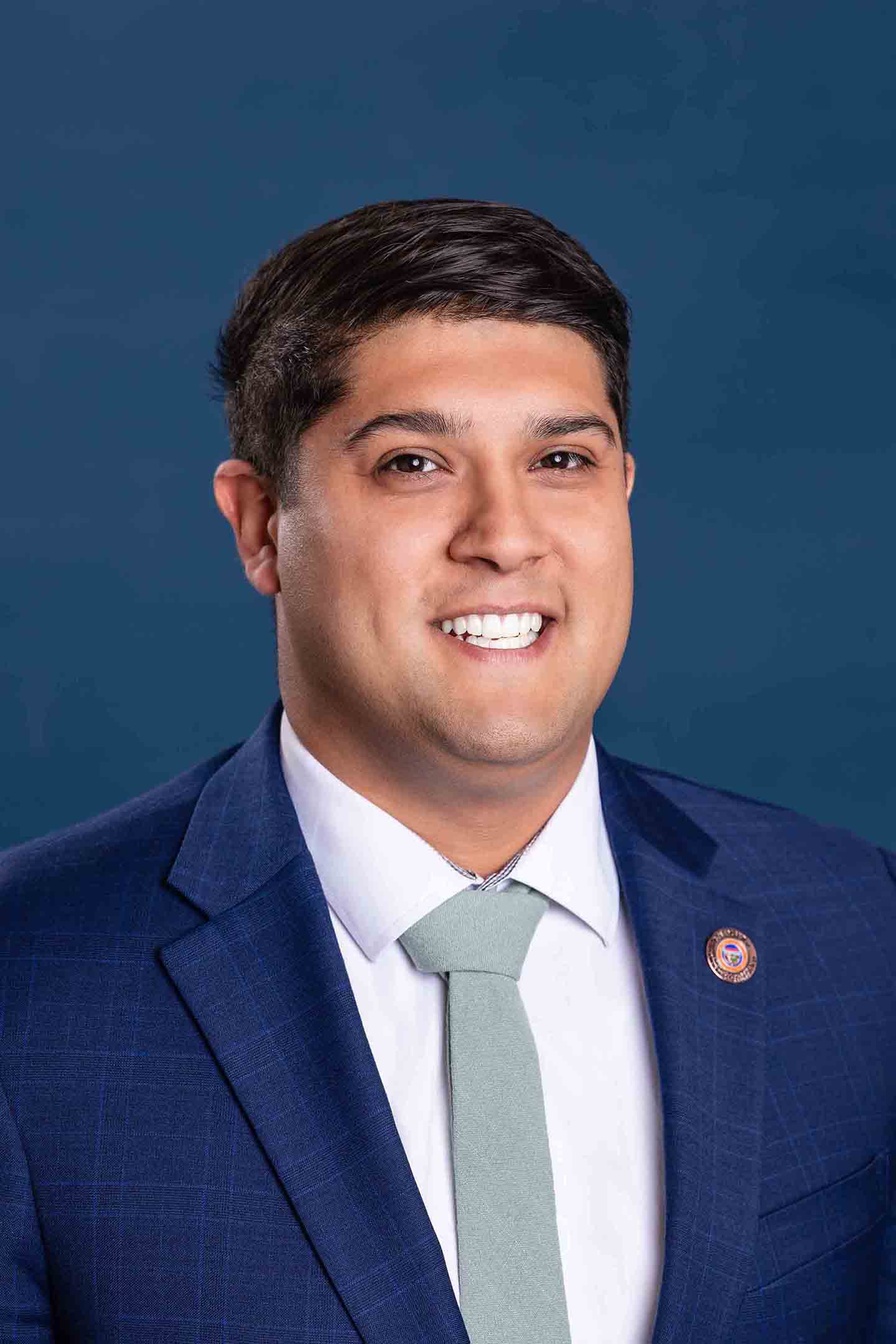
Photo of Cesar Aguilar
D Arizona House · District 26 On the 2026 ballot

Rep. Cesar Aguilar

Compare
Total votes
2,940
all sessions
Attendance
94%
189 missed
Near the chamber average
With party
94%
of cast votes
Near the chamber average
Bipartisan score
5%
crosses aisle rarely
Near the chamber average
Sponsored
517
bills & resolutions
Higher than 85% of chamber peers
Committees
2
assignments
517 bills and resolutions

Sponsored bills

Total
517
Primary
50
Co-sponsor
467
This page
517
matching current filters
Co-sponsor HB 2700
Signed into law · Arizona House · Co-sponsor
technology study committee; assistive technology

Maddy summaryHB 2700 establishes Arizona's "Technology First Study Committee" to examine assistive technology access for individuals with developmental disabilities. The committee, composed of 12 members from disability advocacy groups, state agencies, universities, and technology programs, will study emerging assistive technologies, analyze current service gaps, and identify improvements to better serve this population. It must submit a final report to state leaders by October 1, 2027, detailing findings and recommendations. The committee is scheduled to cease operations after this report deadline. This bill directly affects Arizonans with developmental disabilities by aiming to improve their access to technology-based support services.

Signed into law Jun 22, 2026 1 co-sponsor
Co-sponsor SB 1174
Signed into law · Arizona Senate · Co-sponsor
DCS; intake hotline; case history

Maddy summarySB 1174 requires Arizona's Department of Child Safety (DCS) to operate a centralized hotline for reporting suspected child abuse or neglect, directly affecting children, families, and DCS workers. The bill mandates that hotline staff immediately access prior case history (within the last 60 days) for the child and siblings, and review non-reportable calls from the past three months to inform current decisions. It also requires DCS to use standardized assessment tools to evaluate abuse severity, identify criminal conduct, and assign appropriate investigative tracks. Additionally, DCS reports must now include a single, comprehensive summary of all prior hotline calls and investigations for the child within the last 60 days.

Signed into law Jun 19, 2026 1 co-sponsor
Co-sponsor HR 2005
Introduced · Arizona House · Co-sponsor
gun violence; public health crisis

Maddy summaryHR 2005 is a symbolic resolution passed by the Arizona House of Representatives declaring gun violence a public health crisis within the state. It directly affects Arizona by formally recognizing the severity of gun-related deaths and injuries using state-specific data, including 1,265 firearm deaths in Arizona in 2020 and firearm deaths surpassing other causes as the top killer of teens aged 15-17 in 2022. The bill contains no new policies, funding, or regulatory changes - it solely makes a formal declaration based on cited statistics about gun violence impacts. This resolution does not alter laws or create new programs but aims to shift public health framing for future action.

Introduced Jun 13, 2026 1 co-sponsor
Co-sponsor HB 4132
Introduced · Arizona House · Co-sponsor
ESAs; expenditures; enrollment; limitations.

Maddy summaryArizona's HB 4132 expands the state's Empowerment Scholarship Account (ESA) program to allow more students to access education funds. It adds income requirements ($200,000 annual threshold, adjusted for inflation after 2027) for families seeking eligibility, while also allowing students who previously attended public school to transfer to an ESA. Funds can cover tuition at participating schools, textbooks, educational therapies, tutoring (capped at $2,000 yearly), and approved online programs. The bill explicitly restricts using ESA funds for school tuition organizations concurrently and requires parents to sign agreements detailing how funds must be spent.

Introduced Jun 13, 2026 1 co-sponsor
Co-sponsor HB 2839
Introduced · Arizona House · Co-sponsor
municipal tax; exemption; food

Maddy summaryHB 2839 (Arizona) requires cities and towns to apply municipal sales taxes uniformly to all food items, prohibiting extra charges for specific foods. It exempts food manufacturing, distribution, and packaging containers from these taxes, and removes taxes on food purchased with SNAP benefits (food stamps) or low-cost food sold to eligible elderly, homeless, or disabled individuals through approved programs. The law affects local governments imposing food taxes, food businesses, and SNAP recipients by standardizing tax treatment and expanding certain exemptions. It applies retroactively to taxable periods after its effective date.

Introduced Jun 13, 2026 1 co-sponsor
Co-sponsor HB 2676
Passed · Arizona House · Co-sponsor
juvenile restoration; rights; firearms; civil

Maddy summaryHB 2676 allows individuals adjudicated delinquent as juveniles in Arizona to petition a court for restored firearm rights after meeting specific conditions. It directly affects people who were minors when convicted of certain offenses but not adults. The bill establishes two waiting periods: 25 years for those convicted of serious offenses like burglary or arson, or a two-year wait for other felonies after completing probation or court-ordered conditions. The process requires a court application with no filing fee, served to the county attorney, and is handled by juvenile court judges. This changes the legal pathway for juvenile offenders to regain firearm rights under defined circumstances.

Passed Jun 12, 2026 1 co-sponsor
Co-sponsor SB 1175
Passed · Arizona Senate · Co-sponsor
DCS caseworkers; investigations; child photographs

Maddy summaryThis bill requires Arizona Department of Child Safety (DCS) caseworkers to photograph children involved in abuse or neglect investigations during every contact. The photos must be kept in the child's case file and reviewed by caseworkers when creating safety plans, specifically to assess any changes in the child's appearance or health. It applies directly to DCS workers and children under investigation for abuse or neglect. The law takes effect on December 31, 2026.

Passed Jun 12, 2026 1 co-sponsor
Co-sponsor HB 2673
Signed into law · Arizona House · Co-sponsor
mental illness; prisoners; diagnosis; treatment.

Maddy summaryHB 2673 requires Arizona county sheriffs and state correctional facilities to address mental health needs of incarcerated individuals. It mandates that prisoners showing symptoms of mental illness receive a licensed physician examination within 24 hours, ensures continuity of prescribed medications and treatments upon jail entry, and requires screening for prior mental illness diagnoses. For state facilities, it creates a process where prisoners displaying severe mental health symptoms may be transferred to specialized treatment facilities after a court hearing with appointed legal representation. The bill also requires quarterly condition reports from treatment facilities to correctional authorities and courts. This applies directly to prisoners in county jails (for misdemeanor cases) and state correctional facilities.

Signed into law Jun 4, 2026 1 co-sponsor
Co-sponsor HB 2574
Signed into law · Arizona House · Co-sponsor
traffic penalties; appeal; stay

Maddy summaryHB 2574 amends Arizona law to clarify the process for appealing traffic penalty judgments. It directly affects drivers who face traffic fines and wish to appeal court decisions. The bill requires courts to report stays (pauses) in enforcement to the state department, prevents the department from taking action during an appeal, and states that posting an appeal bond automatically pauses enforcement. It also allows superior court commissioners to handle these appeals, streamlining the process. The changes apply to all traffic penalty cases where a judgment is under appeal.

Signed into law Jun 4, 2026 1 co-sponsor
Co-sponsor SB 1172
Signed into law · Arizona Senate · Co-sponsor
DCS; intake hotline; multiple reports

Maddy summarySB 1172 requires Arizona's Department of Child Safety (DCS) to operate a centralized hotline for reporting suspected child abuse or neglect, mandating that all reports be recorded and cross-checked for prior incidents using state data systems. It directs DCS to use standardized tools to assess the severity of abuse/neglect, identify potential criminal conduct, and determine appropriate investigation priorities. For cases involving four or more reports against the same caregiver within 12 months, investigations must be assigned to specialists with at least two years of experience or advanced forensic training. Additionally, DCS must share hotline reports about children in active dependency court cases with the overseeing court. These changes aim to streamline response protocols and improve child safety outcomes.

Signed into law May 29, 2026 1 co-sponsor
Showing 1 to 10 of 517 bills
1 2 3 52 Next