

Maddy summaryHB 2545 amends Arizona election law (Section 16-411) to update rules for establishing election precincts and polling places. The bill allows counties to consolidate adjacent precincts for administrative efficiency, use voting centers (where any voter in the county can cast a ballot on election day), and establish emergency voting centers for specific elections with defined procedures. It also requires public schools to provide polling space when requested (with exceptions for safety or space), and mandates state coordination to provide state-owned facilities for voting starting in 2026. The provided bill text does not address early ballot returns or a "Friday return" as suggested by the title, so the amendment focuses solely on polling place logistics and voting center implementation.
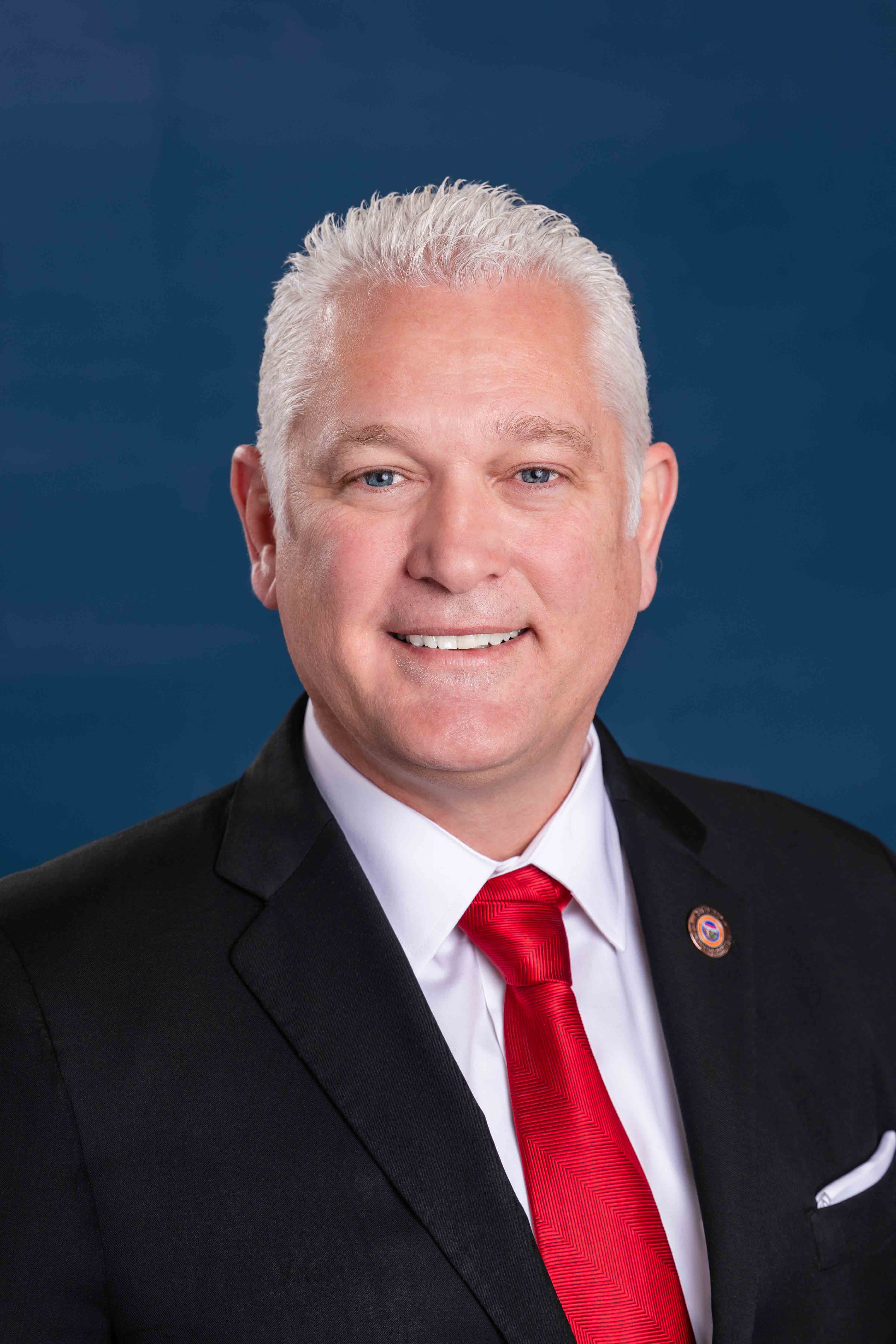
Rep. Michael Carbone
Sponsored bills
Maddy summaryHB 2171 creates a $5 million scholarship fund for spouses and dependents (under age 27) of Arizona law enforcement officers. The fund covers tuition and mandatory fees at eligible Arizona public colleges, career technical schools, or participating private institutions, after subtracting other financial aid. Scholarships are awarded on a first-come, first-served basis with funds limited to the annual appropriation, and must be used within four academic years. The Arizona Board of Regents administers the program and reports annually on recipients and participating law enforcement agencies, with the fund set to expire in 2035.
Maddy summaryThis Arizona House resolution (HM 2001) requests Governor Katie Hobbs to revise and resubmit her 2025 Executive Budget within 10 days. It argues the current proposal fails to balance the state's budget for fiscal years 2027-2028, specifically ignoring $846 million in expected Medicaid cost increases that would create negative fund balances of $192 million (2027) and $390 million (2028). The resolution directs the Governor to submit a financially solvent budget that meets legal requirements for three consecutive balanced fiscal years. This procedural request directly affects the Governor's budget submission process, not the public or specific programs.
Maddy summaryHB 2102 establishes a dedicated anti-racketeering revolving fund in Arizona to manage money recovered from racketeering prosecutions. It requires all recovered funds - such as attorney fees from civil/criminal cases under AZ statutes 13-2301 or 13-2312, forfeiture proceeds, or federal/state cooperative investigation funds - to be deposited into this fund, prohibiting transfers to the general state fund. The fund may finance gang/victim prevention programs, racketeering investigations, officer relocation costs, and administrative reporting, but bans using it for Attorney General’s office salaries after August 2025. All agencies receiving fund monies must submit quarterly reports on sources and expenditures to the Attorney General and Arizona Criminal Justice Commission, with strict deadlines and penalties for noncompliance.
Maddy summaryHB 2520 amends Arizona's duress defense law to limit when a defendant can claim they committed a crime due to threats of immediate physical force. Specifically, the defense cannot be used if the defendant intentionally created the situation where they faced duress, or for offenses involving homicide, serious physical injury, or certain violent crimes like aggravated assault or sexual offenses. This change directly affects criminal defendants in cases where they attempt to justify their actions using duress as a legal defense. The bill clarifies that the duress defense is unavailable for the most serious violent offenses, making it harder for defendants to avoid responsibility for those acts.
Maddy summaryHB 2319, the "Arizona Property Bill of Rights," prohibits Arizona municipalities from regulating private property on single-family lots in specific ways. It blocks local rules that limit building materials (unless code violations exist), impose aesthetic requirements, restrict growing food, prevent energy conservation installations, or require unwanted design features. The bill preempts local regulations that aren't objectively verifiable, strictly necessary for public health/safety, or the least restrictive means. It directly affects property owners and municipalities by limiting local control over single-family lot development and design.
Maddy summaryHB 2539 appropriates $9,200,000 from Arizona's state general fund for fiscal year 2025-2026 to the Department of Transportation. The funds are specifically designated to design a new traffic interchange and connecting arterial roadways at State Route 303 and 155th Avenue. This bill directly affects the Department of Transportation and the communities near this intersection by funding the initial design phase of infrastructure improvements. It does not fund construction or alter traffic laws, focusing solely on planning and engineering work.
Maddy summaryHB 2101 allocates $10 million from Arizona's general fund for fiscal year 2025-2026 to the State Match Advantage for Rural Transportation Fund. This funding directly supports rural transportation programs by providing state matching resources for eligible projects. The bill establishes a specific financial allocation without creating new policy requirements or altering existing laws. It affects rural transportation initiatives that qualify for state matching funds under Arizona Revised Statutes § 28-339.
Maddy summaryThis Arizona bill updates state laws against bestiality by explicitly criminalizing sexual contact with animals and the possession or distribution of visual depictions involving real people and real animals. The legislation establishes specific penalties, classifying direct acts as felonies and the creation or sharing of related images as a misdemeanor, while also allowing courts to order psychological counseling and reimbursement for animal care costs. Importantly, the law includes exemptions for standard veterinary procedures and legitimate animal husbandry practices, and it clarifies that artificial intelligence-generated images do not fall under the visual depiction restrictions.
Maddy summaryThis Arizona bill establishes a legal framework for addressing individuals who unlawfully remain in residential properties after being asked to leave, defining them as "transient occupants." It allows property owners to request law enforcement to direct these individuals to surrender possession based on a sworn affidavit that verifies specific criteria, such as the lack of a lease, utility subscriptions, or exclusive living space. While failing to comply with such a directive can result in trespassing charges, the bill also creates a civil cause of action for wrongful removal if the eviction process is mishandled. Additionally, it sets rules for recovering personal belongings left behind, requiring owners to allow access within ten days unless there are safety concerns, and clarifies that the presence of leftover items does not extend a person's right to stay.