

Maddy summaryArizona's HB 2977 prohibits law enforcement officers from wearing face coverings that conceal their face while on duty. It requires all law enforcement agencies (including police departments, sheriff's offices, and state agencies) to create and publicly post policies emphasizing transparency, with exceptions for medical masks, safety gear like helmets during tactical operations, or authorized undercover work. The law defines "facial covering" broadly but excludes items like clear masks, medical masks, or safety equipment necessary for health or physical safety. It applies to all sworn officers across Arizona's public law enforcement entities.
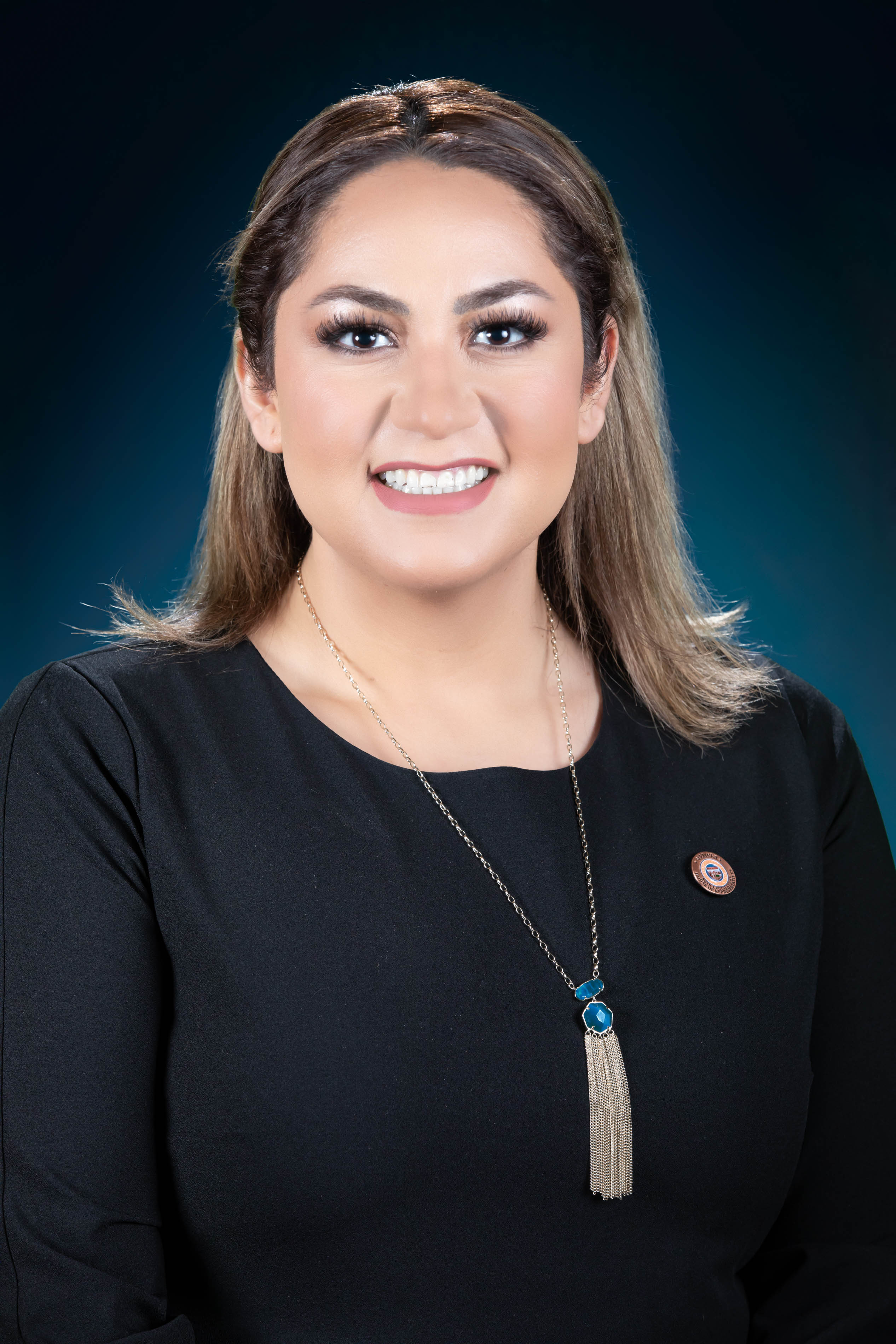
Rep. Consuelo Hernandez
Sponsored bills
Maddy summaryHB 2676 allows individuals adjudicated delinquent as juveniles in Arizona to petition a court for restored firearm rights after meeting specific conditions. It directly affects people who were minors when convicted of certain offenses but not adults. The bill establishes two waiting periods: 25 years for those convicted of serious offenses like burglary or arson, or a two-year wait for other felonies after completing probation or court-ordered conditions. The process requires a court application with no filing fee, served to the county attorney, and is handled by juvenile court judges. This changes the legal pathway for juvenile offenders to regain firearm rights under defined circumstances.
Maddy summaryHB 2673 requires Arizona county sheriffs and state correctional facilities to address mental health needs of incarcerated individuals. It mandates that prisoners showing symptoms of mental illness receive a licensed physician examination within 24 hours, ensures continuity of prescribed medications and treatments upon jail entry, and requires screening for prior mental illness diagnoses. For state facilities, it creates a process where prisoners displaying severe mental health symptoms may be transferred to specialized treatment facilities after a court hearing with appointed legal representation. The bill also requires quarterly condition reports from treatment facilities to correctional authorities and courts. This applies directly to prisoners in county jails (for misdemeanor cases) and state correctional facilities.
Maddy summaryHB 2923 amends Arizona law to establish clearer court oversight for inpatient mental health treatment of incapacitated persons under guardianship. It requires courts to authorize guardians to consent to such treatment only after clear evidence (supported by a mental health expert) that the person is likely to need inpatient care, and mandates that courts limit treatment to the least restrictive option for the shortest necessary duration. Key provisions include requiring facilities to assess placement every 30 days, notifying the ward’s attorney within 48 hours of admission, and allowing the attorney to request a court hearing within 3 days if placement seems inappropriate. The bill also ensures the ward’s attorney can access all treatment records and must review reports if guardians seek continued authority to consent to inpatient care.
Maddy summaryThis resolution expresses the Arizona Legislature's sincere regret and deepest condolences regarding the death of former Senate Majority Leader Alfredo Gutierrez. It formally acknowledges his life of public service, highlighting his advocacy for civil rights, education, and immigrant communities, as well as his significant legislative achievements such as establishing the Arizona Department of Transportation and expanding Medicaid. The bill does not enact new laws or policies but serves as a commemorative gesture to honor his legacy and offer support to his surviving family members.
Maddy summaryArizona's HCR 2043 is a state legislative resolution applying to Congress under Article V of the U.S. Constitution to call a convention proposing term limits for U.S. Congress members. It specifically requests a convention to establish term limits for both House and Senate seats, joining 22 other states that previously sought similar limits but were overruled by the Supreme Court. The resolution states Arizona’s application will be counted toward the two-thirds of states needed to compel Congress to act, aggregating with other states’ identical requests. This is a procedural step by Arizona’s legislature to pressure Congress, not a direct policy change affecting voters or officials.
Maddy summaryHB 2111 requires Arizona driver license applicants seeking a motorcycle license or endorsement to pass a test including at least five questions on motorcycle awareness. It updates exam procedures to mandate documentation from authorized third-party motorcycle training programs (starting July 1, 2014) and ensures all applicants demonstrate knowledge of motorcycle safety. The bill directly affects new motorcycle license applicants and the Arizona Department of Transportation, which administers the exams. It makes no changes to licensing fees or penalties, focusing solely on standardizing the knowledge assessment component for motorcycle operators.
Maddy summaryHB 4109 requires Arizona school districts to adopt specific public safety policies. These policies must clearly outline safety procedures, designate the superintendent as the responsible official, and mandate immediate notification to parents, staff, and law enforcement about life-threatening violence or weapons incidents on school property. School superintendents must confiscate weapons used in such incidents and notify police, while prohibiting retaliation against anyone reporting violations. Failure to comply results in felony charges (class 6 or 4, depending on injury) for superintendents or school board members. The bill directly affects school districts, their leadership, and the safety protocols for students and staff.
Maddy summaryHB 2680 creates a public database requiring Arizona employers to disclose workers' compensation insurance details. It mandates insurers to submit policy information - including employer name, insurer, policy expiration, and employee counts - to the state commission, with each policy including a QR code linking to the database. Employers claiming "zero estimated exposure" (no employees) must sign an affidavit confirming this, and must notify contractors directly if they hold such a policy. This affects all employers with workers' comp coverage, insurers, and contractors who receive zero-exposure notifications.
Maddy summaryHB 2671 changes Arizona's rules for prosecuting juveniles (ages 14-17) as adults, specifically targeting those with prior felony convictions. It requires prosecutors to file notice if a juvenile is a "chronic felony offender" (defined as having two prior felony convictions classified as serious offenses), triggering a court hearing to confirm this status. If confirmed, the juvenile faces adult criminal sentencing; if not, the case transfers to juvenile court. This directly affects juveniles with prior felony convictions who commit new serious offenses, shifting jurisdiction from juvenile to criminal court. The bill creates a clear process for determining chronic offender status before trial.