

Maddy summaryHB 2428 clarifies jurisdiction over air pollution permits in Arizona, giving the state Department of Environmental Quality primary authority for major sources like power plants and refineries in counties without approved air plans. It allows counties to issue voluntary permits for emission reduction credits related to portable and mobile sources (like vehicles or temporary equipment). This affects local air agencies, businesses needing permits, and entities seeking to certify emission reductions under state law. The bill modifies existing permit procedures without changing pollution standards or creating new emission requirements.
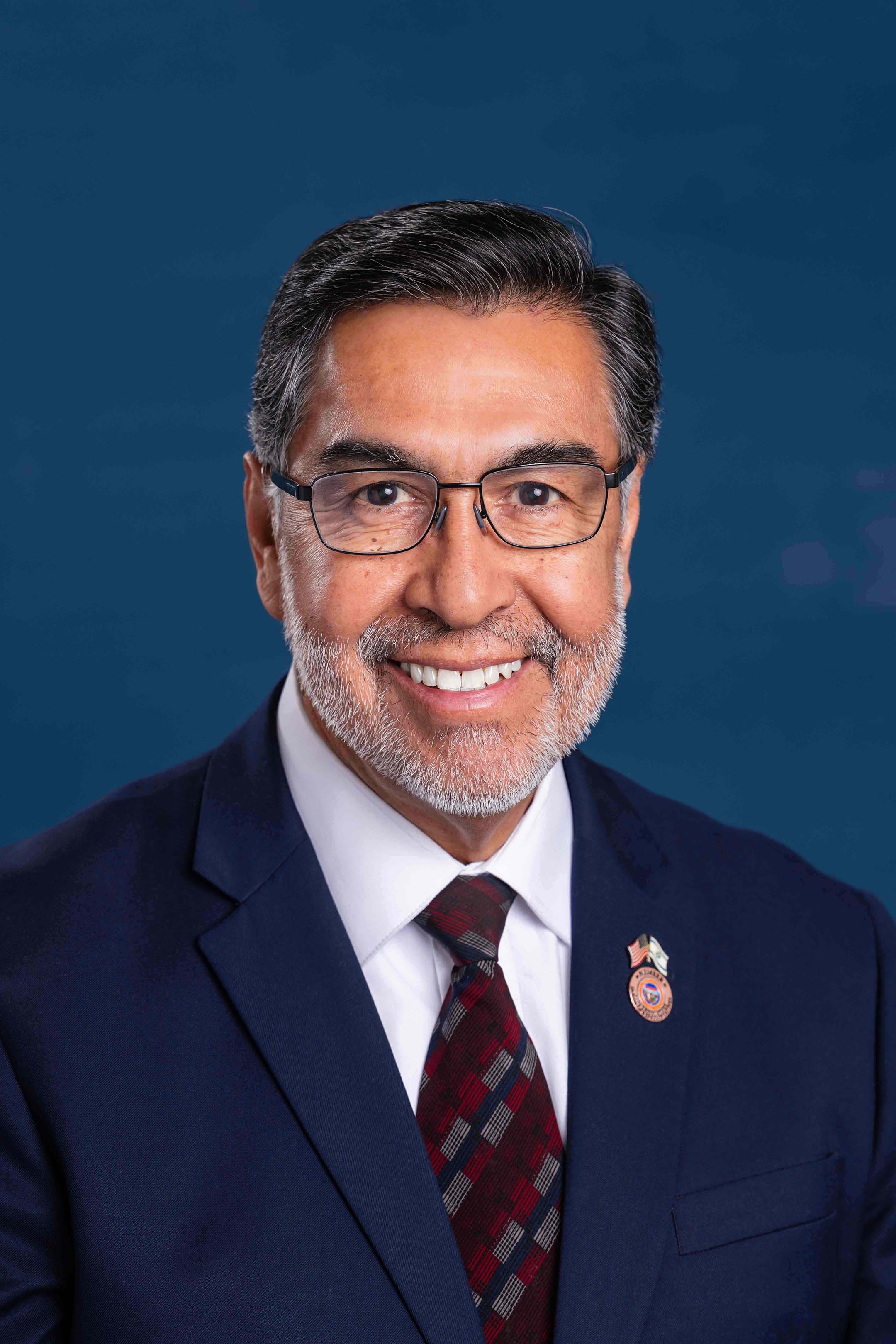
Rep. Lupe Diaz
Sponsored bills
Maddy summaryThis bill is a resolution honoring Louis Gasper, a former public servant and academic who recently passed away. It expresses the legislature's sincere regret for his death and extends condolences to his family and friends. The document does not change any laws or policies but serves as a formal acknowledgment of his life and contributions.
Maddy summaryArizona's HCR 2043 is a state legislative resolution applying to Congress under Article V of the U.S. Constitution to call a convention proposing term limits for U.S. Congress members. It specifically requests a convention to establish term limits for both House and Senate seats, joining 22 other states that previously sought similar limits but were overruled by the Supreme Court. The resolution states Arizona’s application will be counted toward the two-thirds of states needed to compel Congress to act, aggregating with other states’ identical requests. This is a procedural step by Arizona’s legislature to pressure Congress, not a direct policy change affecting voters or officials.
Maddy summaryHCR 2047 is a symbolic Arizona legislative resolution recognizing the historical and biblical significance of "Judea and Samaria" as the ancestral homeland of the Jewish people. It formally rejects the term "West Bank" as a political construct and mandates that Arizona state government use "Judea and Samaria" in all official communications and documents regarding the territory. The resolution cites biblical references, historical claims, and legal arguments (including the San Remo Resolution and League of Nations Mandate) to support its position. As a concurrent resolution, it has no legal effect on international borders or U.S. policy but reflects Arizona's official stance on terminology. It does not alter any existing laws or policies related to the region.
Maddy summaryThis Arizona legislative memorial (HCM 2006) urges federal agencies and Congress to reform the Endangered Species Act (ESA) and Migratory Bird Conservation Act. It requests that the U.S. Fish and Wildlife Service, Bureau of Land Management, and Forest Service reduce regulatory burdens on ranchers and prevent lease cancellations on federally managed grazing lands due to ESA implementation. The memorial specifically cites concerns about ranchers being unfairly evicted from grazing lands and seeks to align federal policy with "long-standing agricultural practices" in Arizona. As a non-binding memorial, it does not directly change laws but formally requests federal action to address these specific impacts on rural ranching communities.
Maddy summaryThis Arizona state memorial (HCM 2011) urges Congress to delist the Mexican wolf from the federal endangered species list. It claims the wolf population has exceeded recovery goals since 2014 (286 wild wolves in 2024) and no longer requires ESA protections. The memorial specifically requests Congress pass H.R. 4255 to remove the wolf from the list, defund the federal reintroduction project, transfer management to states, and ensure full compensation for ranchers' livestock losses. It does not create new law but advocates for policy changes to end federal management of the species.
Maddy summaryHCR 2059 is a symbolic resolution expressing legislative support for Arizona county sheriffs. It does not create new laws or alter legal authority; instead, it reaffirms the Legislature's backing of sheriffs as constitutional law enforcement officers and encourages public appreciation for their service. The resolution highlights sheriffs' roles in addressing issues like drug trafficking and human trafficking, while recognizing their authority derived directly from voters. As a concurrent resolution (HCR), it has no binding legal effect and solely serves to publicly acknowledge sheriffs' duties.
Maddy summaryHB 2787 prohibits Arizona state agencies, employees, and political subdivisions from using state resources to enforce, administer, or cooperate with the federal Mexican wolf reintroduction program under the Endangered Species Act. It directly affects state government operations by banning state involvement in the wolf program, though it exempts the existing livestock loss program managed by the Livestock Loss Board. The bill does not change federal law but aims to limit state-level support for the program, which the legislature claims has exceeded population goals since 2014 and causes economic harm to ranchers. The bill focuses on state authority over resource use, not altering the federal program itself.
Maddy summaryHB 2665 amends Arizona's manslaughter law to create a new offense: intentionally providing advice or encouragement to a minor about suicide, knowing the minor intends to die by suicide. This specifically targets adults who engage in direct online communications (like social media posts, texts, or tagged messages) aimed at a minor who is suicidal. The law defines "directed communication" to include specific online interactions with the minor, but excludes general public discussions about suicide. Violating this provision is classified as a class 2 felony.
Maddy summaryHB 2167 holds Arizona's Attorney General liable for damages if they file a public nuisance lawsuit that is dismissed or found without merit, provided the AG knew or should have known the case lacked legal or factual basis and publicized the filing. If liable, the AG must pay the defendant's attorney fees, litigation costs, and a civil penalty equal to three times the damages suffered - such as lost sales or profits for businesses. The damages and penalties would be paid from the Attorney General's general operating fund, not taxpayer money. This bill directly affects the Attorney General's office and individuals or businesses targeted by potentially unfounded nuisance lawsuits.