

Maddy summaryHB 2738 provides tax relief to owners and operators of computer data centers in Arizona that meet specific investment requirements, with qualified colocation tenants also eligible for the benefit. To qualify, data centers must apply for certification, submit a cost responsibility agreement (requiring them to pay for utility infrastructure upgrades), and meet either a $25 million investment threshold (in counties under 800,000 people) or $50 million (in larger counties) within five years of certification. Failure to meet these thresholds results in revoked certification and potential recapture of tax relief, with new applications no longer accepted after December 31, 2033.
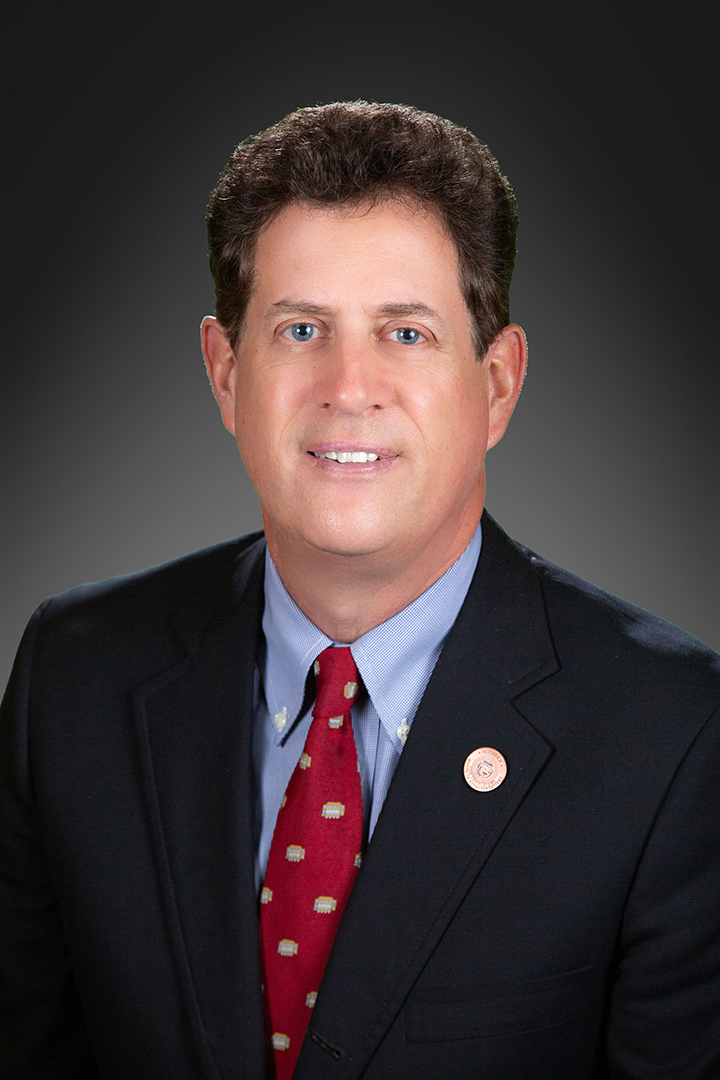
Rep. Chris Mathis
Sponsored bills
Maddy summaryHB 2467 repeals Arizona's tax incentive program for data centers (Section 41-1519) and amends tax disclosure law to allow the Arizona Commerce Authority to access taxpayer information for certifying data centers for tax relief under the repealed program. This bill directly ends eligibility for data center tax incentives for businesses and expands the Commerce Authority's access to confidential tax data for certification purposes. The key mechanism is the repeal of the incentive section combined with a new disclosure provision (added to Section 42-2003) specifying the Commerce Authority's role in data center certification. The bill affects data center operators who previously qualified for tax relief and the Commerce Authority's administrative processes.
Maddy summaryHB 2392 repeals Section 15-120.02 of the Arizona Revised Statutes, which previously addressed team designations related to biological sex. The bill does not create new policy but removes an existing statutory provision. It is currently in early legislative stages, having passed its first two readings in the House on January 20-21, 2026. This is a procedural repeal without direct impact on current laws or individuals, as it eliminates a prior statute rather than altering current regulations. The bill’s specific content prior to repeal is not detailed in the provided text.
Maddy summaryArizona's HB 2464 repeals the specific "RIGHT TO WORK" article heading in the state's labor code (Section 23-1302) and reclassifies it under "GENERAL PROVISIONS." The bill maintains existing liability protections for employees who face retaliation for refusing union membership (Section 23-1306) and preserves the right to non-union membership as protected employment policy under Section 23-1501(vi). It does not change the substance of Arizona's right-to-work law but alters its legal classification within the statutes. The bill's implementation depends on a future voter-approved constitutional amendment.
Maddy summaryHB 2742, the Arizona CROWN Act, prohibits employment and school discrimination based on "protective hairstyles" like braids, locks, or twists. It makes it illegal for employers, training programs, and schools (from nursery through postgraduate) to discriminate against individuals due to their hairstyle, race, or ethnicity. The law defines "protective hairstyle" broadly and explicitly ties it to race and ethnicity protections, including historically associated traits like hair texture. This directly affects employees and students in Arizona workplaces and educational institutions.
Maddy summaryHB 2709 limits landlord fees and requires clearer rental disclosures in Arizona. Landlords cannot charge for background checks if renters provide their own credit reports, may not charge more than the actual screening cost, and cannot charge multiple application fees within a year. Landlords must provide written disclosures before tenancy, including all mandatory fees, rent amounts, due dates, and optional costs (like trash valet or smart device upgrades), and include these details in all rental ads and websites. This directly affects Arizona landlords and renters by reducing unexpected costs and increasing transparency in rental agreements.
Maddy summaryHB 2535 would require Arizona to adopt vehicle emission standards identical to California's for model year 2028 and newer vehicles, but only for standards California has received federal approval for. This directly affects automakers selling new vehicles in Arizona and the Arizona Department of Environmental Quality, which would implement the rules. The bill amends state law to align Arizona's standards with California's instead of federal requirements. The bill is currently in early legislative stages (House first/second reading) with no votes cast yet.
Maddy summaryHB 2711 modifies how Arizona allocates unclaimed property funds, such as abandoned bank accounts and stocks, that would otherwise go to the state general fund. It directs 55% of these funds to the housing trust fund, with 40% of that portion (22% of total funds) specifically reserved for rural housing development. The bill also specifies that $2 million goes to a trust fund for housing the seriously mentally ill, $2.5 million to the general housing trust fund, and $24.5 million to the department of revenue's administrative fund. This policy change affects state fund distribution without directly altering individual rights or services.
Maddy summaryHB 2708 limits late fees landlords can charge to $50 or 5% of rent, whichever is greater, and bans rental agreements that prevent tenants from calling emergency services or penalize them for doing so. It also requires a 5-day waiting period after an eviction judgment before a landlord can enforce a writ of restitution. Landlords cannot force tenants to waive legal rights or pay excessive fees, and tenants may recover damages if landlords knowingly include prohibited lease terms. The bill applies directly to all residential rental agreements in Arizona, affecting both landlords and tenants in housing disputes.
Maddy summaryHB 2542 adds "preventive dental care" to the list of covered services under Arizona's AHCCCS (Medicaid) program for enrollees aged 21 and older. The bill explicitly includes routine preventive dental services alongside existing emergency dental care and extractions, which remain capped at $1,000 annually per member. This change directly affects AHCCCS recipients aged 21+ by expanding their covered dental benefits to include preventive care like cleanings and check-ups. The bill does not alter existing coverage limits for other services or create new funding requirements.