

Maddy summarySB 1087 amends Arizona law to require residential contractors to pay an annual assessment of $370 for initial licenses and $270 for license renewals. These funds are deposited into the residential contractors' recovery fund, which compensates homeowners if contractors fail to complete work or pay debts. The bill includes a mechanism to automatically reduce the assessment by 50% if the recovery fund exceeds $15 million, reverting to full fees once the fund falls below $10 million. The bill was passed by the legislature in April 2025 but was vetoed by the governor.
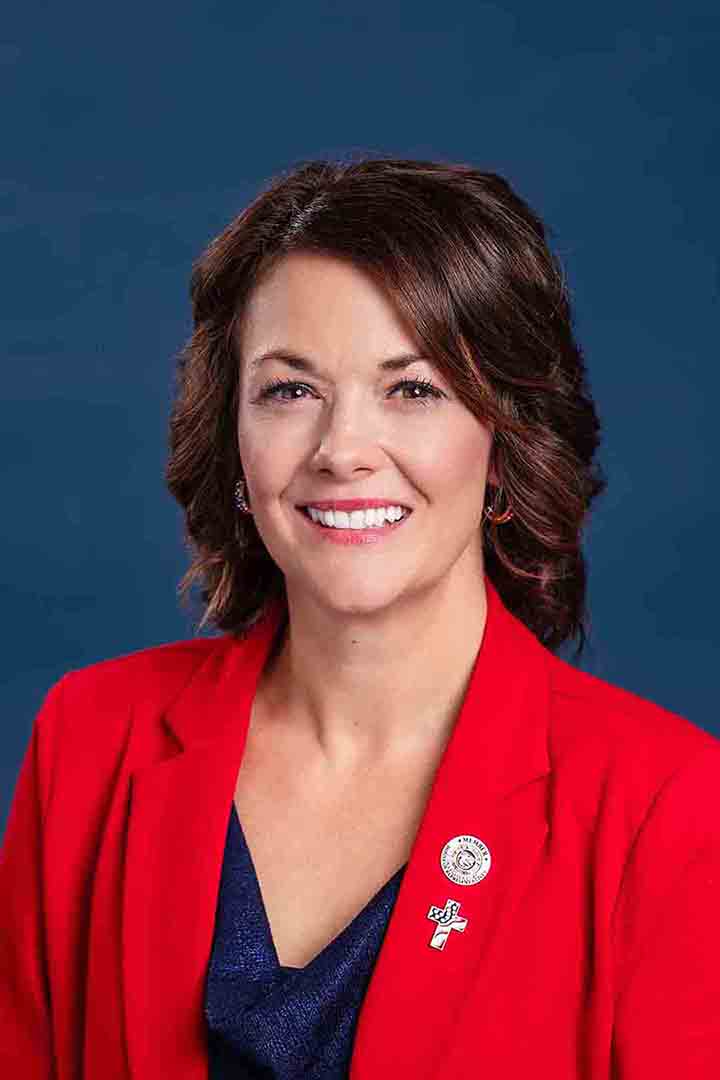
Rep. Rachel Keshel
Sponsored bills
Maddy summaryHB 2733 grants legal immunity to Arizona government agencies and employees (like law enforcement) who intercept, disable, or destroy unmanned aircraft (drones) within 30 miles of the state's international border. It protects them from liability for injuries caused during these actions unless they intentionally harmed someone or were grossly negligent. The law specifically applies to drone operators (defined as anyone controlling a drone, including owners or groups acting together) and covers contractors working for government entities. This bill directly affects border enforcement practices and drone operators operating near Arizona's international border.
Maddy summaryHB 2295 amends Arizona's juvenile court procedures to grant any party appealing a final juvenile court decision an automatic right to request a different judge or commissioner without needing to provide a reason. This change applies specifically to appeals under Section 8-235 of the Arizona Revised Statutes. The law directly affects individuals, parents, or guardians involved in juvenile court cases who choose to appeal a ruling. It removes the requirement for parties to state a cause for seeking a judge change during the appeals process.
Maddy summaryHB 2670 requires Arizona public schools to include specific fetal development instruction in health education for students in grades 7 and 8, covering human reproduction, pregnancy, infertility, and trimester-by-trimester growth of an unborn child. School districts may also offer age-appropriate fetal development lessons in grades 1-6 or 9-12. Parents can opt their child out of this instruction, and schools must notify parents about the curriculum and withdrawal options. The bill passed the legislature in April 2025 but was vetoed by the governor on April 18, 2025, so it did not become law.
Maddy summaryHB 2257 prohibits Arizona's Department of Child Safety (DCS) from refusing to place a child in a licensed foster home solely based on the child's or other children's vaccination status. It amends foster care placement rules to ensure vaccination records cannot be used as a barrier to placement, directly affecting foster parents, children, and DCS. The bill also includes standard provisions for medical information disclosure, placement preferences (prioritizing kinship care), and requirements for age-appropriate abuse education for children over eight. The bill passed the Arizona legislature on April 15, 2025, but was vetoed by the Governor on April 18, 2025, so it did not become law.
Maddy summaryHCM 2012 is a memorial from Arizona's legislature requesting Congress exempt Arizona from the Antiquities Act of 1906, similar to Wyoming's 1950 exemption. It seeks to prevent future federal designation of national monuments in Arizona without specific congressional approval, addressing concerns about land access, recreation, water resources, and economic impacts from current and proposed monuments. The bill cites Arizona's limited private land ownership (18%) and specific examples like the proposed Great Bend of the Gila monument. Arizona's legislature passed the memorial on April 16, 2025, and transmitted it to Congress and the Secretary of State for action. This is a state request, not a federal bill, and would require congressional legislation to implement.
Maddy summaryHB 2063 requires Arizona schools to provide parents or guardians with clear information about immunization requirements and exemptions when communicating about school health policies. It mandates that schools disclose exemption details (per §15-873) in all parent communications regarding immunizations. The bill allows students who have received at least one dose of required vaccines and have a physician-approved schedule for completing shots to attend school, but requires schools to review progress twice yearly and suspend students who miss scheduled doses without an exemption. The bill was passed by the legislature in April 2025 but was vetoed by the Governor on April 15, 2025, so it did not become law.
Maddy summaryHB 2058 would have expanded Arizona's school immunization exemption rules to allow students aged 18 and older to submit their own signed statement declining vaccines based on personal beliefs, instead of requiring parental consent. This change directly affects adult students (18+) in Arizona public schools who wish to opt out of required immunizations. The bill maintained existing requirements for medical exemptions (requiring physician certification) and kept the rule that students without immunization proof must stay home during disease outbreaks. However, the bill was vetoed by the governor on April 15, 2025, so it did not become law.
Maddy summaryHB 2153 (voting locations; political party observers) regulates the presence of political party representatives at Arizona polling places. It allows county party chairs to appoint registered Arizona voters as party representatives (or "challengers") for precincts and early voting locations, with a limit of one representative per party present at any time unless parties agree otherwise. The bill requires representatives to be Arizona residents and prohibits them from entering voting booths except to mark their own ballot. The bill passed the legislature in April 2025 but was vetoed by the governor on April 15, 2025.
Maddy summaryHB 2062, the "Arizona Sex-based Terms Act," defines biological sex as strictly male or female at birth in state laws, administrative rules, and public policies. It specifies terms like "female" to mean individuals with natural reproductive systems producing ova and prohibits using gender identity as a substitute for biological sex. The bill requires single-sex environments (e.g., schools, shelters, sports) to be based on biological sex and mandates that state agencies collect vital statistics using only "male" or "female" categories. The bill was passed by the legislature in April 2025 but vetoed by the governor on April 15, 2025, so it did not become law.