

Maddy summaryHB 2942 establishes a "Firefighters Bill of Rights" in Arizona, directly affecting all nonprobationary firefighters employed by the state or local governments, including those working through private contracts or emergency medical services. The bill requires that disciplinary actions (like dismissal or suspension) only occur for "just cause," defined as fair notice of misconduct, evidence supporting the claim, and proportionality to the offense. Key provisions include requiring employers to notify firefighters of complaints within seven days, allowing them to have a coworker (not an attorney) present during interviews, and permitting firefighters to record their own interviews. It also mandates that employers provide disciplinary history for similar cases before imposing penalties.
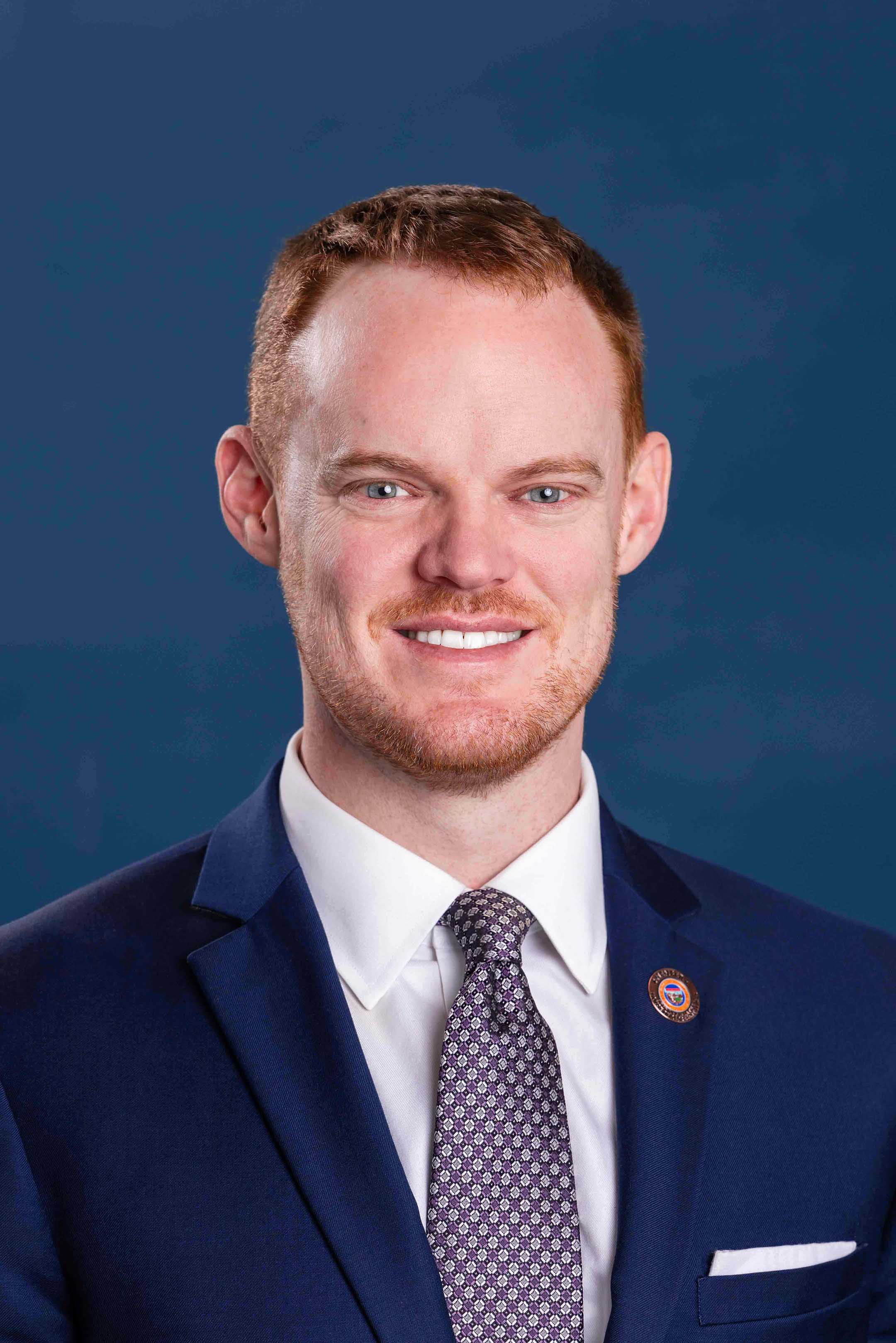
Rep. Kevin Volk
Sponsored bills
Maddy summaryHB 2853 establishes the Tribal Community College Operations Fund to provide dedicated state funding for tribal community colleges in Arizona. It appropriates $13.3 million annually from the state general fund for fiscal years 2025-2026 through 2027-2028, directly supporting operational costs like instructional programs and daily expenses for these institutions. The fund, managed by the Department of Administration, is exempt from standard appropriation lapse rules and can use investment earnings. This bill specifically targets tribal community colleges to strengthen their ongoing operations through guaranteed state funding.
Maddy summaryHB 2890 requires Arizona employers with 15 or more employees to provide reasonable accommodations for pregnant workers, such as modified equipment, more frequent breaks, schedule changes for prenatal visits, or assistance with manual labor, unless it causes significant difficulty for the business. Employers cannot force pregnant employees to use vacation or sick leave when accommodations are possible and must post clear notices about these requirements in employee handbooks and provide written notice to new hires, current employees, and pregnant employees within 10 days of pregnancy notification. The bill directly affects pregnant employees and their employers across Arizona, ensuring they receive specific workplace adjustments without penalty. It takes effect after the law is enacted, with written notices required within 180 days of the effective date.
Maddy summaryHB 2931 requires Arizona's delegates to an Article V constitutional convention to swear an oath committing to only discuss amendments within the "Legal Convention Scope" - defined as topics specified by Congress in its call and supported by at least two-thirds of states that applied for the convention. Delegates who violate this oath face immediate recall by the Arizona Legislature, a $5,000 civil penalty, and potential felony charges for voting on unrelated amendments. The bill establishes clear mechanisms for enforcing this restriction, including mandatory reporting of violations to state leaders and the Attorney General. It directly affects Arizona's convention delegates and the state's ability to control their participation in a potential national constitutional convention.
Maddy summaryHB 2854 creates a new Hopi Tribe special license plate program. It requires a one-time $32,000 payment to the Arizona Department of Transportation for implementation, after which the payer designs the plate (subject to department approval). The program includes a $25 annual fee per plate, with $17 designated as an annual donation to the Hopi Tribe. This special plate option can be combined with personalized plate requests, but only applies to vehicles registered under the Hopi Tribe's specific arrangement. The bill directly affects Hopi Tribe members and anyone funding the plate design.
Maddy summaryHB 2848 requires corporations, limited liability companies (LLCs), or their affiliates purchasing single-family homes in Arizona to register with the Corporation Commission before buying. County recorders cannot record deeds unless the buyer provides proof of registration and the deed states the property is not the owner’s primary residence. The bill limits corporate buyers to owning no more than 5% of a county’s single-family homes (or 100 units annually in counties with over 400,000 residents), with exceptions for entities owning fewer than ten homes statewide. These rules apply to commercial investors buying homes, aiming to limit large-scale corporate ownership in residential neighborhoods.
Maddy summaryHB 2812 modifies Arizona law to expand in-state tuition eligibility for certain students. It allows individuals who attended Arizona high school (public, private, or homeschool) for at least two years and graduated in-state - regardless of immigration status - to qualify for in-state tuition at Arizona universities or community colleges. The bill specifically clarifies that people without lawful immigration status meet the residency requirements under this provision. It does not change requirements for nonimmigrant visa holders (e.g., students on F-1 visas). The amendment requires a three-fourths legislative vote for implementation.
Maddy summaryHB 2770 requires all Arizona school district governing board members to complete either eight hours of professional development training or attend a training workshop related to school governance. This new requirement (Section 15-349) directly affects all current and future school board members statewide, replacing the previous option of meeting education or experience standards as a qualification path. The bill amends qualification rules (Section 15-421) to allow the training to satisfy the "two years of experience" requirement in areas like school finance, student safety, or governance. It does not change existing residency, voter registration, or conflict-of-interest rules but adds training as a concrete, accessible pathway for candidates.
Maddy summaryHCR 2052 proposes a constitutional amendment to repeal a provision requiring Arizona school districts and community college districts to follow annual spending limits. Currently, these limits are calculated by the Economic Estimates Commission based on 1979-1980 spending levels adjusted for student population and cost of living. The repeal would eliminate this requirement, removing the need for annual calculations and the spending cap for districts. This change would require voter approval and a governor's proclamation to take effect.
Maddy summaryHB 2816 appropriates $122,300,300 from Arizona's state general fund and $402,981,400 in Medicaid funding for the Department of Economic Security's developmental disabilities program during fiscal year 2024-2025. This bill provides specific supplemental funding to cover program expenses without altering eligibility or service requirements. The funding directly supports the state's developmental disabilities services, which assist individuals with disabilities and their families. As a funding measure, it does not change program rules or create new policy.