

Maddy summaryHB 2684 prohibits pedestrians from congregating or soliciting (e.g., asking for money) on traffic islands, medians, highway ramps, or unsafe locations without sidewalks. It directly affects pedestrians who gather in these specific high-risk areas, such as busy roadways or unprotected medians. The bill establishes a tiered enforcement approach: a first violation receives only a warning, a second violation is a civil traffic violation (likely involving a fine), and third or subsequent violations are classified as a class 1 misdemeanor. The law aims to improve pedestrian safety by restricting gathering in locations where pedestrians face significant traffic dangers.
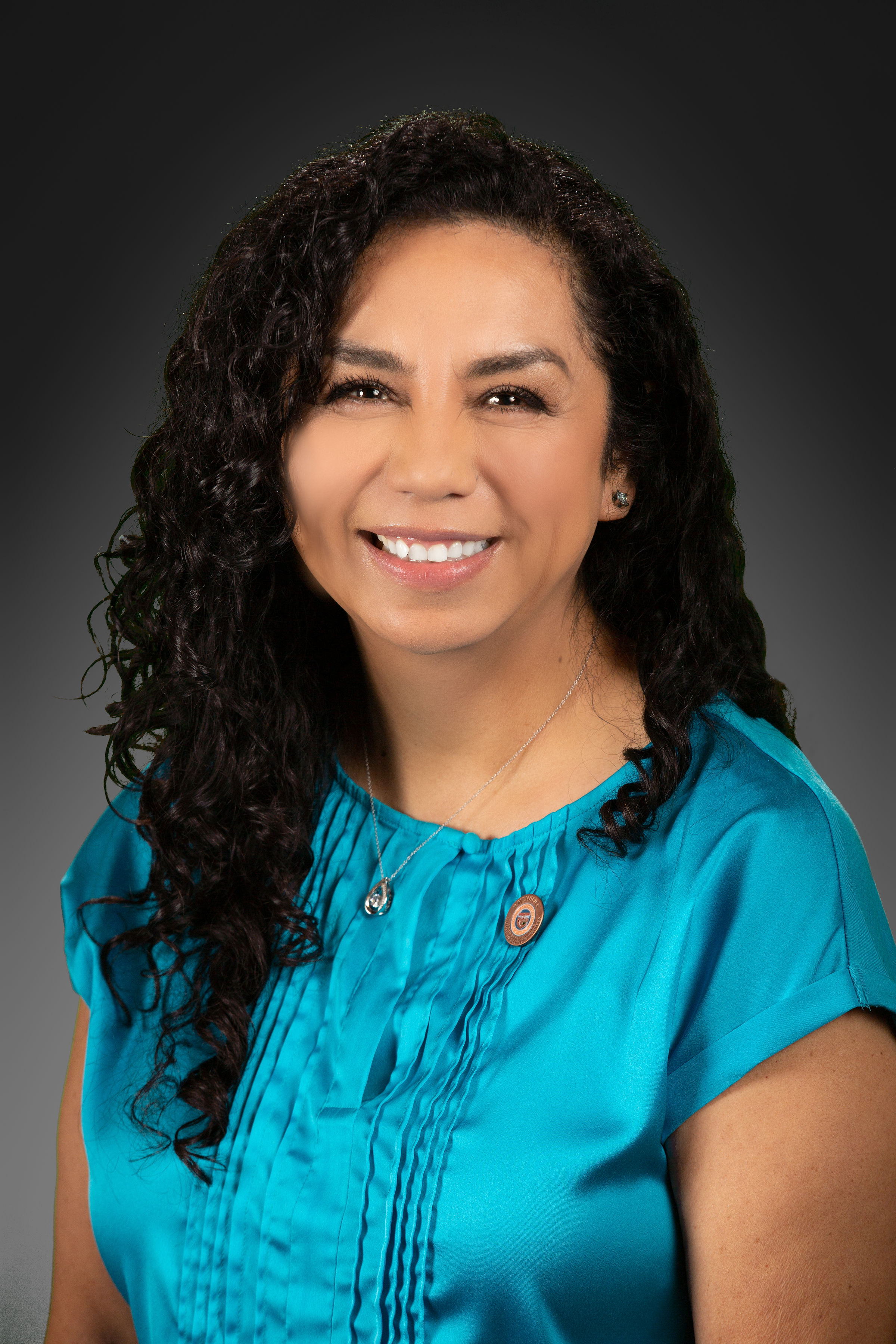
Rep. Teresa Martinez
Sponsored bills
Maddy summaryArizona's SB 1313 prohibits cities, counties, and other local governments from requiring residents to recycle materials that aren't currently being actively recycled. The bill defines "actively recycled" as materials reprocessed into new products, meaning localities can't mandate recycling for items not actually turned into new items. It applies to all Arizona municipalities and counties, amending existing recycling laws to prevent misleading recycling claims. The law takes effect upon passage, ensuring residents aren't pressured to sort materials that don't enter actual recycling streams.
Maddy summaryHB 2764 proposes to make "Howdy" the official state greeting of Arizona by adding it to the Arizona Revised Statutes. This symbolic bill would require state government communications, documents, or interactions to use "Howdy" as the designated greeting. It directly affects state agencies and official state communications but has no practical policy impact on residents or services. The bill is purely ceremonial and does not alter any laws, taxes, or regulations. (Procedural bill; summary limited to 2 sentences as requested.)
Maddy summaryHCR 2014 is a proposed constitutional amendment that would change how Arizona's House of Representatives seats are designated and establish an independent redistricting commission. Starting in 2027, each legislative district would elect two representatives whose seats would be labeled "A" and "B" based on the alphabetical order of their names (surname then first name), requiring candidates to run for a specific seat. It also creates a five-member independent redistricting commission with strict rules to ensure political balance (no more than two members from the same party) and requires members to have been registered voters for at least three years without recent political office or lobbying roles. This amendment must be approved by Arizona voters to take effect.
Maddy summaryHB 2705 amends Arizona election laws to require strict compliance with nomination petition rules for candidates. It specifies exact wording for partisan and nonpartisan petitions, clarifies that signatures from multiple counties are acceptable for district offices, and allows post office box addresses for candidates with protected residences. The bill directly affects candidates seeking public office who must gather signatures through these standardized petitions. It failed to advance in the legislature on February 19, 2025, so these changes did not become law.
Maddy summaryHCM 2016 is a symbolic resolution (not a binding bill) passed by the Arizona House of Representatives. It urges the U.S. Congress to support the Palo Verde Generating Station, Arizona's largest nuclear power plant, highlighting its role as a major clean energy source (supplying 70% of Arizona's carbon-free energy), economic contributor ($2.3 billion annual impact), and employer (2,000+ full-time workers). The resolution cites the plant's use of recycled water, lower costs compared to solar, and public support for nuclear energy (56% in a 2024 survey) to make its case. It does not create new policy but requests congressional recognition and support for the facility.
Maddy summaryHB 2768 appropriates $7 million from Arizona's state general fund for the University of Arizona during fiscal year 2025-2026 to fund campus safety infrastructure and vehicle upgrades. This funding directly affects the University of Arizona by enabling specific safety improvements on its campus. The bill also exempts this appropriation from standard state rules requiring annual re-approval, ensuring the funds remain available for the designated purpose without needing renewal each year.
Maddy summarySB 1630 establishes a study committee to examine issues affecting Arizona inmates aged 55+ who are aging within the state correctional system. The committee, composed of legislative members, corrections and healthcare officials, and community representatives (including a former inmate or family member), will research release programs, healthcare access, and transitions to long-term care. It must develop recommendations for a step-by-step release plan and a healthcare roadmap, submitting a final report to state leaders by December 31, 2025. This is a procedural bill creating a study body - not a policy change - and directly affects aging incarcerated individuals in Arizona.
Maddy summarySB 1686 clarifies that the county recorder is the "officer in charge of elections" for Arizona counties, directly affecting county election officials. It updates rules for establishing election precinct boundaries and designating polling places, requiring county recorders to set boundaries by October 1 before elections and follow specific guidelines for combining precincts or using voting centers. The bill also mandates that public schools must provide space for polling places unless principals deny requests with written reasons like lack of space or safety concerns. These changes aim to standardize election administration procedures for county recorders managing polling locations.
Maddy summarySB 1065 reduces state general fund appropriations by approximately $10 million across 44 Arizona state agencies and institutions for fiscal year 2024-2025, including courts, universities, health services, and departments like agriculture and veterans' services. The bill directly affects these entities by cutting specific line-item funding, such as $1.2 million from the Arizona Health Care Cost Containment System and $11 million from Arizona universities. Key provisions include a total $10.995 million cut for Arizona State University and specific protections preventing deeper cuts (beyond 3.45%) to three university programs: ASU's School of Civic and Economic Thought, NAU's Economic Policy Institute, and U of A's Center for Philosophy of Freedom. The bill makes concrete fiscal adjustments without changing program structures or creating new policies.