

Maddy summaryThis bill revises Arizona's voter registration verification process, requiring county recorders to send follow-up notices to voters with undelivered mail and giving them 35 days to update their address or risk having their registration changed to inactive. It mandates new proof of U.S. citizenship requirements for voter registration (including documents like driver's licenses, birth certificates, or passports), while existing voters are exempt unless moving between counties. The bill also requires counties to maintain inactive voter lists for four years and participate in a multistate electronic voter registration system to improve registration accuracy.
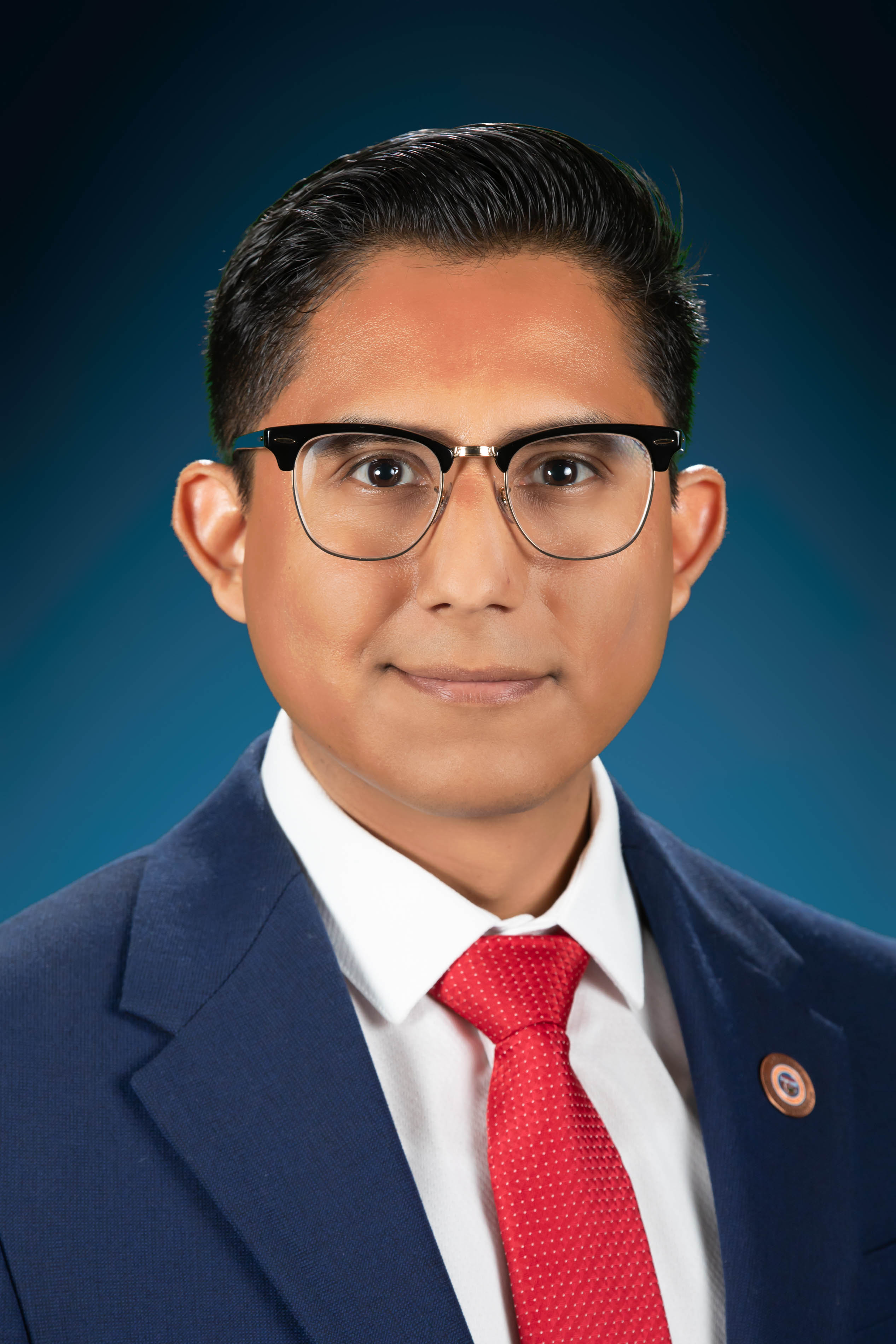
Rep. Oscar De Los Santos
Sponsored bills
Maddy summaryHB 2485 amends Arizona law to define key terms related to power plants and transmission lines, such as specifying that a "plant" must be a thermal, nuclear, or hydroelectric generating unit of at least 125 megawatts and a "transmission line" must be a high-voltage line (115,000 volts or more) over one mile long with five or more structures. These definitions clarify regulatory requirements for new electric infrastructure, ensuring consistent application in siting decisions. The bill directly affects utilities, local governments, and citizens involved in the approval process for major power facilities.
Maddy summaryThis bill defines key terms for Arizona's Empowerment Scholarship Account (ESA) program, establishing eligibility criteria for students. It specifies who qualifies as a "qualified student" (e.g., children with disabilities, military children, students from low-performing schools, or those on Indian reservations) and outlines requirements like prior enrollment in public schools. The definitions directly affect families seeking ESA funds to cover education costs at participating schools. As a foundational definitional bill (not a new policy), it sets the framework for future program implementation without altering current funding or administrative processes.
Maddy summaryArizona's SB 1342 prohibits municipal law enforcement agencies and health care facilities from stopping, detaining, or questioning people based on immigration status, sharing databases with federal immigration authorities, or using local resources to assist federal immigration enforcement. It requires agencies to collect immigration-related information only when strictly necessary for public services and prohibits disclosing such records without specific written consent from the individual. Agencies must also submit annual reports tracking federal immigration requests (like detainers) and their responses. The law does not block compliance with valid federal warrants or actions required by federal law.
Maddy summaryHB 2717 establishes new rights for sexual assault survivors in Arizona, directly affecting individuals reporting sexual assault and the medical/legal professionals who interact with them. The bill creates confidentiality for communications between survivors and sexual assault victim advocates (requiring advocates to complete 30 hours of training), prohibits charging survivors for medical exams, and guarantees survivors the right to consult an advocate during medical exams or police interviews. It also mandates that survivors be informed of their rights in writing before exams or interviews, restricts the use of sexual assault kits against survivors for unrelated offenses, and requires medical providers to notify law enforcement within 48 hours of collecting evidence. The law aims to protect survivors' privacy and ensure they receive support during sensitive medical and legal processes.
Maddy summaryHB 2576 amends Arizona's charter school funding statute to establish an annual inflation adjustment for charter school per-student payments. It sets fixed base rates ($2,131.90 for K-8 and $2,484.69 for 9-12) and requires the legislature to increase charter additional assistance by at least 2% or the GDP price deflator change (whichever is lower) starting in 2026-2027, while ensuring funding never drops below the 2026 base level. This directly affects Arizona charter schools receiving state funding, ensuring their per-student payments rise with inflation. The bill focuses on concrete funding mechanics rather than enrollment or operational rules. The bill is currently in early legislative stages (House First/Second Reading, 2026).
Maddy summaryHB 2701 requires Arizona's legislative council to display the official flags of all 22 federally recognized tribes in Wesley Bolin Plaza. This bill directly affects the state government (specifically the legislative council) and the tribes whose flags are displayed. It mandates a new, specific location for tribal flag display as part of public space management, without altering funding or other provisions in the existing monument law. The bill focuses on a procedural requirement for flag placement, not broader policy changes.
Maddy summaryHB 2510 modifies Arizona's election rules to allow counties to adjust polling locations for early and emergency voting. It permits county election boards to combine adjacent precincts for early voting if they anticipate reduced turnout at specific locations, and to establish emergency voting centers with specified hours and locations through a board resolution. Voters at emergency centers may update registration information without strict ID requirements. This affects county election officials, voters who use early/emergency centers, and schools that may provide polling space (though schools can deny requests for safety or space reasons). The bill does not change early voting hours but adjusts where voting can occur.
Maddy summaryHCR 2024 proposes amending Arizona's constitution to explicitly state that voting is a fundamental right, requiring any law restricting voting to be narrowly tailored for a compelling government interest. It would strengthen protections beyond the U.S. Constitution's equal protection clause, ensuring voting rights cannot be denied based on sex and extending equal eligibility to all citizens. The amendment clarifies that voting eligibility requires U.S. citizenship, age 18+, and state residency, while excluding individuals convicted of treason or felony (unless civil rights are restored). This constitutional change must be approved by Arizona voters at the next general election, as directed by the Secretary of State.
Maddy summaryHB 2505 extends early voting hours in Arizona to include the Saturday and Sunday before an election (open until 7:00 p.m.) and the Monday before until at least 3:00 p.m. (with counties allowed to extend to 7:00 p.m.). It establishes an emergency voting process for voters facing emergencies between 5:00 p.m. Friday and 5:00 p.m. Monday before an election, requiring a signed statement under penalty of perjury and identification. The bill also permits voters at early voting locations to update their registration information as outlined in state procedures. These changes apply to all elections in Arizona that utilize early voting.