

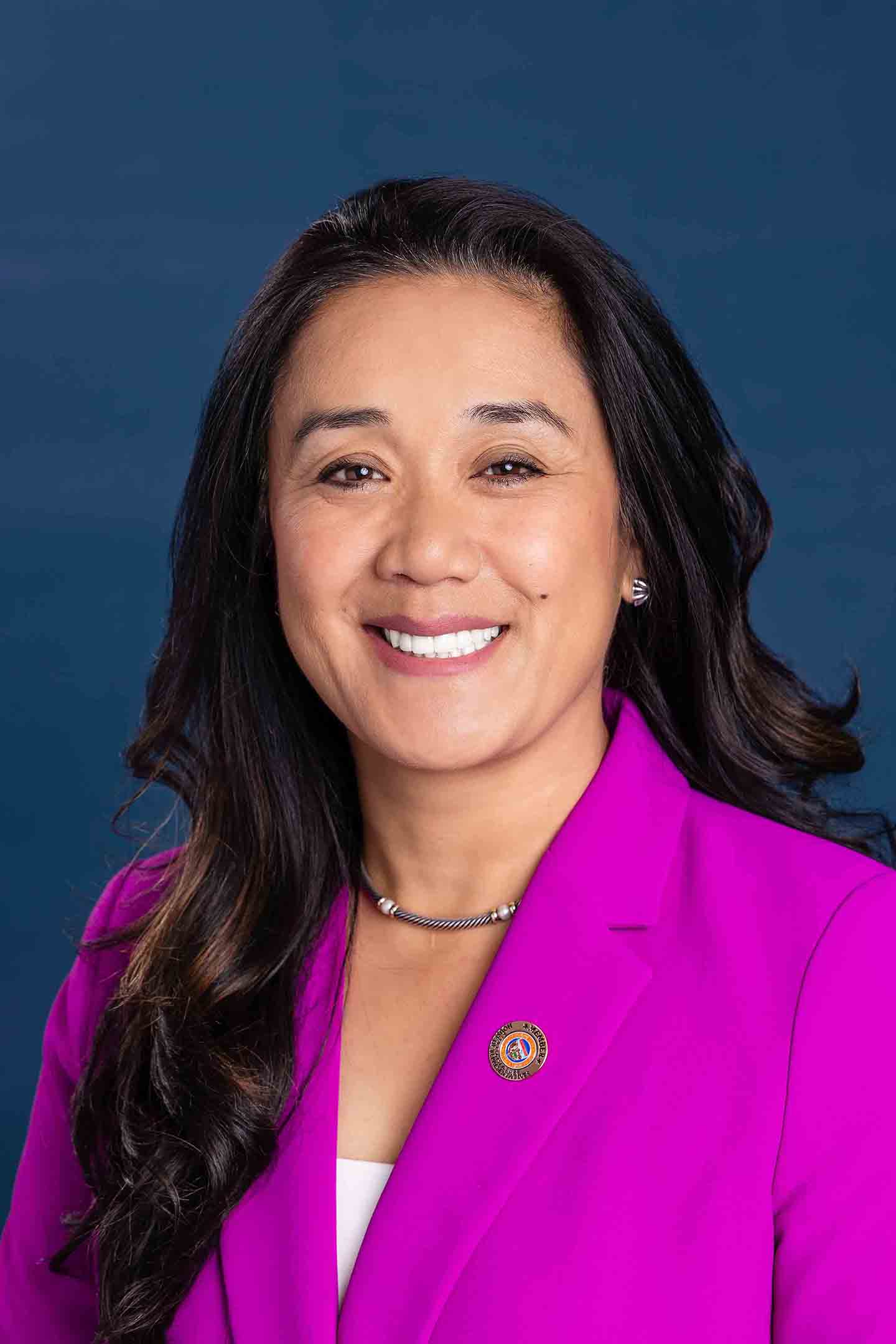
Photo of Junelle Cavero
D Arizona House · District 11 On the 2026 ballot

Rep. Junelle Cavero

Compare
Total votes
1,783
all sessions
Attendance
67%
773 missed
Lower than 78% of chamber peers
With party
95%
of cast votes
Near the chamber average
Bipartisan score
6%
crosses aisle rarely
Near the chamber average
Sponsored
234
bills & resolutions
Higher than 83% of chamber peers
Committees
4
assignments
234 bills and resolutions

Sponsored bills

Total
234
Primary
18
Co-sponsor
216
This page
234
matching current filters
Co-sponsor HB 4119
Introduced · Arizona House · Co-sponsor
Arizona jazz day

Maddy summaryHB 4119 designates April 30 as "Arizona Jazz Day" to recognize jazz music's cultural significance in Arizona and American heritage. The bill encourages residents to promote music education, celebrate jazz's role in creativity and unity, and participate in statewide jazz events and festivals. It explicitly states Arizona Jazz Day is not a legal holiday, making it a symbolic observance with no legal or financial requirements. This ceremonial bill does not impose new regulations or affect specific groups, focusing solely on cultural recognition.

Introduced Feb 17, 2026 1 co-sponsor
Co-sponsor HB 4091
Introduced · Arizona House · Co-sponsor
tribal government; law enforcement fund

Maddy summaryHB 4091 creates a grant program to provide funding to tribal governments on reservations located in Arizona counties with fewer than 500,000 residents. The grants can be used for hiring or retaining law enforcement officers, purchasing communication equipment, funding IT upgrades, or covering costs related to investigating turquoise alerts. The bill appropriates $10 million from the state general fund for fiscal year 2026-2027 to establish the Tribal Government Rural Law Enforcement Enhancement Fund, with no more than $100,000 annually allowed for administrative costs. The department administering the program must submit annual reports to the legislature by December 1st starting in 2027, detailing the program's effectiveness and improvement recommendations.

Introduced Feb 12, 2026 1 co-sponsor
Co-sponsor HB 4126
Introduced · Arizona House · Co-sponsor
individual savings plan program; appropriation

Maddy summaryHB 4126 establishes Arizona's state-run retirement savings program, targeting private-sector employees without access to employer-sponsored retirement plans (excluding government workers, railroad employees, and those in existing tax-qualified plans). The bill creates an Arizona Retirement Savings Board to manage the program, allowing workers to contribute to individual retirement accounts (IRAs) through automatic payroll deductions. Key provisions include requiring the Board to develop investment policies, partner with private administrators, and ensure federal tax compliance for the program. The title references "appropriation" as future funding would be authorized separately, but the bill itself only sets up the program framework.

Introduced Feb 12, 2026 1 co-sponsor
Co-sponsor HB 4082
Introduced · Arizona House · Co-sponsor
social media platforms; user restrictions

Maddy summaryHB 4082 proposes that social media platforms in Arizona must restrict users under 16 from accessing content and engaging in social interactions. The bill requires platforms to implement age-appropriate design features, default safety settings, and annual risk assessments to address potential harms to minors. Platforms must also publish safety policies detailing risk categories and mitigation strategies, while maintaining compliance records for three years. This legislation directly affects social media companies operating in Arizona, mandating specific safety measures without restricting business transactions or advertising.

Introduced Feb 12, 2026 1 co-sponsor
Co-sponsor HB 4090
Introduced · Arizona House · Co-sponsor
liquor licenses; issuance; prohibition

Maddy summaryHB 4090 amends Arizona's liquor licensing law to clarify requirements for issuing and transferring spirituous liquor licenses. It creates a rebuttable presumption that public convenience and community interest were established when an existing licensed location applies for a new license (unless challenged with evidence), and requires businesses to notify the state liquor director within 30 business days of any ownership or control change. The bill mandates a preinvestigation to verify qualifications for ownership transfers and allows local governments (cities, towns, or counties) to review applications and provide recommendations within 60 days. This affects bars, liquor stores, and other businesses holding spirituous liquor licenses, as well as local governments overseeing license applications.

Introduced Feb 12, 2026 1 co-sponsor
Co-sponsor HB 4095
Introduced · Arizona House · Co-sponsor
income tax; additional rate; education

Maddy summaryHB 4095 establishes the Classroom Site Fund to provide additional resources for Arizona public schools, using existing state transfers (not an additional tax). It requires school districts and charter schools to use these funds for specific purposes like class size reduction, teacher compensation (with a performance component), and student support services. School districts must adopt a performance-based teacher compensation system that includes metrics such as academic progress, attendance, and graduation rates, and obtain approval from at least 70% of eligible teachers. Annual reporting on fund usage and program outcomes is also mandated for all recipients.

Introduced Feb 12, 2026 1 co-sponsor
Co-sponsor HB 4072
Introduced · Arizona House · Co-sponsor
tattooing; body piercing; registration

Maddy summaryHB 4072 requires tattoo artists and body piercing professionals in Arizona to register with the state board. The bill defines "tattoo artist" as someone who practices tattooing (placing ink under the skin) and "piercing professional" as someone who practices body piercing (making permanent skin holes). It establishes fees for registration, including a $100 initial application fee and a $100 renewal fee every two years. This requirement applies to anyone providing these services for compensation in Arizona.

Introduced Feb 12, 2026 1 co-sponsor
Primary HB 4116
Introduced · Arizona House · Lead sponsor
TPT; use tax; exemption; batteries

Maddy summaryHB 4116 amends Arizona's use tax law to add a new exemption for the sale of precious metal bullion (like gold, silver, platinum, rhodium, and palladium) to the ultimate consumer. This exempts these items from the state's use tax, which typically applies to tangible personal property. The change directly affects businesses selling precious metal bullion to individual consumers, as they will no longer need to collect use tax on these sales. The exemption applies to bullion that has been smelted or refined, with value based on its metal content rather than form. This is a specific tax policy change, not a procedural or commemorative measure.

Introduced Feb 12, 2026 0 co-sponsors
Co-sponsor HB 4121
Introduced · Arizona House · Co-sponsor
property tax; appeals; valuation; notice

Maddy summaryHB 4121 updates Arizona's property tax appeal process for owners challenging valuation or classification decisions. It requires property owners to submit a copy of their appeal petition to the county assessor via certified mail within 25 days (or 20 days for certain denied petitions) and specifies standardized notice formats for tax corrections. The bill also clarifies procedures for appealing to either county boards (where established) or the state board of equalization, including deadlines and required documentation. These changes primarily affect property owners who dispute their tax assessments and ensure consistent administrative processes across counties.

Introduced Feb 12, 2026 1 co-sponsor
Co-sponsor HB 4065
Introduced · Arizona House · Co-sponsor
DES; continuation

Maddy summaryHB 4065 formally ends the Arizona Department of Economic Security (DES) on July 1, 2034, despite its title suggesting continuation. The bill repeals existing DES-related statutes and sets a specific termination date, while making these changes retroactive from July 1, 2026. It directly affects DES operations, requiring the department to cease providing social services, welfare programs, vocational rehabilitation, and developmental disability services by 2034. The legislation does not create new programs but outlines a structured phaseout of the department’s current functions.

Introduced Feb 12, 2026 1 co-sponsor
Showing 21 to 30 of 234 bills
Previous 1 2 3 4 24 Next