

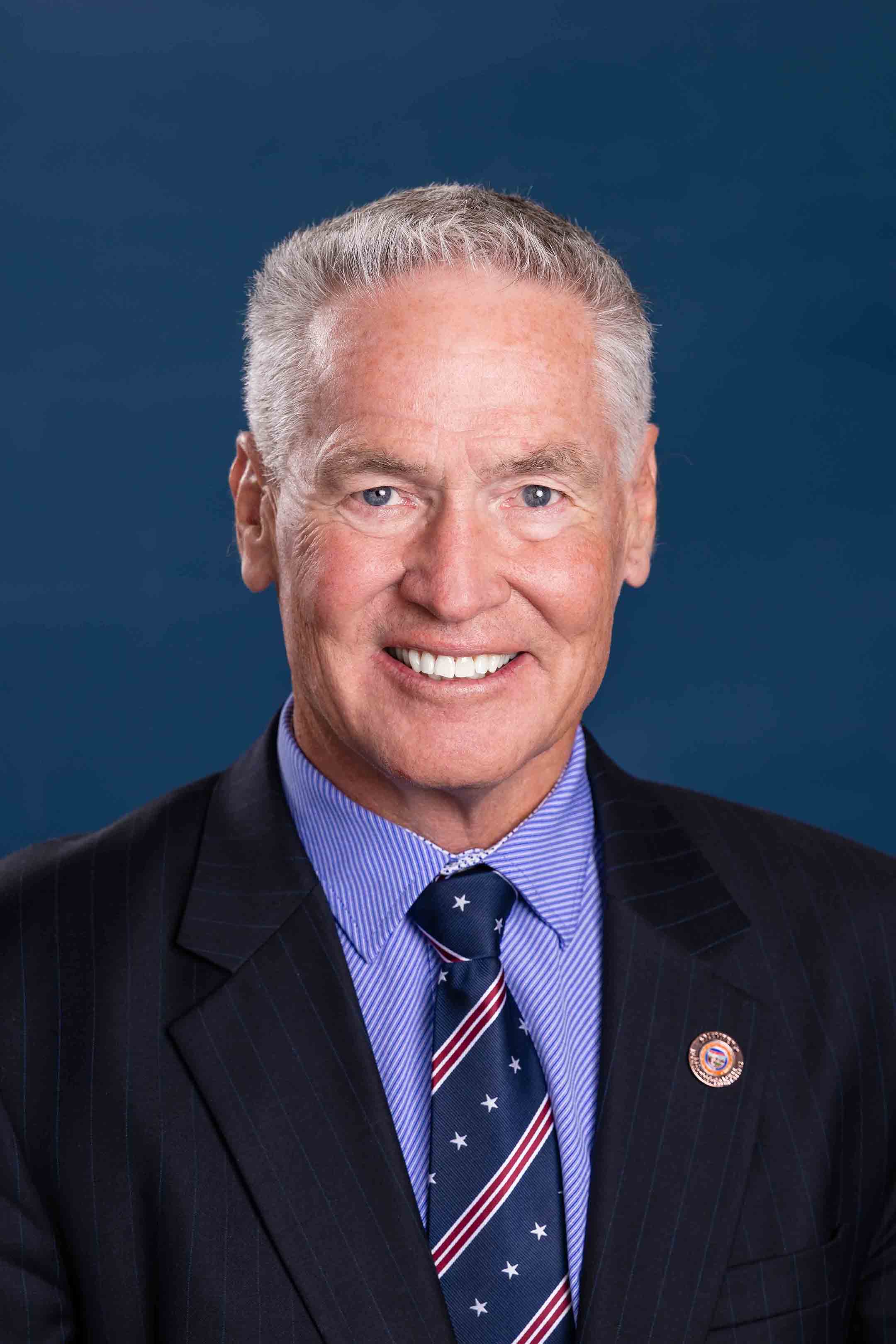
Photo of Ralph Heap
R Arizona House · District 10

Rep. Ralph Heap

Compare
Total votes
1,672
all sessions
Attendance
98%
39 missed
Higher than 86% of chamber peers
With party
84%
of cast votes
Lower than 83% of chamber peers
Bipartisan score
10%
crosses aisle rarely
Higher than 83% of chamber peers
Sponsored
127
bills & resolutions
Near the chamber average
Committees
3
assignments
127 bills and resolutions

Sponsored bills

Total
127
Primary
23
Co-sponsor
104
This page
127
matching current filters
Primary HB 2810
Introduced · Arizona House · Lead sponsor
developmental disabilities; Prader-Willi syndrome

Maddy summaryHB 2810 amends Arizona's developmental disabilities definitions to explicitly include Prader-Willi syndrome as a qualifying condition under the state's definition of "developmental disability." This change affects individuals with Prader-Willi syndrome who may now qualify for state-funded developmental disability services. The bill does not create new programs or funding but ensures the condition is recognized in eligibility criteria. (Procedural definition bill, 2 sentences)

Introduced Feb 12, 2025 0 co-sponsors
Co-sponsor HB 2870
Introduced · Arizona House · Co-sponsor
law enforcement agencies; applicants; summary

Maddy summaryHB 2870 requires Arizona law enforcement agencies (including police departments, sheriff's offices, and public safety departments) to provide written explanations to job applicants who were not hired or advanced in the hiring process. The summary must detail specific reasons, such as concerning background information, physical fitness test failures, medical concerns from exams, polygraph results, or psychological exam issues. This bill directly affects applicants whose hiring was denied or delayed by these agencies. It aims to increase transparency in hiring decisions by standardizing the information provided to applicants. The bill is currently in early legislative stages (House first and second readings).

Introduced Feb 12, 2025 1 co-sponsor
Primary HB 2809
Introduced · Arizona House · Lead sponsor
GRRC; legal rights; petition

Maddy summaryHB 2809 creates a formal process for Arizonans to challenge state agency rules or practices they believe are unfair, illegal, or overly burdensome. It allows citizens to petition an agency for rule changes or reviews, and if rejected, appeal within 30 days to the state council for review. The council can then require agencies to justify their actions, modify or void rules that exceed authority or violate rights, or declare practices "unduly burdensome." This directly affects individuals and businesses interacting with state agencies by providing a structured path to contest regulations. The bill does not change existing rules but establishes a new review mechanism for agency decisions.

Introduced Feb 12, 2025 0 co-sponsors
Co-sponsor SB 1686
Introduced · Arizona Senate · Co-sponsor
election duties; county recorders

Maddy summarySB 1686 clarifies that the county recorder is the "officer in charge of elections" for Arizona counties, directly affecting county election officials. It updates rules for establishing election precinct boundaries and designating polling places, requiring county recorders to set boundaries by October 1 before elections and follow specific guidelines for combining precincts or using voting centers. The bill also mandates that public schools must provide space for polling places unless principals deny requests with written reasons like lack of space or safety concerns. These changes aim to standardize election administration procedures for county recorders managing polling locations.

Introduced Feb 11, 2025 1 co-sponsor
Co-sponsor HB 2766
Introduced · Arizona House · Co-sponsor
municipal tax; exemption; food

Maddy summaryHB 2766 requires Arizona cities and towns to apply municipal sales taxes uniformly to all food items (without differential rates), while exempting most food for home consumption, food packaging, and sales paid with SNAP benefits. It specifically excludes candy, confectionaries, soft drinks, and soda from the general food exemption, ensuring these remain taxable. The bill also exempts low-cost food sales to vulnerable groups (elderly, homeless, disabled) when purchased using SNAP benefits through approved programs. This amendment, effective January 1, 2026, modifies existing tax code to standardize food taxation and expand specific exemptions.

Introduced Feb 11, 2025 1 co-sponsor
Co-sponsor HB 2761
Introduced · Arizona House · Co-sponsor
health professionals; disclosure; unprofessional conduct

Maddy summaryHB 2761 requires health professionals in Arizona to clearly state their exact license title and type in all advertisements for their services, including business cards, websites, and phone solicitations. This applies to any promotion intended to attract patients or clients, such as brochures, social media, or radio ads, but excludes network provider materials created by regulated entities. Violating this rule is classified as unprofessional conduct, subjecting the professional to disciplinary action by their licensing board, and may also trigger investigation by the attorney general if it violates other laws. The bill directly affects all licensed health professionals who advertise services, ensuring transparency about their qualifications.

Introduced Feb 11, 2025 1 co-sponsor
Co-sponsor HB 2729
Introduced · Arizona House · Co-sponsor
online exchange; groundwater sales

Maddy summaryHB 2729 creates a regulated marketplace for selling or leasing groundwater rights within Arizona’s Phoenix, Tucson, and Pinal active management areas. It allows owners of grandfathered groundwater rights to sell or lease portions of those rights (while reserving 35% of their original right), requiring detailed transaction notices to the Department of Water Resources. Buyers receive 65% of the groundwater forgone by sellers, and forgiven water is split 50/50 between aquifer recharge and reserved for future water supply applications. The bill mandates an online public exchange platform for these transactions and exempts conveyed groundwater from replenishment obligations and city water use calculations.

Introduced Feb 11, 2025 1 co-sponsor
Co-sponsor HB 2707
Introduced · Arizona House · Co-sponsor
vaccination status; unprofessional conduct; policies

Maddy summaryHB 2707 prohibits health professionals and health care institutions in Arizona from denying care or providing substandard care based on a patient's vaccination status. The bill makes it unprofessional conduct for health professionals to discriminate in this way and bans health care institutions from adopting policies allowing such discrimination. It directly affects hospitals, clinics, and medical providers by requiring them to treat all patients equally regardless of vaccination status. The law changes existing professional standards to explicitly forbid this form of discrimination in healthcare settings.

Introduced Feb 5, 2025 1 co-sponsor
Co-sponsor HB 2188
Introduced · Arizona House · Co-sponsor
national guard; active duty combat

Maddy summaryHB 2188, titled "Defend the Guard Act," restricts Arizona's National Guard from being deployed in active duty combat without specific authorization. It requires either a formal U.S. Congressional declaration of war or a concurrent resolution passed by the Arizona legislature to deploy troops in combat. The bill defines "active duty combat" as participating in armed conflict, performing hazardous duties in foreign countries, or carrying out war-related tasks. This law directly affects Arizona's National Guard deployment decisions, ensuring they align with the bill's authorization requirements.

Introduced Jan 29, 2025 1 co-sponsor
Co-sponsor HB 2055
In committee · Arizona House · Co-sponsor
immunizations; requirements; exemption

Maddy summaryHB 2055 creates a new exemption from required immunizations (for school, work, or licensing) if no vaccine meets seven specific safety and transparency criteria. These criteria include long-term cancer/fertility studies, two-year clinical trials with placebo comparison, public reporting of vaccine injuries, combined vaccine safety data, proof the vaccine is safer than the disease itself, and manufacturer liability for defects. The exemption applies to individuals or their dependents and cannot be restricted by state agencies. It does not change existing immunization requirements but establishes this narrow path for those whose vaccine fails to meet all seven criteria.

In committee Jan 28, 2025 1 co-sponsor
Showing 111 to 120 of 127 bills