

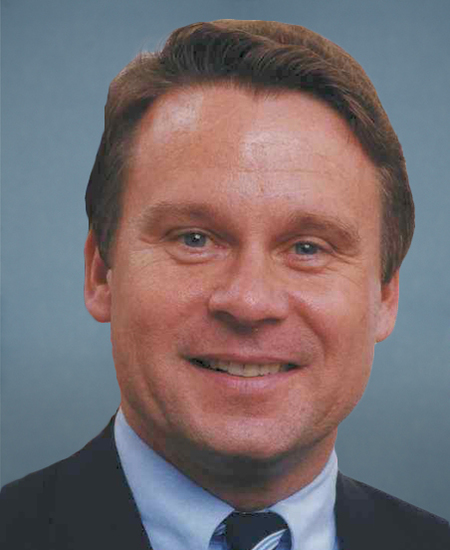
Photo of Christopher H. Smith
R United States House · District 4 · New Jersey On the 2026 ballot

Rep. Christopher H. Smith

Compare
Total votes
2,818
all sessions
Attendance
98%
50 missed
Higher than 76% of chamber peers
With party
91%
of cast votes
Near the chamber average
Bipartisan score
5%
crosses aisle rarely
Near the chamber average
Sponsored
1,050
bills & resolutions
Near the chamber average
Committees
3
assignments
1,050 bills and resolutions

Sponsored bills

Total
1,050
Primary
156
Co-sponsor
894
This page
1,050
matching current filters
Primary HR 5160
Passed · Alaska House · Lead sponsor
Stem Cell Therapeutic and Research Reauthorization Act of 2025

Maddy summaryThis bill reauthorizes funding for the C.W. Bill Young Cell Transplantation Program, setting $31 million for fiscal year 2025 and $33 million annually for fiscal years 2027-2031. It also extends the deadline for the national cord blood inventory program from 2026 to 2031. The legislation directly affects stem cell research programs and cord blood banks by maintaining federal funding levels and prolonging the inventory program’s timeline. These provisions ensure continuity for existing research infrastructure and blood bank operations without introducing new policy changes.

Passed Jul 21, 2026 0 co-sponsors
Primary HR 4348
Passed · Alaska House · Lead sponsor
To reauthorize the Kay Hagan Tick Act, and for other purposes.

Maddy summaryThis bill reauthorizes federal programs focused on preventing and responding to tick-borne diseases through 2026-2030, extending existing efforts beyond their previous expiration. It updates the National Strategy for Vector-Borne Diseases to emphasize identifying, reporting, preventing, and responding to these illnesses. The bill modifies two sections of the Public Health Service Act to continue funding for health departments working on vector-borne disease control. It directly affects public health programs and state/local health departments managing tick-borne disease prevention and response.

Passed Jul 21, 2026 0 co-sponsors
Co-sponsor HR 3747
Passed · Alaska House · Co-sponsor
Accelerating Access to Dementia and Alzheimer’s Provider Training Act

Maddy summaryThe AADAPT Act reauthorizes and expands Project ECHO grants to improve Alzheimer’s and dementia care through technology-enabled training. It specifically funds grants for healthcare providers in rural, frontier, or medically underserved areas to enhance early diagnosis, quality care, and provider retention for dementia patients. The bill authorizes $1 million annually (2027-2032) for these dementia-focused training programs, requiring funds to supplement - not replace - existing resources. This directly supports primary care providers licensed to serve underserved communities, using collaborative online learning to address care gaps.

Passed Jul 21, 2026 1 co-sponsor
Co-sponsor HR 2821
Passed · Alaska House · Co-sponsor
FDA Modernization Act 3.0

Maddy summaryHR 2821, the FDA Modernization Act 3.0, requires the FDA to update regulatory language within one year of enactment. It directs the agency to replace all references to "animal tests" with "nonclinical tests" in 22 specific sections of the Code of Federal Regulations related to drug development and approval processes. The bill also adds a definition for "nonclinical test" into relevant FDA regulations to align with prior legislative changes. This update applies directly to pharmaceutical manufacturers and FDA reviewers who follow these regulatory guidelines during drug development. The changes aim to modernize terminology without altering current testing requirements.

Passed Jul 21, 2026 1 co-sponsor
Co-sponsor HR 1266
In committee · Alaska House · Co-sponsor
Combating Illicit Xylazine Act

Maddy summaryHR 1266, the Combating Illicit Xylazine Act, adds xylazine - a veterinary sedative increasingly found in illicit drug mixtures - to Schedule III of the Controlled Substances Act, regulating its use and trafficking. It directly affects veterinarians, animal owners, and manufacturers by allowing xylazine to be legally dispensed for animal use under specific veterinary prescriptions, while prohibiting non-veterinary human use. The bill includes transition periods (60 days for practitioners, 1 year for labeling) to ease compliance for manufacturers and practitioners, and requires the DEA and FDA to expedite necessary applications. It also mandates two congressional reports on xylazine's illicit use and trafficking patterns, and directs the Sentencing Commission to review penalties for offenses involving xylazine.

In committee Jul 21, 2026 1 co-sponsor
Co-sponsor HR 6007
Passed · Alaska House · Co-sponsor
To name the Department of Veterans Affairs community-based outpatient clinic in Newton, New Jersey, as the "Anthony "Tony" J. Gallopo VA Clinic".

Maddy summaryThis bill renames the Department of Veterans Affairs community-based outpatient clinic in Newton, New Jersey, as the "Anthony 'Tony' J. Gallopo VA Clinic." It directly affects the clinic's official designation and all federal references to it, including documents and maps. The change takes effect upon the bill's enactment, with no policy or funding changes involved. As a ceremonial naming bill, it honors Anthony "Tony" J. Gallopo but does not alter VA services or benefits.

Passed Jul 16, 2026 1 co-sponsor
Co-sponsor HR 7651
In committee · Alaska House · Co-sponsor
Chloe Cole Act of 2026

Maddy summaryHR 7651, the Chloe Cole Act of 2026, prohibits healthcare providers from performing certain medical interventions on minors under 18 aimed at altering physical development to align with gender identity. These "covered interventions" include puberty blockers, hormone treatments, and specific surgeries, but exclude medically necessary care for conditions like disorders of sexual development or traumatic injuries. The bill creates a federal civil lawsuit right for affected minors or their parents against providers who perform such interventions, allowing claims for damages including emotional distress and punitive awards, with strict liability for providers after the law's enactment. It explicitly allows exceptions for legitimate medical treatments and requires providers to prove such exceptions apply if challenged.

In committee Jul 15, 2026 1 co-sponsor
Co-sponsor HR 7184
In committee · Alaska House · Co-sponsor
PRESS Act

Maddy summaryHR 7184, the PRESS Act, targets equipment used to manufacture illegal drugs by making it unlawful to sell specific items like tableting machines, gelatin capsules, or related chemicals when the seller knows the equipment will be used to produce controlled substances for unlawful U.S. importation. It directly affects manufacturers and distributors of these drug-making tools who have knowledge or reasonable cause to believe their products will facilitate illegal drug trafficking. The bill adds new prohibitions to the Controlled Substances Act and increases potential prison sentences for violations, with penalties reaching up to 20 years for major offenses involving large quantities of equipment or chemicals. These changes aim to disrupt the supply chain for illicit synthetic drugs by holding equipment sellers accountable for their intended use.

In committee Jul 15, 2026 1 co-sponsor
Co-sponsor HR 5880
In committee · Alaska House · Co-sponsor
Fight Illicit Pill Presses Act

Maddy summaryHR 5880, the "Fight Illicit Pill Presses Act," requires manufacturers and distributors of pill-making machines (like tableting machines) and their critical parts (such as punches and dies) to affix permanent serial numbers to these items. It mandates that these businesses report transactions involving such machines to the Attorney General and maintain records of the serial numbers. The law prohibits tampering with or knowingly distributing machines with removed or altered serial numbers. This directly affects manufacturers, distributors, and sellers of these specific pill-production machines and parts, aiming to improve tracking of equipment used in illicit drug manufacturing.

In committee Jul 15, 2026 1 co-sponsor
Co-sponsor HR 3514
In committee · Alaska House · Co-sponsor
Improving Seniors’ Timely Access to Care Act of 2025

Maddy summaryThis bill requires Medicare Advantage plans to implement electronic pre-approval systems for medical services by 2028 and meet transparency reporting standards starting in 2027. Plans must publicly report data on approval/denial rates, appeal outcomes, response times, and technology use for pre-approval requests, including details on how denials relate to clinical criteria. It establishes a 24-hour response timeframe for certain requests and mandates annual reviews of pre-approval requirements based on data and input from seniors and providers. The law directly affects Medicare Advantage plans, seniors enrolled in these plans, and healthcare providers who submit pre-approval requests. These changes aim to make the pre-approval process faster, more transparent, and more accountable for seniors seeking covered medical services.

In committee Jul 15, 2026 1 co-sponsor
Showing 21 to 30 of 1,050 bills
Previous 1 2 3 4 105 Next