

Maddy summaryHR 899 would end the U.S. Department of Education by requiring its termination on December 31, 2023. This bill directly affects the Department of Education itself, eliminating its federal structure and operations. The key provision is a specific termination date, ending the agency's existence as a standalone cabinet-level department. No other mechanisms or affected groups are specified in the bill text.
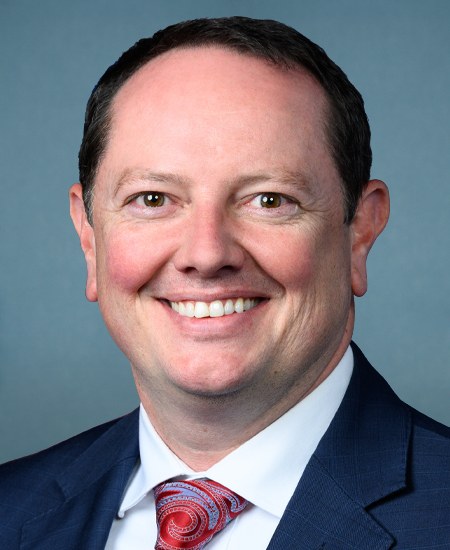
Rep. Eric Burlison
Sponsored bills
Exposing Lewd Outlays for social Networking companies Act or the ELON Act This bill requires a report on Department of Justice (DOJ) payments to certain companies (i.e., Twitter, Meta, Google, Microsoft, and Apple) and imposes a one-year moratorium on payments to these companies. Specifically, the bill requires the Government Accountability Office to submit a report to specified congressional committees on all payments made by DOJ to these companies since January 1, 2015. Additionally, the bill imposes a one-year moratorium on DOJ that temporarily prohibits the use of federal funds to make payments to these companies, unless such funds are lawfully owed to any such company.
Maddy summaryHJRES 31 is a procedural resolution seeking congressional disapproval of a specific rule issued by the Department of Veterans Affairs (VA) concerning reproductive health services. It targets the VA's September 2022 rule (published in the Federal Register as 87 Fed. Reg. 55287), which established policies for reproductive health care access for veterans. If passed, this resolution would nullify the VA rule, preventing it from taking effect under the Congressional Review Act (Chapter 8 of Title 5, U.S. Code). The bill directly affects the VA’s ability to implement its reproductive health services policy for veterans.
Maddy summaryHCONRES 13 is a concurrent resolution expressing Congress's support for maintaining the current policy that prohibits imposing new fees on local radio stations for playing music. It states that Congress should not impose any performance fee, tax, royalty, or charge on local radio stations for broadcasting sound recordings over the air, or on businesses like bars and restaurants that play music publicly. The resolution argues that such fees would harm local radio stations - critical sources for emergency information and community programming - and jeopardize the economic model that has supported both radio and the music industry for decades. This resolution does not create new law but formally opposes potential legislative changes to the existing fee structure.
Maddy summaryHR 812, titled the "Inflation Reduction Act of 2023," would repeal the Inflation Reduction Act of 2022 (Public Law 117-169) and rescind unobligated funds from that law. This bill does not establish new policy but reverses the existing 2022 legislation, halting its ongoing programs and redirecting unused funding. It directly affects the continuation of the 2022 act's provisions, including climate and healthcare initiatives, by formally terminating them. The key mechanism is the repeal of the 2022 law and the rescission of remaining unobligated balances.
Maddy summaryHR 139, the SHOW UP Act of 2023, requires U.S. federal executive agencies to revert to their pre-pandemic telework policies and levels by January 30, 2024 (30 days after enactment). Agencies must conduct a study on pandemic-era telework impacts - including effects on mission performance, costs from underused offices or incorrect pay classifications, and employee productivity - and submit a new plan to Congress if they seek to expand telework beyond 2019 levels. This plan requires certification from the Office of Personnel Management (OPM) Director confirming it will improve mission performance, reduce real property costs, lower locality pay expenses, and ensure secure remote work tools without increasing overall costs. The bill directly affects all federal executive agencies and their telework policies, mandating a return to pre-2020 practices while creating a formal process for any future telework expansion.
This resolution impeaches Secretary of Homeland Security Alejandro Nicholas Mayorkas for high crimes and misdemeanors related to his actions regarding border security and immigration.
Maddy summaryHR 719 would prohibit employers from entering neutrality agreements with unions during organizing campaigns. It specifically bans employers from providing "organizing assistance" (such as funding or space for union activities) as part of such agreements. The bill amends labor law to define "organizing assistance" as a prohibited "thing of value" under Section 302. This directly affects employers and unions involved in unionization efforts by restricting certain forms of employer support for organizing drives.
Maddy summaryThe Union Integrity Act protects union employees who report labor law violations, testify, file complaints, or object to illegal practices from retaliation by their union. It prohibits unions from terminating or discriminating against these employees and requires the Secretary of Labor to investigate complaints within 60 days, ordering remedies like reinstatement, back pay, and compensation if violations are found. Employees can file complaints within 180 days of retaliation, and the law prevents unions from requiring employees to waive these protections through employment agreements or arbitration. This bill directly affects union employees and unions by strengthening whistleblower safeguards in labor relations.
Maddy summaryHR 720, the Davis-Bacon Repeal Act, would eliminate the Davis-Bacon wage requirements for federal construction projects. It directly affects federal contractors working on projects funded by the government, removing a longstanding rule that required them to pay prevailing wages. The bill repeals Subchapter IV of Chapter 31 in Title 40 of the U.S. Code, which established these wage standards. The repeal would take effect 30 days after enactment but would not impact existing contracts or bids outstanding on that date.