

Maddy summaryThis bill renames a United States Postal Service facility at 114 Center Street East in Roseau, Minnesota, as the "Floyd B. Olson Post Office." It directly affects the physical post office location and all official references to it in government documents. The key provision updates all federal records, maps, and communications to use the new name, ensuring consistency in official correspondence and signage. This is a ceremonial designation with no changes to postal services, funding, or policy.
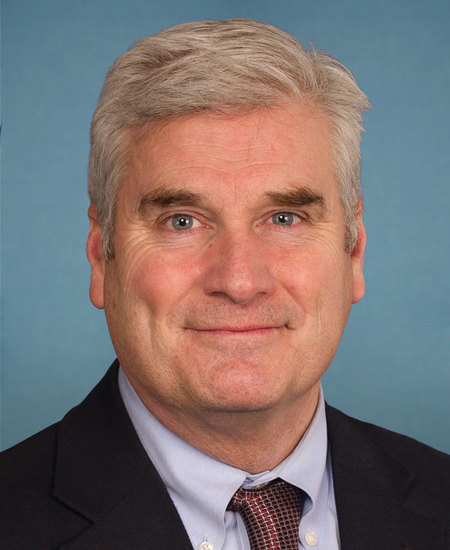
Rep. Tom Emmer
Sponsored bills
Maddy summaryThis bill requires Congress to approve major federal regulations before they take effect. It would mandate that agencies submit detailed reports including cost-benefit analyses, economic impact assessments, and other information to Congress before implementing significant regulations. Major rules - defined as those with at least $100 million annual economic impact or significant effects on costs, competition, or employment - would need a joint resolution of approval from Congress within 70 session days. Nonmajor rules would follow a less stringent disapproval process. The bill aims to increase legislative oversight of the regulatory process, requiring Congress to formally review and approve rules that significantly impact the economy or public regulations.
Maddy summaryThis bill requires federal financial regulators to coordinate with state insurance regulators before collecting data from insurance companies, ensuring they first check if the data is already available through state agencies or public sources. It strengthens confidentiality protections by preventing the sharing of nonpublic data with federal regulators from waiving existing privacy rights under federal or state law. Insurance companies and state regulators are directly affected, as the law governs how data is shared between federal financial regulators and state agencies. The bill modifies existing rules to streamline data collection while maintaining privacy safeguards.
Maddy summary# Summary of Tariff Suspensions and Reductions Document This document is a section of U.S. tariff legislation that adds new duty suspensions and reductions to the Harmonized Tariff Schedule of the United States. It contains 120 new tariff items (numbered 9902.19.01 through 9902.20.24) that provide temporary duty-free or reduced-duty status for various goods. Key features of the document: 1. **Content**: The list includes chemical compounds, food ingredients, and specialty materials (such as shelled pine nuts, licorice extract, refined carrageenan, various chemicals like neodymium metal, tungsten concentrate, and numerous organic compounds). 2. **Tariff Treatment**: Most entries are listed as "Free" (meaning duty-free), with a few having small duty rates (e.g., 0.7%, 1.8%, 2.3%, 2.9%, 4.3%). 3. **Effective Period**: All listed suspensions and reductions are effective "On or before 12/31/2025." 4. **Purpose**: These tariff suspensions are intended to support specific industries, reduce costs for manufacturers, or provide temporary relief for certain imported goods. 5. **Technical Details**: Each entry includes the chemical name, CAS number, Harmonized Tariff Schedule code, duty rate, and a brief description of the product. This document represents a legislative amendment to the Harmonized Tariff Schedule, specifically adding new subchapter II of chapter 99 to provide temporary duty relief for these specific items.
Maddy summaryThis bill clarifies that Medicare must cover fully implanted active middle ear hearing devices as prosthetics, not as hearing aids. It requires the Centers for Medicare & Medicaid Services (CMS) to update its rules within 60 days of the bill's enactment to remove these devices from Medicare's hearing aid coverage exclusion. This directly affects Medicare beneficiaries who rely on these specific implanted devices for hearing. The change means these devices will now be covered under Medicare's prosthetic benefits, not excluded under hearing aid rules, without altering existing coverage for other hearing aids.
Maddy summaryHR 7480, the Disabled Veterans Housing Support Act, changes how housing programs calculate income eligibility for veterans. It requires states and local governments to exclude service-connected disability compensation from the Department of Veterans Affairs (VA) when determining if a veteran qualifies as "low or moderate income" for HUD housing programs (like Section 8 or public housing). This directly helps disabled veterans whose VA disability pay would otherwise disqualify them from housing assistance they need. The bill also mandates a report within one year examining how VA disability pay is treated across HUD programs and recommending improvements to better serve veterans. The change simplifies access to housing support by ensuring VA benefits aren't counted as income for these programs.
Maddy summaryThe Financial Services Innovation Act of 2024 establishes Financial Services Innovation Offices (FSIOs) at major financial regulatory agencies to help companies develop new financial products and services. The bill creates a process where companies (called "covered persons") can submit petitions requesting modifications or waivers of existing regulations that might hinder their financial innovations. If approved, agencies enter into enforceable compliance agreements with these companies that outline how they can offer the innovation while meeting regulatory requirements. The bill also requires agencies to publish regulatory areas that could be modified and establishes a committee to coordinate between agencies on these petitions, aiming to reduce regulatory barriers for innovations that improve consumer access, protect consumers, and don't pose systemic risks.
Maddy summaryThe Working Dog Commemorative Coin Act (HR 807) directs the U.S. Treasury to mint three types of commemorative coins honoring working dogs' service: $5 gold coins, $1 silver coins, and half-dollar coins with specific weight and composition requirements. Each coin will carry a surcharge ($35 for $5 coins, $10 for $1 coins, $5 for half-dollars) that will be paid directly to America's VetDogs to support their programs providing service dogs for veterans, the disabled, and others. The coins will be issued in 2027 with designs reflecting working dogs' roles in military, detection, therapy, and assistance work. The legislation specifies that all surcharge revenue must fund America's VetDogs' operations without creating new government programs. This is a commemorative measure focused on honoring working dogs' contributions through coin sales, with all surcharge funds going to a specific nonprofit organization.
Maddy summaryHR 8706, the "Dismantle DEI Act of 2024," would prohibit federal agencies from maintaining diversity, equity, and inclusion (DEI) offices, programs, or training by requiring the closure of existing DEI offices within 90 days and banning federal funding for DEI-related activities. The bill defines "prohibited diversity, equity, and inclusion practices" as those that discriminate based on race, color, ethnicity, religion, biological sex, or national origin, or require training that asserts a particular group is inherently superior or inferior. It would rescind several executive orders related to racial equity and gender inclusion, and prohibit the use of federal funds for DEI-related activities across all federal agencies, contractors, and grant recipients. The bill contains limited exceptions for Equal Employment Opportunity offices and disability rights enforcement offices as historically organized and operated.
Maddy summary# Summary of Proposed Higher Education Act Amendments This document outlines significant proposed amendments to the Higher Education Act of 1965, primarily as part of the "College Cost Reduction Act." The key elements include: ## Accreditation Reform - Major overhaul of accreditation standards, requiring accrediting agencies to demonstrate independence from trade associations - New requirements for accrediting agencies to assess student achievement outcomes, including median value-added earnings relative to median total price charged - Introduction of an "Alternative Quality Assurance Experimental Site Initiative" to test non-accredited institutions - Protections for religious institutions, including a new process for appealing accreditation decisions related to religious mission - Removal of "litmus tests" that would require institutions to support specific political viewpoints ## Student Success Initiatives - Establishment of "Postsecondary Student Success Grants" to increase participation, retention, and completion rates for high-need students - Focus on evidence-based practices, with tiered requirements (tier 1, 2, and 3 reforms) - Mandatory inclusion of high-need student populations (low-income, first-generation, military-connected, etc.) - Requirements for institutions to report on completion rates, retention rates, and student demographics ## Regulatory Changes - Repeal of numerous existing regulations including: * Closed school discharges * Borrower defense to repayment * Pre-dispute arbitration * False certification requirements * Ability-to-benefit rules * Financial responsibility regulations - New restrictions on incentive compensation for recruiters - Changes to third-party servicer definitions and regulations ## Transfer and Credit Policies - New requirement that institutions cannot deny transfer credit based solely on the source of accreditation - Requirements for transparent transfer policies - Changes to reverse transfer policies ## Other Key Provisions - Modifications to the National Advisory Committee on Institutional Quality and Integrity (NACIQI) - New definitions for "total price" and "value-added earnings" - Changes to the process for institutions to change accrediting agencies - New requirements for institutions to report on student outcomes The overall focus of these proposed amendments is to reduce regulatory burden on institutions, promote transparency, improve student outcomes (particularly for high-need students), modernize accreditation processes, and protect religious institutions' rights in accreditation decisions.