This resolution honors the veterans of the Philippine Commonwealth Army during World War II for their sacrifice to the United States and for their selfless service.
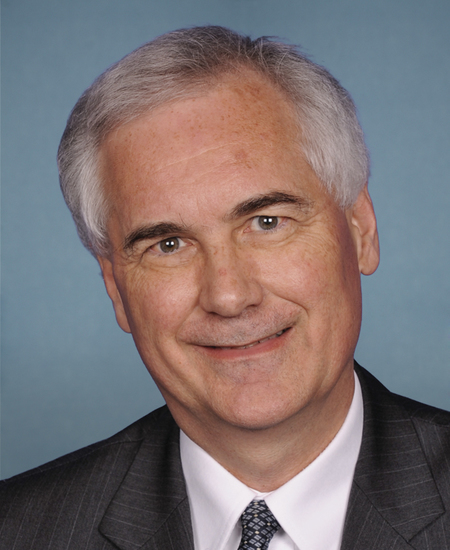
Rep. Tom McClintock
Sponsored bills
UNRWA Accountability and Transparency Act This bill makes changes to U.S. foreign policy in matters concerning the United Nations Relief and Works Agency for Palestine Refugees in the Near East (UNRWA). For purposes of this policy, the bill defines Palestinian refugee as a person who (1) resided from June 1946 to May 1948 in Mandatory Palestine (a region controlled by Britain until 1948), (2) was personally displaced as a result of the 1948 Arab-Israeli conflict, and (3) has not accepted citizenship or other permanent adjustment in status in another country. The bill withholds U.S. funding for the UNRWA unless the Department of State makes certifications concerning the UNRWA's staff, partners, and funding. Specifically, the State Department must certify that neither UNRWA staff and partners nor its funding and facilities are affiliated with terrorism or engaged in the dissemination of anti-American, anti-Israel, or anti-Semitic ideologies. Additionally, the State Department must certify that the UNRWA is subject to comprehensive financial audits by an independent auditing firm and is unaffiliated with any financial institutions that the United States considers to be complicit in money laundering or terror financing. The bill also requires the State Department to implement a plan to encourage other countries to align their activities and efforts regarding the UNRWA with U.S. policy objectives, including the phase out of the UNRWA by resettling Palestinian refugees in countries other than Israel and in territories not controlled by Israel. The State Department must report to Congress on this plan.

Alexander Lofgren Veterans in Parks (VIP) Act This bill makes the America the Beautiful-National Parks and Federal Recreational Lands Pass available, without charge, to members of the Armed Forces, veterans, and Gold Star Families. The pass covers the entrance fee and standard amenity recreation fee for all federal recreational lands and waters.
Proven Forest Management Act of 2021 This bill directs the Department of Agriculture (USDA), when conducting a forest management activity on National Forest System land, to coordinate with impacted parties to increase efficiency and maximize the compatibility of management practices across such land. USDA shall conduct such an activity on National Forest System land in a manner that attains multiple ecosystem benefits, including reducing forest fuels and maintaining biological diversity. However, a forest management activity shall not be conducted if the costs associated with attaining such benefits are excessive. Additionally, the USDA shall (1) establish any post-program ground condition criteria for a ground disturbance caused by a forest management activity required by the applicable forest plan, and (2) provide for monitoring to ascertain the attainment of relevant post-program conditions. The bill categorically excludes certain forest management activities for reducing forest fuels from certain environmental impact requirements. USDA or the Department of the Interior, as appropriate, in conjunction with land adjustment programs, may enter into contracts and cooperative agreements with a qualified entity to provide for fuel reduction, erosion control, reforestation, Stream Environment Zone restoration, and similar management activities on federal lands and nonfederal lands within such programs.
Listing Reform Act This bill modifies requirements concerning the review of petitions to add a species to the list of endangered or threatened species or to remove a species from the list. Specifically, the bill allows the Department of the Interior and the Department of Commerce to prioritize the consideration of petitions to list a species as endangered or threatened other than in the order in which the petitions are received. The appropriate department may not give general priority to petitions to add species to the list of endangered or threatened species over petitions to remove a species from the list. The deadline for the appropriate department to decide on whether or not a petition to list or remove a species should be granted is changed from within 12 months to as expeditiously as possible. The appropriate department is given the authority to preclude the listing of a species as threatened due to the likelihood of significant, cumulative economic effects that would result from such listing or from the likely resulting designation of critical habitat of the species. Once a petition is precluded due to those economic effects, the appropriate department may not reconsider that finding unless the department (1) determines there is endangerment of extinction of the species; or (2) receives a new petition to add the species to the list that includes an analyses concluding that alternative actions are possible other than those resulting in significant, cumulative economic effects.
This resolution denounces socialism and opposes the implementation of socialist policies in the United States.
Less Imprecision in Species Treatment Act of 2021 or the LIST Act of 2021 This bill revises the process for removing a species from the endangered or threatened species lists. A species must be removed from the endangered or threatened species lists if the Department of the Interior produces or receives substantial scientific or commercial information demonstrating that the species is recovered or that recovery goals set for the species have been met. The publication and notice of a proposed regulation to remove a species from the lists must consist solely of a notice of the removal. The bill establishes a process for removing species from the lists if they were erroneously or wrongfully listed. The bill prohibits a person from submitting a petition to list a species as a threatened or endangered species for 10 years if the person knowingly submitted a petition with information that was inaccurate beyond scientifically reasonable margins of error, fraudulent, or misrepresentative.
Necessary to Ensure Expeditious Delivery of Water Act or the NEED Water Act This bill addresses drought in California. The bill requires the Department of Commerce and the Department of the Interior to direct the operations of the Central Valley Project and allow operations of the State Water Project ( both in California) to provide the maximum quantity of water supplies possible to (1) the Central Valley Project agricultural, municipal and industrial, and refuge service and repayment contractors; and (2) State Water Project contractors. The bill extends the authority for the funding of federally owned storage projects and state-led storage projects that Interior determines to be feasible before January 1, 2031. The bill extends various water projects in California until December 31, 2031. The bill extends federal agency cooperation with state and local agencies to resolve water resource issues concerning the conservation of endangered species in any consultation or reconsultation on the coordinated operation of the Central Valley Project and the State Valley Project until December 31, 2036.
Wildfire Prevention and Drought Mitigation Act of 2021 This bill categorically excludes forest management activities carried out on specified public lands from requirements to conduct environmental assessments and environmental impact statements. In order to be excluded from environmental review, the primary purposes of such activities must be to protect a municipal or tribal water source from damage caused by wildfire; improve watershed or habitat conditions; improve, maintain, or restore water yield or quality; improve, maintain, or restore snowpack; or adapt the forest landscape to an increased threat of drought. The bill limits the categorical exclusion to activities that manage up to 10,000 acres of land. However, activities that manage up to 30,000 acres of land may be categorically excluded from environmental review if the activities are located in areas that (1) are in a severe, extreme, or exceptional drought; or (2) have been in such droughts in the previous five years.
Travel Mask Mandate Repeal Act of 2021 This bill prohibits federal agencies from mandating the use of masks or face coverings on planes, trains, buses, and other public conveyances and at transportation hubs to prevent the transmission of COVID-19. Specifically, the bill nullifies (1) the rule issued by the Centers for Disease Control and Prevention (CDC) on January 29, 2021, that mandates such use of masks or face coverings; and (2) orders and directives of the Transportation Security Administration that relate to the CDC rule.