

Maddy summaryHB 155 establishes a statewide database tracking monthly alcohol purchases in municipalities that restrict alcohol sales. It limits shipments to 10.5 liters of spirits or 24 liters of wine per month in these areas and requires shippers to check the database before delivering. The bill also restricts shipping addresses to a purchaser's residence or designated community sites in restricted zones, and denies license applications if they violate local sales restrictions. These changes directly affect alcohol licensees, retailers, and municipalities with local option sales restrictions.
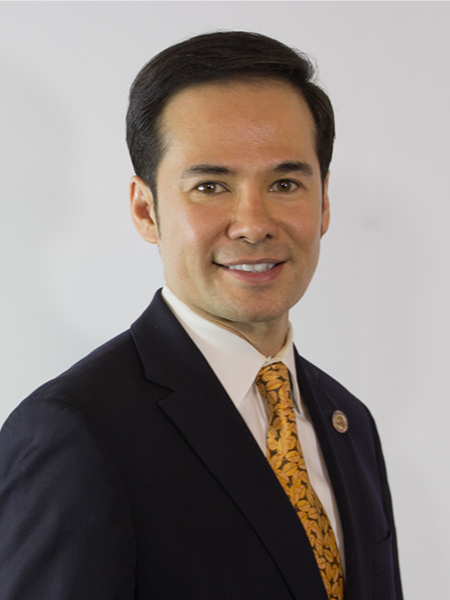
Rep. Neal Foster
Sponsored bills
Maddy summaryHB 229 would exempt Alaska from observing daylight saving time, meaning the entire state would permanently stay on standard time year-round instead of changing clocks twice annually. The bill amends Alaska Statutes to state that during the federal daylight saving period (defined under 15 U.S.C. 260a), the state will not advance clocks and will instead maintain standard time. This change would affect all Alaskans by eliminating the biannual clock changes, with the policy taking effect on November 3, 2026.
Maddy summaryHB 235 requires Alaska's Department of Environmental Conservation to test all public drinking water systems annually for perfluoroalkyl and polyfluoroalkyl substances (PFAS), harmful chemicals found in products like nonstick coatings and firefighting foam. If PFAS levels exceed specific safety limits (e.g., 4 parts per trillion for perfluorooctanoic acid), the state must provide free, safe drinking water to affected residents. The bill also establishes liability: entities that release PFAS without following safety rules must cover cleanup costs, while manufacturers may be liable if users complied with all regulations. This law directly affects public water systems, residents in contaminated areas, and companies handling PFAS-containing products.
Maddy summaryHB 125 changes how Alaska's Board of Fisheries members are appointed. It requires the governor to appoint seven members with specific representation: two for commercial fishing, two for sport fishing, two for subsistence fishing (selected from a list by the Alaska Federation of Natives), and one from the scientific community (selected from a list by NOAA). The governor must choose members based on knowledge and judgment, without regard to political affiliation or geographic location, while ensuring diverse viewpoints. The bill also includes a transition rule allowing current board members to finish their terms before new appointments follow these requirements.
Maddy summaryHB 203 prohibits the use of trawl or dredge fishing gear that causes substantial contact with the seafloor in Alaska state waters, directly affecting commercial fishermen using this gear. The bill requires the Department of Fish and Game to conduct a study on seafloor ecosystem health and bycatch (unintended catch) from such gear, reporting findings by January 2027. The study must assess impacts on fish habitats and recommend whether to ban or limit this gear for sustainable fisheries and public benefit. If adopted, the prohibition would take effect on January 1, 2028. The bill is currently under consideration by the Fisheries Committee.
Maddy summaryHB 105 requires Alaska public schools (K-12) to include mental health education in health curricula and mandates that schools provide parents with at least two weeks' notice before offering mental health instruction to their children. It directs the state Board of Education to develop age-appropriate mental health education guidelines in collaboration with health departments, tribal organizations, and mental health experts. The bill also expands existing health education requirements to explicitly include mental health, alongside topics like personal safety and substance abuse prevention. School districts must adopt policies allowing parents to withdraw children from mental health instruction or assessments, similar to existing provisions for other sensitive topics.
Maddy summaryHB 332 requires Alaska's Department of Environmental Conservation to develop and implement a statewide plan for regularly testing water, soil, fish, wildlife, and other environmental media for microplastics (defined as plastic particles under 5 millimeters). The department must use scientifically sound methods and update the testing schedule annually before July 1 in even-numbered years. This bill directly affects state environmental agencies by establishing mandatory testing protocols and reporting requirements for microplastic pollution. It does not alter existing public assistance programs, despite an unrelated amendment to health department duties appearing in the bill text.
Maddy summaryAlaska's HJR 35 is a resolution urging federal fisheries managers to maintain current bycatch limits for trawl fishing in federal waters off Alaska, require vessels to process and donate unintended catch (like salmon and seafloor species) instead of discarding it, and strengthen enforcement. It specifically targets trawl fisheries that incidentally capture salmon and bottom-dwelling species (such as crab and halibut), which affects commercial, subsistence, and sport fisheries. The resolution also calls for penalties for damaging seafloor habitats and supports federal research on reducing bycatch through better monitoring and gear innovation. As a non-binding resolution, it does not create new laws but requests specific actions from federal agencies like the National Marine Fisheries Service.
Maddy summaryHB 368 requires Alaska's Board of Fisheries to hold at least one annual meeting in communities under 7,000 people located off the main road system, plus one meeting per year in each of five geographic regions: Upper Yukon-Kuskokwim-Arctic, Western Alaska (including Kodiak), Southcentral, Prince William Sound (including Kodiak/Yakutat), and Southeast (including Yakutat). These provisions amend Alaska Statutes to ensure broader geographic representation in fisheries decision-making. The bill takes effect January 1, 2027, directly affecting how the Board schedules public meetings. It does not change fishing regulations but alters meeting location requirements.
Maddy summaryHB 30 creates an Office of Entrepreneurship within the Department of Commerce to support new businesses in Alaska. It requires state agencies to annually report on contracts with new businesses, including demographic details and geographic locations, and to suggest ways to improve access for these businesses. The bill also waives the initial $50 business license fee for new businesses (as defined by state law) and mandates the Office to issue an annual report on legislation affecting new businesses. These changes aim to streamline support for new business growth and increase transparency in government contracting.