This bill prohibits any program for which federal funds are appropriated on a discretionary basis from providing federal funds to a state that has implemented a program to provide assistance to individuals who are unlawfully present in the United States.
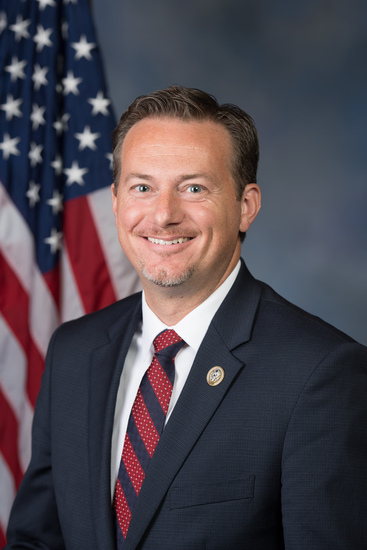
Rep. Michael Cloud
Sponsored bills
Home Health Emergency Access to Telehealth Act or the HEAT Act This bill provides for Medicare coverage of home health services that are furnished via telehealth during a public health emergency, in accordance with specified requirements. Specifically, the bill allows telehealth services to substitute for in-person home health services and to be considered as home health visits for purposes of payment under Medicare during a public health emergency. Such services (1) may not constitute more than 50% of the number of billable visits in a 30-day period, (2) must be furnished under a plan of care established by a practitioner with whom the beneficiary has an existing care relationship, and (3) must be furnished in accordance with the beneficiary's consent.
Rehabilitating Economic Success Through Overcoming Rural Emergencies Act or the RESTORE Act This bill expands the Department of Agriculture's Wildfire and Hurricane Indemnity Program Plus (WHIP+) to include coverage for losses of crops due to high winds or derechos, polar vortexes (including losses to dairy cooperatives due to power outages or curtailments), hailstorms, freeze, and droughts occurring in the 2020 and 2021 calendar years, with specified limitations. Under current law, the program provides disaster payments to agricultural producers who suffered crop, tree, bush, and vine losses resulting from hurricanes, wildfires, and other qualifying natural disasters that occurred in the 2018 and 2019 calendar years.
This resolution recognizes that the national debt is a threat to national security and that deficits are unsustainable, irresponsible, and dangerous. It also commits to (1) restoring regular order to the appropriations process, and (2) addressing the fiscal crisis faced by the United States.
Recognizing the Protection of Motorsports Act of 2019 or the RPM Act of 2019 [ sic ] This bill authorizes the modification of a vehicle's air emission controls for vehicles that are not legal for operation on a street or highway and are used solely for competition.
Stopping Border Surges Act This bill modifies immigration law provisions relating to unaccompanied alien minors and to asylum seekers. For certain unaccompanied inadmissible alien children, generally those not at risk of being trafficking victims nor having a fear of persecution, the Department of Homeland Security (DHS) shall repatriate the child. Currently, only inadmissible unaccompanied aliens from neighboring countries are subject to repatriation, and DHS has discretion whether to repatriate. When HHS releases an unaccompanied child to an individual, it shall provide DHS with certain information about that individual, including Social Security number and immigration status. The bill amends the definition of credible fear of persecution to require that such fear can be established by statements that are more probable than not. The bill also imposes certain rules relating to credible fear interviews, including requirements for recordings and interpreters. If an alien is granted asylum because of fear of persecution in a country, the alien shall be deemed to have renounced asylum status by returning to that country, if there has been no change in the country's conditions. The bill also (1) expands the definition of what constitutes a frivolous asylum application, (2) imposes additional limitations on eligibility for asylum, (3) shortens the deadline for applying for asylum, and (4) extends the time period an alien seeking asylum must wait before receiving employment authorization. Any individual who knowingly and willfully makes materially false statements or uses fraudulent documents in asylum-related proceedings shall be fined or imprisoned up to 10 years, or both.
Regulations from the Executive in Need of Scrutiny Act of 20 21 This bill revises provisions relating to congressional review of agency rulemaking. Specifically, the bill establishes a congressional approval process for a major rule. A major rule may only take effect if Congress approves of the rule. A major rule is a rule that results in (1) an annual effect on the economy of $100 million or more; (2) a major increase in costs or prices for consumers, individual industries, government agencies, or geographic regions; or (3) significant adverse effects on competition, employment, investment, productivity, innovation, or the ability of U.S.-based enterprises to compete with foreign-based enterprises. In addition, the bill establishes a congressional disapproval process for a nonmajor rule. A nonmajor rule may only take effect if Congress does not disapprove of the rule.
Lawful Interstate Transportation of Firearms Act This bill revises criminal provisions related to the interstate transportation of firearms and ammunition. An individual may transport a firearm between two places (e.g., states) where it is legal to possess, carry, or transport the firearm. During transport, the firearm must be unloaded and secured or securely stored. Additionally, an individual may transport ammunition, or a detachable magazine or feeding device, between two places where it is legal to possess, carry, or transport the ammunition, magazine, or feeding device. During transport, the ammunition, magazine, or feeding device must not be loaded into a firearm and must be securely stored. The term transport includes staying in temporary lodging; stopping for food, fuel, vehicle maintenance, an emergency, or medical treatment; or any other activity incidental to the transport. The bill prohibits the arrest or detention of an individual for a state or local firearm or ammunition violation unless there is probable cause to believe the individual failed to comply with the provisions of this bill, and there is probable cause to believe the individual committed another crime.

Border Visibility and Security Act This bill directs the Department of Homeland Security (DHS) to install surveillance technology and take other actions with respect to the U.S.-Mexico border. DHS shall deploy the most practical and effective technology available to achieve situational awareness and operational control of the border. Such technology may include radar surveillance systems, tunnel detection technology, and unmanned aerial vehicles. DHS is authorized to waive legal requirements as necessary in order to implement the necessary surveillance technology along the border. DHS shall also (1) construct a navigable road along at least 700 miles of the southwest border, (2) permanently eradicate certain foliage that grows along the Rio Grande river, and (3) report to Congress a comprehensive strategy about the barriers and technologies needed to secure operational control along the border. Drug cartel funds that have been criminally forfeited to the U.S. government shall be reserved for security measures along the U.S.-Mexico border.
Iran Sanctions Relief Review Act of 2021 This bill restricts the President's authority to unilaterally undertake certain actions with respect to Iran and increases congressional oversight of those actions. Specifically, the President must report to Congress before terminating or waiving sanctions related to Iran or taking a licensing action that significantly alters U.S. foreign policy with respect to Iran. Each report must (1) describe the proposed action and its rationale, and (2) indicate whether or not the action is intended to significantly alter foreign policy concerning Iran. If the intention is to alter that policy, the report must provide additional information about the policy objectives and anticipated effects of the action. After the President submits a report, the bill provides Congress with a 30-day period to review it; this period is extended to 60 days for reports submitted between July 10 and September 7. During this period, Congress may enact a joint resolution approving or disapproving the action. During the review period, the President may not take the action unless Congress passes a joint resolution of approval; if Congress enacts a joint resolution of disapproval, the bill prohibits the President from taking the action. The bill also outlines procedures for the introduction and consideration of these types of joint resolutions.