

Maddy summaryThis bill would require all states to recognize valid concealed carry permits issued by other states, allowing permit holders to carry concealed handguns (excluding machine guns) in any state that either issues such permits or doesn't prohibit concealed carry. It directly affects law-abiding gun owners with valid permits from their home state, ensuring they can carry in states with similar permit systems or no prohibitions. Key provisions include treating valid permit documents as proof of legal carry (reducing officer stops), shifting the burden of proof to prosecutors if challenged, and allowing civil lawsuits for violations with attorney's fee awards. The bill does not override state laws restricting firearms on private property or government land, nor does it affect federal gun restrictions like those in section 922(q).
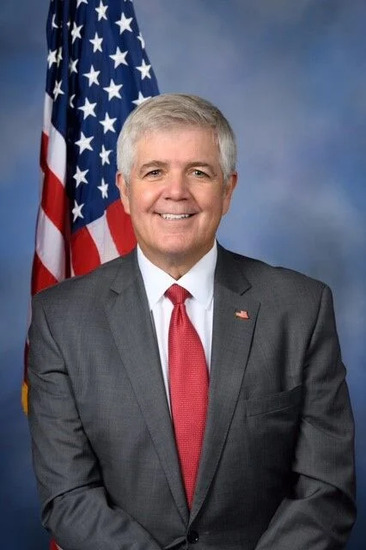
Rep. Cliff Bentz
Sponsored bills
Maddy summaryHRES 719 is a House resolution honoring Charles "Charlie" James Kirk, the founder of Turning Point USA who was assassinated on September 10, 2025. The resolution condemns his assassination and all political violence, extends condolences to his family, and calls on Americans to reject violence while promoting civil discourse. It specifically recognizes Kirk's legacy as a defender of constitutional principles and his role in inspiring youth through free speech and faith-based civic engagement. As a commemorative resolution, it does not enact policy changes but formally expresses the House's stance on honoring his life and legacy.
Maddy summaryHR 5454, the Medicare Advantage Prompt Pay Act, requires Medicare Advantage plans to pay 95% of valid claims (with complete data) within 14 days for electronic claims or 30 days for paper claims, starting January 1, 2027. Plans that miss these deadlines must pay interest at standard government rates and face $25,000 civil penalties per violation. The bill also mandates annual reports showing payment rates for in-network versus out-of-network claims and interest paid. This directly affects Medicare Advantage insurers and healthcare providers (like doctors and hospitals) who bill these plans.
Maddy summaryThis bill ensures Medicare coverage for new medical devices designated as "breakthrough devices" during a 4-year period after FDA approval. To qualify, devices must meet specific criteria, including FDA priority review, clinical data from Medicare beneficiaries, and a safety review showing benefits outweigh risks. Medicare must finalize coverage decisions within 6 months of manufacturer applications and before the 4-year period ends. The law appropriates $10 million annually (2025-2030) for Medicare to administer this process.
Maddy summaryHR 5401, the Pay Our Troops Act of 2026, ensures military personnel, civilian Defense workers, and supporting contractors receive pay during government funding gaps in fiscal year 2026. It appropriates emergency funds for active-duty service members, reserves, and their supporting personnel (including Coast Guard staff under DHS) if regular appropriations aren't enacted by the end of the fiscal year. The bill provides necessary pay and allowances during any period when full-year funding is unavailable, covering both active service and support roles. Funding expires when regular appropriations are passed, a funding resolution is enacted, or January 1, 2027, whichever comes first. This is a procedural measure to prevent pay delays for military and support staff during fiscal year 2026 funding lapses.
Maddy summaryThe RESULTS Act (HR 5269) changes how Medicare calculates payment rates for clinical diagnostic laboratory tests. It requires Medicare to collect data on private payor rates for widely available non-Advanced Diagnostic Laboratory Tests (non-ADLTs) from a qualifying independent claims data entity (a national nonprofit organization meeting specific criteria) rather than relying on data reported directly by laboratories. For tests where data is unavailable, the bill establishes default payment rates based on previous years' rates adjusted for inflation. The law also requires Medicare to publicly explain payment rates with supporting data, affecting Medicare beneficiaries, clinical laboratories, and private payors that provide services covered by Medicare.
Maddy summaryThis bill adds a new tax exclusion to the Internal Revenue Code, allowing individuals to exclude certain wildfire relief payments from their taxable income. It directly affects wildfire victims who receive compensation for losses like property damage, additional living expenses, or emotional distress from federally declared wildfires (after 2014), but only if the payments aren’t covered by insurance. The exclusion prevents double tax benefits by disallowing deductions for expenses already covered by the excluded payments, and it expires for payments received after December 31, 2032. The provision applies to payments received after December 31, 2025.
Maddy summaryThe Pacific Northwest Gray Wolves Relief Act of 2025 requires the Secretary of the Interior to reissue a 2020 federal rule that removed gray wolves from the endangered species list. This reissued rule would apply exclusively to gray wolf populations in Oregon and Washington, ending federal protections for wolves in those states. The bill mandates this reissuance within 60 days of enactment, directly affecting gray wolf management in Oregon and Washington. As a result, gray wolves in these states would no longer be classified as federally endangered under the Endangered Species Act.
Maddy summaryHR 5133, the Patients’ Right to Know Their Medication Act of 2025, requires drug manufacturers to provide standardized printed patient medication information (PMI) with each prescription dispensed in non-hospital settings. This PMI must include clear, plain-language details on drug name, usage instructions, warnings, side effects, storage, disposal, and interactions - formatted consistently with readable text and graphics. The bill directly affects patients receiving prescriptions, ensuring they get accessible, non-promotional printed information to improve safety and reduce errors. The FDA would establish regulations within one year of enactment, mandating that manufacturers include this standardized PMI on prescription drug packaging.
Maddy summaryHR 2073, the Defending our Dams Act, prohibits federal funding for any study, planning, or technical assistance related to removing or altering the Lower Snake River dams in Washington State. It specifically blocks the use of federal funds for evaluating dam removal alternatives, including replacements for power, flood control, or navigation. The bill also restricts spillage operations at these dams without explicit approval from the Army Corps of Engineers and Bonneville Power Administration, requiring consideration of all Columbia River System operations. The law directly affects federal agencies' ability to fund or plan for changes to the four specific dams: Ice Harbor, Lower Monumental, Little Goose, and Lower Granite.