

Maddy summaryThis resolution (SJR 20) formally commends the Alabama Birth Equity Initiative, a Black women-led coalition addressing Alabama's maternal health crisis. It recognizes their work to combat high maternal mortality rates - disproportionately affecting rural, Black, and Indigenous communities - through midwifery training, mobile health units, and addressing systemic issues like medical racism and food insecurity. The resolution does not create new laws or funding but expresses legislative support for the initiative's community-centered approach to improving prenatal care and birth outcomes. It specifically highlights their focus on expanding midwifery access and "wraparound" services like housing and childcare support.
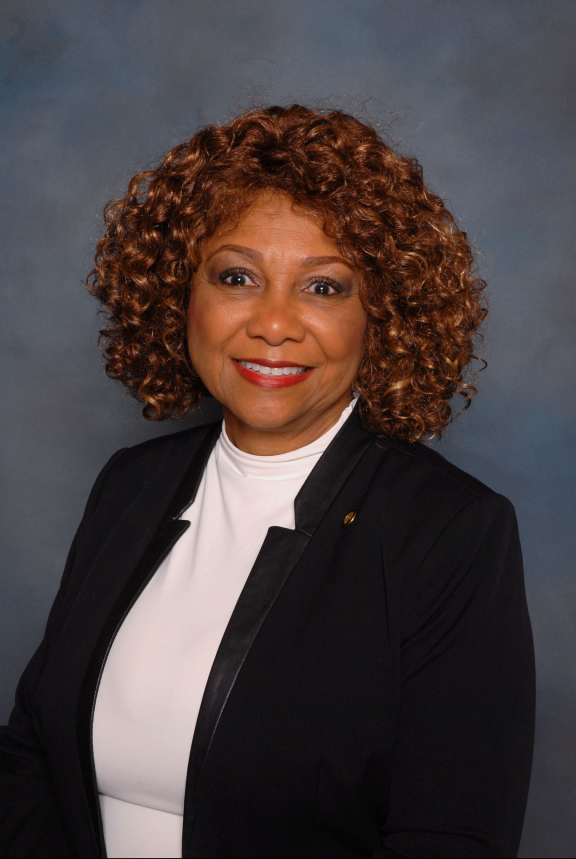
Sen. Linda Coleman-Madison
Sponsored bills
Maddy summarySB 204 would change how Alabama's local land banks handle properties with unpaid taxes. It shortens the redemption period for tax-delinquent properties to one year (allowing land banks to obtain deeds after this period), removes the requirement for public notice before selling land, and exempts land bank properties from local property taxes. The bill also allows multiple counties to create shared land banks through agreements, gives local governments authority to transfer properties for flood management, and permits the Governor to create land banks during emergencies. These changes primarily affect local land banks, county governments, and property owners facing tax sales.
Maddy summarySB 102 would allow pregnant women in Alabama to receive temporary Medicaid-covered prenatal care for up to 60 days while awaiting final Medicaid approval. It directly affects pregnant women who provide proof of pregnancy and household income to a qualified prenatal care provider but haven't yet been formally approved for Medicaid. The bill establishes a "presumptive eligibility" period: providers can approve coverage based on preliminary information, require the woman to apply for Medicaid within one month, and notify the Medicaid agency within five days. Coverage cannot be retroactively denied if the woman later applies or is denied Medicaid. This policy change implements a federal Medicaid option already available in other states, streamlining access to prenatal care during application processing.
Maddy summarySB 223 creates a new pathway for individuals to expunge certain nonviolent felony convictions from their criminal records. It allows a person convicted of a nonviolent Class C or Class D felony to petition the circuit court for expungement. To be eligible, the conviction cannot be for a sex offense or a crime of moral turpitude. Additionally, the person must not have been arrested for any other felony or misdemeanor, excluding minor traffic violations, within the five years prior to filing the petition.
Maddy summaryThis bill establishes new procedures for restoring voting rights for individuals with felony convictions in Alabama. It requires the Board of Pardons and Paroles and the Secretary of State to jointly develop and post an online explanation and application form for voting rights restoration by September 2026. The Board of Pardons and Paroles must notify the Secretary of State when an individual's rights are restored, including their address and the restoration date. The Secretary of State then informs the individual and their county board of registrars, which adds the individual's name to the poll list and notifies them of their eligibility to vote.
Maddy summarySB 347 establishes a new method for determining the annual salary of mayors in Class 1 municipalities, such as Birmingham. The bill sets the mayor's salary at an amount 10 percent higher than the highest-paid municipal employee under the jurisdiction of the county personnel board. This salary is fixed at the beginning of the mayor's four-year term and will not change during that term. It also repeals several existing laws related to mayoral compensation and expense allowances in these municipalities, including specific provisions for the Mayor of Birmingham. This act is set to become effective on November 11, 2025.
Maddy summarySB 342 aims to update the operations of local land bank authorities and how they acquire tax-delinquent properties. It shortens the redemption period for certain tax-delinquent properties and allows local governments or land banks to purchase these properties at auction without open market bids. The bill also authorizes the creation of multijurisdictional land bank authorities and provides a property tax exemption for properties they own. Furthermore, it allows local governments to allocate property tax revenues to land banks and permits the Governor to create land bank authorities during a state of emergency.
Maddy summarySJR 49 is a ceremonial resolution celebrating the 111th anniversary of Saint Stanislaus Catholic Church in Birmingham, Alabama. It honors the church's history, including its founding in 1914 by Polish immigrants working in Birmingham's steel mills, its rebuilding after a 1915 fire, and its ongoing community service through charity initiatives. This resolution has no legal effect or policy changes; it is solely a symbolic gesture by the Alabama legislature to recognize the church's 111 years of service to the community.
Maddy summarySB 165 amends Alabama law to change when candidates must file economic interest statements with the State Ethics Commission. It requires candidates to file within five days of the official candidacy filing deadline (instead of five days after filing qualifying papers), and for independent candidates, within five days after the first primary election (instead of five days after filing a petition). The bill also allows candidates who have previously filed a current statement for another reason to simply provide proof of that filing, rather than resubmitting it. This affects all candidates running for state, county, or municipal office who must currently file such statements.
Maddy summarySB 11 imposes new annual fees on electric vehicles: $200 for fully electric vehicles and $100 for plug-in hybrids, with these fees increasing by $3 every four years starting in 2023. It also adds a $5 annual fee for all motor vehicles, effective October 2025, with all proceeds going directly to the Alabama Public Transportation Trust Fund. The bill specifies that if electric vehicle registrations exceed 4% of all vehicles, the fees will drop to $150/$75 and funds will shift to road infrastructure. This affects all vehicle owners in Alabama, with the new fees specifically targeting electric vehicle owners and generating dedicated revenue for public transportation expansion. The law does not change existing fees for conventional vehicles beyond the new $5 charge.