

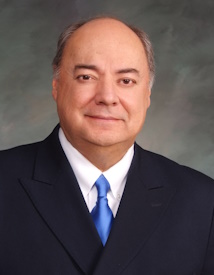
Photo of Tim Salazar
R Wyoming Senate · District 26

Sen. Tim Salazar

Compare
Total votes
4,168
all sessions
Attendance
90%
405 missed
Higher than 85% of chamber peers
With party
81%
of cast votes
Near the chamber average
Bipartisan score
11%
some cross-party votes
Near the chamber average
Sponsored
308
bills & resolutions
Lower than 78% of chamber peers
Committees
6
assignments
308 bills and resolutions

Sponsored bills

Total
308
Primary
48
Co-sponsor
260
This page
308
matching current filters
Co-sponsor SF 116
Failed · Wyoming House · Co-sponsor
Wind tax moratorium exemption-repeal.

Maddy summaryThis bill repeals Wyoming's temporary tax exemption for electricity produced from wind energy, ending a moratorium that previously exempted wind power from a production tax. Starting July 1, 2024, all wind-generated electricity in Wyoming - including power produced before the repeal that qualified for the old exemption - will be subject to the tax. The bill directly affects wind energy producers by requiring them to pay the tax on their electricity output. It makes no changes to existing tax rates but removes the specific exemption that had applied to wind energy since 2020. (Note: The bill failed to advance in the legislature on February 16, 2024.)

Failed Feb 16, 2024 1 co-sponsor
Co-sponsor SJ 4
Failed · Wyoming House · Co-sponsor
Convention of states-2.

Maddy summaryWyoming's SJ 4 is a joint resolution requesting Congress to call a constitutional convention under Article V of the U.S. Constitution to propose amendments focused on fiscal restraint, limiting federal power, and setting term limits for federal officials. The resolution specifies that the convention must not consider changes to the Bill of Rights and must operate with each state having one vote. The bill failed to pass during introduction in the Wyoming Senate on February 15, 2024, with 17 votes in favor and 14 against. This procedural resolution does not directly change laws but seeks to initiate a state-driven process for potential constitutional amendments.

Failed Feb 15, 2024 1 co-sponsor
Co-sponsor HB 47
Failed · Wyoming House · Co-sponsor
Solid waste-illegal dumping remediation grants.

Maddy summaryHB 47 creates a state grant program to help government entities clean up illegal trash dumps. It allows cities, counties, tribes (like the Eastern Shoshone and Northern Arapaho), or other local governments to apply for grants up to $125,000 to fund cleanup efforts at sites where waste was dumped illegally. Applicants must provide a 10% local match, describe the dumpsite and cleanup plan, and agree to use funds only for remediation. The program is funded through a dedicated account, with annual reports required on grant usage. This bill directly affects communities dealing with illegal dumping by providing financial support for cleanup.

Failed Feb 14, 2024 1 co-sponsor
Co-sponsor SJ 1
Failed · Wyoming House · Co-sponsor
Resolution demanding equal footing.

Maddy summaryThis joint resolution (SJ 1) is a non-binding request from Wyoming's legislature to the U.S. Congress. It demands that Congress extinguish federal ownership of public lands and subsurface resources within Wyoming (currently covering about 46% of the state's surface area and 69% of its subsurface resources) to fulfill Wyoming's constitutional "equal footing" status as a state admitted to the Union. The resolution requires Congress to confirm its intent to transfer these lands to Wyoming by October 1, 2024, and proposes that the transferred lands remain state public lands. It is a procedural resolution, not a law, and has not advanced beyond the introduction stage in the Wyoming Senate (failed 17-14).

Failed Feb 13, 2024 1 co-sponsor
Co-sponsor SF 88
Failed · Wyoming House · Co-sponsor
State law violations by counties, cities and towns.

Maddy summaryWyoming's SF 88 requires the attorney general to investigate local government actions (counties, cities, towns) that allegedly violate state law or the Wyoming Constitution, following a legislator's written request and prior notice to the local government. If violations aren't resolved within 60 days of notice, the attorney general must notify the state treasurer to withhold state funds from the violating entity until the issue is fixed. The bill creates a specific process for holding local governments accountable, including mandatory reporting to the governor and legislature. It directly affects counties, cities, and towns that adopt policies conflicting with state law, with the primary enforcement tool being the withholding of state revenue distributions. The law amends existing fund distribution rules to implement this withholding mechanism.

Failed Feb 13, 2024 1 co-sponsor
Co-sponsor SF 80
Signed into law · Wyoming House · Co-sponsor
Visitation rights.

Maddy summaryWyoming's SF 80 mandates that hospitals, nursing homes, hospices, and other 24-hour care facilities must allow visitation for patients. It requires facilities to permit visitors while permitting reasonable restrictions (like visitor limits, timing, or safety equipment) and to provide written visitation policies to patients or their representatives. The law explicitly excludes patients involuntarily detained under certain legal codes or individuals incarcerated by the state. Facilities must visibly post current visitation rules and allow patients to designate or block visitors. The bill takes effect July 1, 2023.

Signed into law Mar 17, 2023 1 co-sponsor
Co-sponsor HB 152
Signed into law · Wyoming House · Co-sponsor
Life is a Human Right Act.

Maddy summaryWyoming's HB 152, the "Life is a Human Right Act," prohibits most abortions by defining "abortion" as the intentional termination of an unborn baby's life from conception. It directly affects pregnant individuals and medical providers in Wyoming by banning abortion except when a physician uses reasonable medical judgment to prevent the death of the pregnant woman, address a serious risk to her life or a life-sustaining organ, or treat an ectopic pregnancy. The bill explicitly excludes contraception from the prohibition and defines "unborn baby" as a living human from fertilization through birth. This law creates criminal penalties for violations and amends existing abortion-related statutes.

Signed into law Mar 17, 2023 1 co-sponsor
Primary SF 109
Signed into law · Wyoming House · Lead sponsor
Prohibiting chemical abortions.

Maddy summaryWyoming's SF 109 prohibits the use of specific abortion drugs (like mifepristone and misoprostol) for terminating pregnancies, affecting doctors, pharmacists, and anyone distributing or prescribing these drugs. Exceptions include contraceptive use before pregnancy confirmation, treatment of natural miscarriages under medical guidelines, and cases where a patient faces an immediate physical danger to life or health (excluding psychological conditions), or pregnancy from incest/sexual assault. Violations carry misdemeanor penalties of up to six months in jail or a $9,000 fine. Women seeking abortions using these drugs are explicitly exempt from criminal prosecution under this law.

Signed into law Mar 17, 2023 0 co-sponsors
Co-sponsor SF 133
Signed into law · Wyoming House · Co-sponsor
Student eligibility in interscholastic sports.

Maddy summaryThis Wyoming bill (SF 133) prohibits male students from competing on teams designated for female students in K-12 interscholastic sports. It requires schools to designate teams as "male," "female," or "coed" based on biological sex at birth (defined as "genetics and anatomy at birth" in Section 21-25-101(iv)). The bill also creates a commission to determine eligibility if courts invalidate the main prohibition (Section 21-25-202), but its core effect is to bar male students from female-designated teams. It directly affects public and private K-12 schools and student athletes in Wyoming.

Signed into law Mar 17, 2023 1 co-sponsor
Co-sponsor SF 174
Signed into law · Wyoming House · Co-sponsor
Wyoming charter school authorizing board.

Maddy summaryWyoming's SF 174 creates a new Wyoming Charter School Authorizing Board to oversee public charter schools statewide. The board, consisting of five members (including the state superintendent and appointees from the governor, Senate, and House), will approve, renew, and oversee charter schools under specific quality standards. The bill modifies how charter schools are authorized (replacing school district oversight with the state board), adjusts funding rules, and requires transparency in decision-making. This directly affects public charter schools, their governing boards, and the state education department as the local education agency.

Signed into law Mar 10, 2023 1 co-sponsor
Showing 71 to 80 of 308 bills
Previous 1 … 7 8 9 … 31 Next