

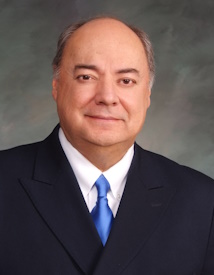
Photo of Tim Salazar
R Wyoming Senate · District 26

Sen. Tim Salazar

Compare
Total votes
4,168
all sessions
Attendance
90%
405 missed
Higher than 85% of chamber peers
With party
81%
of cast votes
Near the chamber average
Bipartisan score
11%
some cross-party votes
Near the chamber average
Sponsored
308
bills & resolutions
Lower than 78% of chamber peers
Committees
6
assignments
308 bills and resolutions

Sponsored bills

Total
308
Primary
48
Co-sponsor
260
This page
308
matching current filters
Co-sponsor SF 77
Signed into law · Wyoming House · Co-sponsor
Homeland defense-infrastructure reporting and investigating.

Maddy summaryWyoming's SF 77 requires county clerks to report property sales within five miles of designated critical infrastructure zones to the Office of Homeland Security and the Division of Criminal Investigation. Critical infrastructure zones - designated by the governor in consultation with the homeland security director - include areas vital to state or national security, such as energy facilities or communication systems. The law mandates that these agencies investigate transactions involving "designated countries or persons" (like foreign adversaries) or posing security threats, with all investigation details kept confidential. Annual reviews of zone designations ensure they remain the least restrictive necessary for security.

Signed into law Mar 14, 2024 1 co-sponsor
Co-sponsor SF 102
died · Wyoming House · Co-sponsor
Foreign property ownership-critical infrastructure.

Maddy summarySF 102 prohibits foreign entities designated as "foreign adversaries" (including governments or companies from specified countries) from owning or acquiring real property within 10 miles of critical infrastructure or military installations in Wyoming. It requires such entities to divest property within 8 months of notice, with court-ordered sales and forfeiture of proceeds to the state if they fail to comply. The law mandates registration of foreign ownership with the Secretary of State, requires inclusion of ownership prohibitions in tax documents, and defines key terms like "critical infrastructure" and "significant interest" (25%+ ownership). These provisions apply directly to foreign governments, their entities, or U.S. entities controlled by them, aiming to protect infrastructure security through enforceable ownership restrictions.

died Mar 5, 2024 1 co-sponsor
Co-sponsor HB 66
Signed into law · Wyoming House · Co-sponsor
Firefighter-cancer screening benefits.

Maddy summaryHB 66 requires Wyoming's workers' compensation program to provide annual cancer screenings for firefighters who have worked at least 10 years, including paid, volunteer, and municipal firefighters. It mandates specific screenings: annual mammograms for female firefighters, colon cancer screenings (including stool tests or colonoscopies), and prostate screenings for male firefighters, plus other screenings for cancers more common among firefighters. These screenings are considered work-related injuries under workers' compensation, covering up to 10 years after retirement. The bill creates a new "Aaron Booker Firefighter Cancer Screening Act" and amends existing statutes to implement these benefits.

Signed into law Mar 5, 2024 1 co-sponsor
Co-sponsor SF 120
died · Wyoming House · Co-sponsor
Driver's licenses-unauthorized alien restrictions.

Maddy summaryThis Wyoming bill (SF 120) invalidates out-of-state driver's licenses or driving privilege cards issued to people who are not legally allowed to be in the United States (defined as "unauthorized aliens"). It directly affects non-citizens who hold such licenses from other states, making them invalid for use in Wyoming. Key provisions include defining "unauthorized alien," requiring the state to issue rules for implementation, and imposing penalties for driving with an invalid license (up to $750 fine or 6 months in jail for first offenses). The law takes effect July 1, 2024, with rulemaking provisions effective immediately upon passage.

died Mar 5, 2024 1 co-sponsor
Co-sponsor SJ 2
died · Wyoming House · Co-sponsor
Foreign adversaries-prohibited property ownership.

Maddy summaryThis joint resolution proposes amending Wyoming's constitution to prohibit foreign adversaries of the U.S. and foreign entities deemed a national security threat by the legislature from owning, using, or inheriting property in Wyoming. It would block these entities from holding any real estate, mineral rights, or other property interests, including surface and subsurface rights. The amendment requires voter approval at the next general election to take effect as part of the state constitution. (Note: This is a constitutional amendment proposal, not a law, and has not yet been enacted.)

died Mar 5, 2024 1 co-sponsor
Co-sponsor HB 127
died · Wyoming House · Co-sponsor
Property tax exemption-specified real property.

Maddy summaryHB 127 creates a new property tax exemption for non-agricultural real property in Wyoming's "all other property" category. It exempts a portion of a property's value above its prior year's taxable value, adjusted by the county's median household income change (capped at 3% annually). Property owners who acquired their property in the prior calendar year are excluded, and tax assessment notices must now show exemption details. The exemption applies starting with the 2024 tax year.

died Mar 5, 2024 1 co-sponsor
Co-sponsor SF 106
died · Wyoming House · Co-sponsor
Wyoming state guard-amendments.

Maddy summaryThis bill removes federal oversight from Wyoming's State Guard, granting the governor full authority to organize and maintain it without federal approval. It specifies that state funds - not federal resources - will cover guard members' pay and equipment, aligning with existing state budget processes. The changes directly affect Wyoming State Guard members and the governor's operational control over the force. The bill takes effect July 1, 2024.

died Feb 24, 2024 1 co-sponsor
Co-sponsor HB 193
Introduced · Wyoming House · Co-sponsor
Ban on sanctuary cities and counties.

Maddy summaryWyoming's HB 193 prohibits cities, towns, and counties from adopting policies that restrict local officials from sharing non-confidential immigration status information with federal immigration authorities. It defines "immigration status information" as details about a person's legal presence in the U.S. and requires local governments to cooperate with federal enforcement on immigration matters. The bill allows the governor, with advice from the attorney general, to withhold state and federally administered funding from localities that violate this requirement. This directly affects all Wyoming municipalities and counties by mandating cooperation with federal immigration enforcement and imposing financial penalties for non-compliance.

Introduced Feb 17, 2024 1 co-sponsor
Co-sponsor HB 160
Introduced · Wyoming House · Co-sponsor
Protect Firearms Rights Act.

Maddy summaryHB 160, the "Protect Firearms Rights Act," prohibits Wyoming state and local governments from implementing or enforcing extreme risk protection orders (ERPOs), which are court orders restricting firearm access for individuals deemed a danger to themselves or others. The bill directly affects Wyoming residents who might otherwise be subject to such orders, while explicitly excluding existing protection orders (e.g., domestic violence orders) and mental health hospitalization orders from this prohibition. Key provisions include preempting conflicting local laws, banning state/local use of funds or personnel to enforce ERPOs, and defining ERPOs to exclude specific existing legal mechanisms. The law takes effect July 1, 2024, and is currently in the introduction stage (received February 12, 2024).

Introduced Feb 17, 2024 1 co-sponsor
Co-sponsor HB 178
Introduced · Wyoming House · Co-sponsor
Religious Freedom Restoration Act.

Maddy summaryHB 178, the Wyoming Religious Freedom Restoration Act, would prevent state government from restricting religious practices unless it proves the restriction is necessary for a compelling government interest and is the least restrictive option. It applies to individuals, businesses, and religious groups whose religious exercise is burdened by government actions like denying permits, benefits, or access to facilities. Those affected could sue in court to challenge such restrictions. The bill explicitly states it does not override laws protecting public health, safety, or order.

Introduced Feb 17, 2024 1 co-sponsor
Showing 51 to 60 of 308 bills
Previous 1 … 5 6 7 … 31 Next