

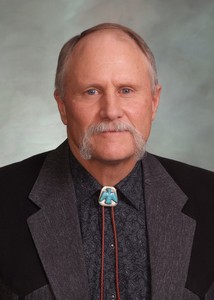
Photo of Larry Hicks
R Wyoming Senate · District 11

Sen. Larry Hicks

Compare
Total votes
3,457
all sessions
Attendance
100%
9 missed
Near the chamber average
With party
90%
of cast votes
Near the chamber average
Bipartisan score
6%
crosses aisle rarely
Near the chamber average
Sponsored
285
bills & resolutions
Near the chamber average
Committees
2
assignments
285 bills and resolutions

Sponsored bills

Total
285
Primary
92
Co-sponsor
193
This page
285
matching current filters
Co-sponsor HB 133
died · Wyoming House · Co-sponsor
Conservation districts-contracting and supervisors.

Maddy summaryHB 133 changes how conservation district supervisors are elected in Wyoming. It requires new districts to elect five supervisors: three rural agricultural residents (one specifically for production agriculture), one urban resident, and one at-large candidate, all serving staggered terms. The bill defines "production agriculture" as commercial farming, ranching, or crop production and mandates that at least two supervisors must be rural residents actively involved in such work. These rules apply to supervisors elected on or after July 1, 2026, the bill's effective date. The bill does not alter existing supervisors' terms but sets new election standards for future appointments.

died Feb 23, 2026 1 co-sponsor
Co-sponsor SF 118
died · Wyoming Senate · Co-sponsor
Eminent domain-water projects.

Maddy summarySF 118 requires legislative approval before state-funded water projects can use eminent domain to acquire private land. It directly affects water districts, cities, or public entities seeking to build or expand water infrastructure using state funds. The bill adds a new requirement (W.S. 41-2-124(m)) that mandates the legislature must approve such eminent domain actions for water projects, modifying existing laws that previously allowed these entities to proceed without this step. This change applies specifically to projects utilizing state funds, not all eminent domain uses.

died Feb 21, 2026 1 co-sponsor
Co-sponsor HB 158
Introduced · Wyoming House · Co-sponsor
EV Charging Stations Transparency Act.

Maddy summaryHB 158, the EV Charging Stations Transparency Act, requires operators of direct current (DC) fast-charging stations in Wyoming to display a clear 3x3 inch label showing the primary energy source (e.g., wind, natural gas, coal) powering the station. This applies to stations connected to public utilities or using on-site generation, with labels updated annually based on the utility’s annual energy mix in the station’s service area. If the primary source accounts for less than 50% of electricity, the label must show the top two sources. The law aims to provide transparency for EV drivers about the energy sources powering charging stations, with violations punishable by fines up to $750.

Introduced Feb 14, 2026 1 co-sponsor
Co-sponsor HB 177
Introduced · Wyoming House · Co-sponsor
Judicial nominating commission-senate confirmation.

Maddy summaryHB 177 requires the Wyoming Senate to confirm the governor's appointments to the judicial nominating commission, which selects state court judges. Previously, the governor could appoint members without Senate approval, but this bill mandates confirmation for all future appointed voting members. The change applies to commission terms starting July 1, 2026, and does not affect current or past appointments. The bill is pending in the legislature and has not yet been voted on.

Introduced Feb 14, 2026 1 co-sponsor
Co-sponsor HB 89
Introduced · Wyoming House · Co-sponsor
Donations of alcoholic beverages-amendments.

Maddy summaryHB 89 allows alcohol industry businesses and licensed sellers to donate alcoholic beverages to qualifying nonprofits for charitable events, without the donation counting as a sale. To qualify, nonprofits must be Wyoming-organized, federally tax-exempt, and use all proceeds exclusively for charitable purposes. The bill requires prior approval from the licensing authority for such donations and clarifies that these gifts avoid triggering sales regulations. This change, effective July 1, 2026, directly affects Wyoming alcohol licensees and eligible nonprofits seeking to fundraise through event donations.

Introduced Feb 14, 2026 1 co-sponsor
Co-sponsor SF 103
Failed · Wyoming Senate · Co-sponsor
Courts-retired judges, constitutional cases and injunctions.

Maddy summaryThis bill requires three-judge panels to handle cases challenging the constitutionality of Wyoming state laws or session laws. When a party seeks an injunction against a law's enforcement, the district court clerk must notify the state court administrator, who then randomly selects two judges from other districts to join the local judge on a panel. Individual judges may no longer issue permanent injunctions blocking state laws in these cases - only temporary orders for up to 30 days while the panel reviews the challenge. All decisions by these panels are appealable directly to the Wyoming Supreme Court.

Failed Feb 12, 2026 1 co-sponsor
Co-sponsor SJ 7
Failed · Wyoming House · Co-sponsor
Right of health care access-separation of powers.

Maddy summarySJ 7 is a proposed constitutional amendment that would give the Wyoming legislature, not courts, the authority to define what constitutes "health care" for the purpose of the constitutional right to health care access. It would also require that any health care laws passed by the legislature undergo judicial review under the "rational basis" standard (meaning courts would only strike down laws lacking a reasonable connection to a government interest). This change would directly shift how health care decisions are legally defined and regulated in Wyoming, moving authority from judges to elected lawmakers. The amendment must be approved by Wyoming voters to become part of the state constitution.

Failed Feb 12, 2026 1 co-sponsor
Co-sponsor SJ 4
Failed · Wyoming House · Co-sponsor
Confirmation of justices and judicial nominations.

Maddy summaryThis Wyoming constitutional amendment (SJ 4) proposes three key changes: requiring Senate approval for Supreme Court justices before they take office, expanding the Judicial Nominating Commission from 7 to 9 members with specific representation rules, and giving the legislature authority to define what counts as "actual practice of law" for judicial qualifications. It directly affects the Governor (who appoints justices), the Judicial Nominating Commission, and candidates for the Supreme Court. If approved, justices would need Senate majority confirmation, and the legislature could set standards for legal experience requirements. The bill failed to advance in the Senate (16-15 vote) and remains a proposed constitutional change, not law.

Failed Feb 11, 2026 1 co-sponsor
Co-sponsor HB 135
Failed · Wyoming House · Co-sponsor
Public officials-nondisclosure agreements.

Maddy summaryHB 135 prohibits Wyoming public officials from signing nondisclosure agreements that prevent disclosure of information related to public funds, public obligations, land-use impacts, or information already required to be public under existing law. It applies to all elected and appointed officials, employees, and agents of Wyoming government entities (cities, counties, state agencies). The bill makes such agreements void and unenforceable, imposes misdemeanor penalties (up to $1,000 fine) for violations, and allows termination of employment or removal from office for violations. Residents can also seek court action to void noncompliant agreements. The bill never became law, as it failed committee consideration in February 2026.

Failed Feb 11, 2026 1 co-sponsor
Co-sponsor SF 174
Signed into law · Wyoming Senate · Co-sponsor
Constitutional apportionment of legislators.

Maddy summaryThis bill requires Wyoming's legislature to comply with constitutional requirements for drawing legislative districts. It mandates that future districts follow county lines and ensure each county has at least one senator and one representative, aligning with Wyoming Constitution Article 3, Sections 3 and 48. A legislative committee will study apportionment options during the 2025 interim, gather public input, and report findings by December 2025 to inform potential legislation for the 2026 budget session. The bill does not change current districts but sets a process to create a constitutionally compliant plan for the next reapportionment cycle after the 2020 census.

Signed into law Mar 18, 2025 1 co-sponsor
Showing 11 to 20 of 285 bills