

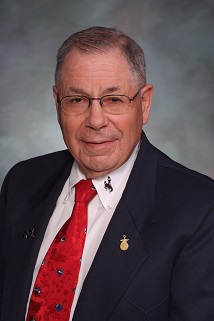
Maddy summaryThis bill designates the third week of September as "Wyoming Cowboy Legacy Week" to honor the cultural and historical significance of cowboys and cowgirls to Wyoming. It encourages schools to incorporate lessons about cowboy/cowgirl heritage and values into their curriculum, and asks the University of Wyoming to promote these symbols. The bill has no funding or regulatory changes - it is purely a symbolic recognition to foster community reflection on these traditions.
Sponsored bills
Maddy summarySF 161 amends Wyoming's legislative management council membership rules. It specifies that two senators and two representatives are selected at large by each chamber's party caucuses, with strict limits on party representation (no more than one from the same party as the chamber's presiding officer). The bill also establishes a two-year rotation of the council chairmanship between the House and Senate and clarifies that the council directs the legislature's day-to-day operations. This procedural bill affects only the internal organization of the Wyoming Legislature, not public policy.
Maddy summaryThis bill prohibits Wyoming counties from eliminating livestock grazing on state-owned land without first following specific procedures. It requires counties to comply with the zoning article and their comprehensive plan before restricting grazing. The law directly affects counties managing land use and livestock operations using state lands. It became effective July 1, 2019, ensuring existing grazing uses on state land cannot be unilaterally ended by county action.
Maddy summaryThis Wyoming joint resolution (HJ 10) designates seven cities (Casper, Greybull, Cheyenne, Laramie, Powder River, Rock Springs) and three unincorporated areas (Platte River, Elkhorn Creek, Bluff Station) as "Medal of Honor cities." It encourages the placement of public markers in these locations to honor Wyoming residents who received the Medal of Honor for military valor. The resolution specifically recognizes 17 Medal of Honor recipients connected to these communities, who served from the Civil War through Vietnam. The measure does not create new legal requirements but formally recognizes these locations for commemorative purposes.
Maddy summaryHB 169 authorizes Wyoming's Game and Fish Commission to issue free, lifetime fishing licenses and conservation stamps to residents who are permanently and totally disabled. It directly affects eligible disabled residents by eliminating annual license fees and the requirement to purchase conservation stamps. The bill amends existing statutes to create a process for issuing these complimentary licenses, requiring the Commission to establish rules by July 1, 2019. The policy change takes effect July 1, 2019, providing permanent cost savings for this specific group of residents.
Maddy summaryHB 142 amends Wyoming's wildlife trust account board duties to require the board to recommend to specific legislative committees that funds be transferred from the income account to the wildlife and natural resource trust account. This procedural bill directly affects the wildlife trust board by adding a mandatory recommendation duty regarding fund transfers. It does not create new funding but specifies a process for moving existing funds between accounts. The change took effect July 1, 2019.
Maddy summaryThis bill (SF 69) expands eligibility for Wyoming's Water Development Program by adding two categories of public entities that can participate. It allows any entity covered under Wyoming Constitution Article 16, Section 10 (including irrigation districts, public water corporations, and state subdivisions) and any other public entity with taxing or fee authority for serviced lands. The change directly affects water management groups, public utilities, and local governments seeking program funding. The bill became effective July 1, 2019, without altering existing program operations.
Maddy summaryThis bill (SF 103) expands and reorganizes Wyoming's oversight for state capital construction projects. It renames the "select committee on school facilities" to include community colleges and state capital construction, authorizes additional temporary members, and specifies the committee's expanded duties - including reviewing construction project designs and receiving annual reports from state agencies. The bill removes the requirement for quarterly committee meetings and updates statutes to clarify how the committee coordinates with the state building commission and legislative bodies on construction priorities and funding recommendations. This change directly affects the committee, state agencies managing facilities, and the legislative process for capital projects.
Maddy summaryHB 149 creates a property tax credit for individuals who purchase and improve abandoned buildings in Wyoming cities or towns. It allows owners to claim a tax credit equal to their documented costs for rehabilitating designated abandoned properties, such as removing or repairing deteriorating structures. To qualify, owners must get city/town approval for expenses directly tied to the building and submit them to the state revenue department within five years of purchase. The credit is limited to actual improvement costs, cannot exceed the property's tax liability, and must be used within 10 years of eligibility. This policy directly affects property owners and local governments seeking to revitalize vacant, deteriorating buildings.
Maddy summaryHB 291 allows local governments in Wyoming to restrict liquor licenses based on existing zoning rules but prohibits licensing authorities from adding extra restrictions beyond what the law already permits. It directly affects businesses seeking or renewing alcohol licenses and local officials managing licensing decisions. The law prevents authorities from imposing additional conditions (like special fees or location limits) that aren't already specified in state law. The bill took effect on July 1, 2019.