

Maddy summaryHB 196 amends Wyoming law to limit county commissioners' authority over land divisions in unincorporated areas. It clarifies that counties cannot prevent residential or agricultural uses on land divisions already exempt from standard subdivision rules under state law. The bill specifically prohibits counties from imposing restrictions that conflict with these exemptions, ensuring developers and property owners can use exempt land for those purposes. The changes took effect on July 1, 2019.
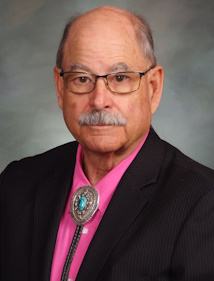
Sen. Ogden Driskill
Sponsored bills
Maddy summaryHB 142 amends Wyoming's wildlife trust account board duties to require the board to recommend to specific legislative committees that funds be transferred from the income account to the wildlife and natural resource trust account. This procedural bill directly affects the wildlife trust board by adding a mandatory recommendation duty regarding fund transfers. It does not create new funding but specifies a process for moving existing funds between accounts. The change took effect July 1, 2019.
Maddy summaryThis bill amends Wyoming election code to clarify procedures for voters changing political party affiliation. It allows voters to change their party affiliation at the polls on election day (for general elections) or when requesting an absentee ballot, in addition to the existing 14-day advance filing requirement before primaries. The change must be noted on the poll list by election judges, but voters cannot switch parties between two weeks before absentee voting begins and primary election day. It directly affects Wyoming voters seeking to alter their party affiliation before casting a ballot. The bill took effect July 1, 2019.
Maddy summaryThis bill requires most Wyoming Medicaid recipients to work, attend school, or volunteer for at least 20 hours per week to maintain eligibility, beginning three months after initial approval. Exceptions apply to children under 18, seniors 65+, pregnant individuals, caregivers of young children or disabled dependents, and those in treatment programs. Failure to comply results in a 12-month loss of Medicaid coverage, with verification required every six months. The bill also prohibits similar work requirements for SNAP (food assistance) and mandates that any federal savings from approved waivers fund child care for employed Medicaid recipients.
Maddy summaryThis bill (SF 69) expands eligibility for Wyoming's Water Development Program by adding two categories of public entities that can participate. It allows any entity covered under Wyoming Constitution Article 16, Section 10 (including irrigation districts, public water corporations, and state subdivisions) and any other public entity with taxing or fee authority for serviced lands. The change directly affects water management groups, public utilities, and local governments seeking program funding. The bill became effective July 1, 2019, without altering existing program operations.
Maddy summaryThis bill (SF 100) clarifies which state firearms regulations apply by amending a definition in Wyoming law. It specifies that "this act" refers to specific sections (W.S. 6-8-401 through 6-8-406) governing weapons, resolving potential confusion about applicable rules. The change affects how existing firearms laws are interpreted but does not create new restrictions or allowances. The bill was introduced in 2019 and recommended for passage by the Judiciary Committee. It became effective immediately upon enactment.
Maddy summaryWyoming's HB 166 increases the annual decal fee for plug-in electric vehicles from $50 to $200 and establishes a new $100 annual decal fee for hybrid electric vehicles. The bill directly affects owners of these vehicles in Wyoming, requiring them to pay the updated fees when registering their vehicles. Key provisions include the specific fee amounts ($200 for plug-ins, $100 for hybrids) and an effective date of July 1, 2019. The legislation modifies existing vehicle registration fee structures without creating new programs or regulations.
Maddy summaryHB 147 changes Wyoming law to make foreign language instruction for kindergarten through second grade optional for school districts, rather than mandatory. School districts may choose to offer such programs, but if they do, they must follow state board standards for instruction. This bill directly affects all Wyoming public school districts serving K-2 students. It became effective July 1, 2019, after passing the Education Committee unanimously.
Maddy summaryHB 291 allows local governments in Wyoming to restrict liquor licenses based on existing zoning rules but prohibits licensing authorities from adding extra restrictions beyond what the law already permits. It directly affects businesses seeking or renewing alcohol licenses and local officials managing licensing decisions. The law prevents authorities from imposing additional conditions (like special fees or location limits) that aren't already specified in state law. The bill took effect on July 1, 2019.
Maddy summaryHB 185 allows Wyoming corporations to issue digital "certificate tokens" instead of physical stock certificates. It directly affects corporations issuing shares and their shareholders, enabling electronic representation of ownership stored on secure databases or blockchain systems. Key provisions define "certificate tokens" to satisfy legal requirements for share certificates, permit electronic transfer using "network signatures" (digital authorization), and specify that tokens must contain standard share information. The bill updates Wyoming law to treat these digital tokens as legally equivalent to physical certificates for all purposes, including transfers and corporate records. It became effective July 1, 2019.