

Maddy summaryWyoming's SF 156, the Medical Digital Innovation Sandbox Act, creates a time-limited testing environment for new medical digital tools like apps or software that help diagnose or monitor health conditions. It allows developers to temporarily bypass certain health licensing rules (covering 19 professions including doctors, nurses, and dentists) if they apply to the Department of Health and meet safety standards. To participate, applicants must pay a $500 fee, undergo criminal background checks, post a consumer protection bond, and submit detailed safety plans for review within 90 days. The sandbox does not exempt developers from criminal liability or civil claims, and the Department of Health can refer violations to law enforcement.
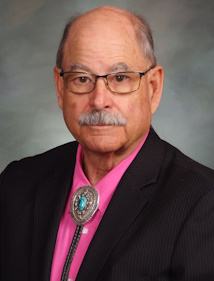
Sen. Ogden Driskill
Sponsored bills
Maddy summaryWyoming's SF 104 establishes a specialized Chancery Court to handle complex civil cases, directly affecting residents and businesses involved in disputes requiring specialized legal expertise (e.g., corporate, real estate, or contract matters). The bill creates a court with up to three nonpartisan judges serving six-year terms, requiring a $1,000 minimum filing fee for cases and authorizing the Supreme Court to set rules for procedures, fees, and case transfers. Funding comes primarily from case filing fees, with the legislature able to supplement from general funds if needed. The court operates statewide with concurrent jurisdiction, and appeals go directly to the Wyoming Supreme Court.
Maddy summaryWyoming's SF 111 authorizes community colleges to offer applied bachelor's degree programs (called "baccalaureate of applied science" degrees) for the first time. It requires the Community College Commission to approve all new such programs before they can receive state funding. The bill also updates the Hathaway scholarship program to cover these new degrees, allowing students to use scholarships for up to eight semesters to complete them while maintaining a 2.25 GPA. This directly affects community college students pursuing applied bachelor's degrees and the colleges offering them.
Maddy summaryThis bill exempts qualifying private schools from county zoning regulations in Wyoming. It specifically applies to private schools located on 35 or more contiguous acres with a capacity for at least 50 students, as defined in state law. County zoning rules can no longer restrict the location, use, or occupancy of such schools. The policy change took effect July 1, 2019, directly affecting only private schools meeting these two size and capacity requirements.
Maddy summaryHB 15 (Wyoming) removes the requirement for notarization on certain motor vehicle titles and bills of sale. It directly affects vehicle owners, dealers, and auctioneers during title transfers by eliminating the need for notarized signatures on sale documents. The bill clarifies ownership transfer rules, allowing any owner listed on a title to transfer a vehicle without signatures from other owners unless the title specifies joint tenancy or "and" ownership. This simplifies the process for most title transfers while maintaining existing requirements for lien notifications and tax payments. The changes apply to all motor vehicles requiring a Wyoming title.
Maddy summaryHB 55 allows mobile home owners in Wyoming to use a copy of their title instead of the original when transporting their mobile home within the state. The bill amends tax and permit rules to require owners to present a copy of the title (along with proof of tax payment) to the county treasurer before obtaining an over-width permit from the Department of Transportation. This change directly affects mobile home owners who need to move their homes on public roads, simplifying the process by eliminating the need to carry the original title. The law became effective July 1, 2019, and does not alter the requirement to pay annual property taxes for transport permits.
Maddy summaryWyoming's SF 118 clarifies that tax liens on mineral production (like oil and gas) have priority over most other claims against the mineral property. It requires counties to notify existing lienholders 90 days after taxes become delinquent and file their lien within 120 days, while protecting taxpayers' rights to appeal tax disputes before enforcement. This directly affects mineral producers who owe taxes, creditors holding prior liens, and counties managing tax collections. The law applies to mineral tax liens perfected on or after July 1, 2019, and ensures mineral tax claims are prioritized over most other debts except federal/state claims and pre-existing, properly recorded liens.
Maddy summaryWyoming's SF 150 creates a framework for the Department of Health to conduct "innovative studies" focused on reducing health care costs, enabling home-based long-term care, developing new health services, and expanding telehealth access. The bill establishes a dedicated $1 million health care innovation account (funded from the general fund), allows the department to bypass standard procurement rules and waive certain regulations for these studies, and defines "innovative study" as controlled trials or pilot programs (excluding pharmaceuticals). It requires annual reports to legislative committees on study progress and funding use. The bill directly affects the state health department and entities partnering with it to test new health care approaches.
Maddy summaryThis bill allows private buyers to purchase retiring Wyoming coal-fired power plants without becoming regulated public utilities, while requiring utilities to make good-faith efforts to sell such plants before retirement. It prevents utilities from recovering costs for replacement facilities unless the commission determines they attempted to sell the retiring plant and received no reasonable offers. The Public Service Commission must approve all sale agreements and evaluate offers based on cost savings, risk reduction, and public interest - not potential lost utility revenues. It directly affects Wyoming utilities owning retiring coal plants, potential private buyers, and the commission overseeing approvals.
Maddy summaryWyoming's HB 171 legalizes hemp production and processing by setting a 0.3% THC limit (on a dry weight basis) for hemp and hemp products. It requires licenses for producers and processors (with background checks and $500 annual fees), while allowing unrestricted possession and use of hemp products by all residents. The bill establishes enforcement through annual inspections, corrective action plans for violations, and misdemeanor penalties for intentional breaches. It also mandates a state regulatory plan, authorizes tribal agreements, and repeals conflicting laws.