

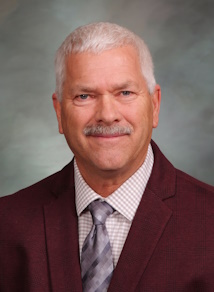
Maddy summaryHB 218 requires Wyoming's Public Service Commission to pause all pending rate cases, applications, and related proceedings when a public utility files a lawsuit challenging the commission's rules, regulations, or decisions. This pause continues until the lawsuit is fully resolved, affecting utilities, the commission, and any parties involved in those pending matters. The law does not apply to lawsuits focused on factual disputes (like evidence or witness testimony) or enforcement actions for commission violations. It directly changes how the commission handles active cases during utility litigation.
Rep. J.R. Riggins
Sponsored bills
Maddy summaryWyoming's HB 224 restricts land ownership by "foreign adversaries" (defined as entities or individuals linked to Russia, China, terrorism-designated countries, or specific international sanctions lists) in all Wyoming real property, except for personal residences under one acre. Owners must register with the Homeland Security office within 60 days of acquisition or July 1, 2025 (whichever is later), and update annually. Failure to register incurs a $5,000 daily civil penalty, and county clerks must report violations to Homeland Security. The law also requires tax assessment notices to inform property owners about the ownership restrictions and registration requirements.
Maddy summaryHB 172 repeals restrictions on concealed weapons in specific public spaces, allowing permit holders to carry guns in government meetings, school athletic events on public property, and school facilities (like classrooms and offices). It also strengthens Wyoming’s state law by preventing local governments from regulating firearms, declaring that only the state legislature can set rules for guns, ammunition, and weapons. The bill includes exceptions for health facilities, explosive materials, and private property rules, and adds penalties for blocking someone from entering permitted areas. School districts must establish training rules for employees carrying concealed weapons, requiring 16 hours of initial training and annual 12-hour recertification.
Maddy summaryHB 263 creates a state program to provide financial assistance to Wyoming cities, towns, and special districts for improvements to public water and wastewater systems. The program covers upfront planning costs, local matching funds, repayment of other loans, and regional system integration, with eligibility requiring projects to align with existing state water programs or charge consumer rates. Funding comes from borrowing up to $50 million annually from the legislative stabilization reserve, to be repaid using future revenue distributions. The State Loan and Investment Board administers applications, reviews projects based on population, repayment ability, and system efficiency, and reports annually to legislative committees. This directly affects local governments managing community water infrastructure.
Maddy summaryThis bill creates a "Residential Property Tax Reduction Account" to fund property tax refunds for Wyoming homeowners. It directly affects primary residence owners who paid property taxes in the prior year, capping refunds at $13,300 per household. Key mechanisms include funding the account from unappropriated general fund balances (exceeding 5% of projected receipts) and mineral trust earnings, with refunds paid proportionally if funds are insufficient. Refunds will begin for 2025 taxes in 2026, with even years capped at half the account balance and odd years using the full balance. The program defines "primary residence" as where a homeowner lived at least six months of the tax year.
Maddy summaryHB 212 amends Wyoming's local sales and use tax procedures to require approval from at least 50% of incorporated municipalities (down from two-thirds) for tax propositions, instead of the previous 2/3 requirement. It shortens the tax term from four years to two years for new taxes, and repeals the optional municipal sales tax provision. The bill also modifies election timing and ballot language requirements for county-level tax votes. These changes directly affect Wyoming counties and municipalities seeking to implement or renew local sales taxes. The bill focuses on procedural adjustments to tax approval processes without altering tax rates or revenue distribution.