

Maddy summaryWyoming's SF 60 revises how sales and use tax revenues are distributed to counties and local governments. It reduces the percentage of sales tax going to the state general fund from 69% to 65%, increases annual county payments from $20,000 to $40,000 (for pre-2004 amounts), and adjusts the share of out-of-state vendor taxes distributed to local areas from 29.5% to 35%. These changes apply to taxes collected on or after July 1, 2025, and affect all Wyoming counties and local municipalities receiving tax distributions based on population and sales data. The bill updates existing distribution formulas without altering the overall structure of tax allocation.
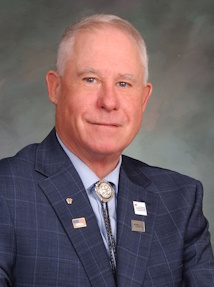
Rep. Bill Allemand
Sponsored bills
Maddy summaryHB 218 requires Wyoming's Public Service Commission to pause all pending rate cases, applications, and related proceedings when a public utility files a lawsuit challenging the commission's rules, regulations, or decisions. This pause continues until the lawsuit is fully resolved, affecting utilities, the commission, and any parties involved in those pending matters. The law does not apply to lawsuits focused on factual disputes (like evidence or witness testimony) or enforcement actions for commission violations. It directly changes how the commission handles active cases during utility litigation.
Maddy summaryHB 270 changes Wyoming's spending policy for the Permanent Mineral Trust Fund by reducing the annual spending rate from 5% to 4.5% of the fund's five-year average market value. This adjustment directly affects how the state calculates and spends earnings from the trust fund's investments each fiscal year. The bill modifies Section 9-4-719(d)(v) of Wyoming law to implement this lower spending percentage. It takes effect on July 1, 2025, applying to all future fiscal years.
Maddy summaryHB 182 clarifies that for voting purposes in Wyoming, "residence" refers only to a person's primary home where they actually live and intend to return, excluding secondary or commercial addresses not used for habitation. The bill amends election code definitions to prevent voters from registering using vacation homes, rental properties, or business locations as their official residence. It directly affects Wyoming voters who might attempt to register at non-primary addresses. The bill died in committee in March 2025 and never became law, with no effective date implemented.
Maddy summaryThis bill (SF 47) allows cities, towns, counties, and school districts in Wyoming to establish a system of public recreation (like parks and community facilities) by either having their local government serve directly as the governing board or appointing a separate board of at least five members. It specifies that if the local government acts as the board, it is exempt from certain administrative rules, and outlines how vacancies on appointed boards must be filled. The bill also clarifies that jointly established recreation systems require at least one representative from each participating local government on the board. The changes take effect July 1, 2025.
Maddy summaryWyoming's HB 224 restricts land ownership by "foreign adversaries" (defined as entities or individuals linked to Russia, China, terrorism-designated countries, or specific international sanctions lists) in all Wyoming real property, except for personal residences under one acre. Owners must register with the Homeland Security office within 60 days of acquisition or July 1, 2025 (whichever is later), and update annually. Failure to register incurs a $5,000 daily civil penalty, and county clerks must report violations to Homeland Security. The law also requires tax assessment notices to inform property owners about the ownership restrictions and registration requirements.
Maddy summaryHB 63, the "Working Animal Protection Act," prevents Wyoming counties and cities from banning or unduly restricting the use of "working animals" in lawful commerce or animal enterprises. It directly affects local governments by overriding conflicting ordinances, though it allows zoning, health, and safety rules to remain in place. The bill defines "working animals" as non-food animals used for duties like ranching, transportation, or tourism (excluding cattle, chickens, or other food/fiber animals). It becomes effective July 1, 2025.
Maddy summaryWyoming's HB 171 amends the legal definition of "explicit sexual conduct" under the state's child exploitation statute (W.S. 6-4-303(a)(iii)). The bill specifically expands the definition to include acts like genital-genital contact, oral-genital contact, bestiality, masturbation, and lascivious exhibitions of genitals or breasts. This change directly affects how prosecutors define and prosecute cases involving the sexual exploitation of children in Wyoming. The amendment will take effect on July 1, 2025, strengthening the legal framework for addressing such crimes.
Maddy summaryHB 282 establishes that for certain properties (like recently purchased residential real estate), the purchase price (acquisition value) is presumed correct for property tax assessment, unless proven otherwise. This directly affects property owners who recently bought land or buildings, as it shifts the burden to tax assessors to justify using a different value. The bill clarifies that sworn statements about acquisition value must remain confidential but can be used by county assessors and the state board of equalization to determine tax value, while maintaining privacy protections. It amends Wyoming's property tax code to formalize this presumption and update related definitions and procedures. The bill does not change tax rates but changes how property value is initially determined for tax purposes.
Maddy summaryHB 232 requires manual hand counting for certain election recounts in Wyoming, directly affecting county clerks, candidates, and election officials. The bill mandates that recounts requested by candidates must be conducted by hand (not electronic systems), revises primary and canvass deadlines to allow time for this process, and specifies that candidates can request recounts based on defined criteria. It clarifies that county clerks must appoint counting boards for recounts and authorizes the secretary of state to establish rules for handling ballots during manual counts. The bill does not change who can request recounts but replaces electronic recount options with mandatory hand counting in specified cases.