

Maddy summaryThis Wyoming bill prohibits state and local governments from enforcing "extreme risk protection orders" (ERPOs), which are court orders that temporarily restrict firearm access to prevent harm. It blocks the use of state funds or personnel to implement ERPOs and preempts any local laws conflicting with this prohibition. Violating this ban is a misdemeanor punishable by up to one year in jail or a $2,000 fine. The bill cites constitutional rights - including the Second Amendment and due process protections - as justification for its provisions.
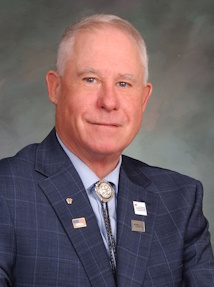
Rep. Bill Allemand
Sponsored bills
Maddy summaryHB 260 creates the Wyoming Firearms Research Center Oversight Commission to guide the University of Wyoming's planned firearms research center. The commission, with eight members (including a legislative appointee and seven from gun-related groups, industry, law enforcement, and county attorneys), reviews the center's mission and recommends how it should focus on firearms culture and traditions in Wyoming. It also facilitates agreements between the university center and Wyoming stakeholders and advises the legislature on funding. The bill appropriates $2,500 for the legislative member's expenses and $17,500 for other members, with funds expiring June 30, 2024. The commission must meet annually but has no compensation beyond travel reimbursement.
Maddy summaryWyoming's HJ 11 is a joint resolution requesting Congress to change federal regulations so agricultural producers can directly access medically important antibiotics for livestock without needing a veterinarian's supervision. Currently, FDA rules require these antibiotics (used in feed or water) to be dispensed under a licensed veterinarian's oversight, which the resolution claims causes delays in treating livestock. The resolution specifically asks Congress to eliminate this vet-supervision requirement and allow over-the-counter access for Wyoming farmers. This would directly affect Wyoming livestock producers by altering how they obtain antibiotics for animal health care.
Maddy summaryHB 168 allows licensed custom exempt meat processors in Wyoming to sell their products directly to consumers at retail. This affects small meat processing facilities that already operate under specific federal exemptions (9 C.F.R. 303.1) for processing carcasses for individual customers. The bill creates a new law (W.S. 35-7-128) explicitly permitting these processors to offer retail sales without needing additional permits. The change takes effect July 1, 2023, enabling local producers to sell directly to shoppers while maintaining existing inspection standards.
Maddy summaryWyoming's HB 87 updates the state's definition of "child pornography" to explicitly include cartoons, drawings, and other depictions alongside photographs or videos. It removes a previous exemption that allowed school, college, university, museum, or public library employees to promote obscenity during work activities. The bill directly affects educational and cultural institutions by eliminating this employment-related exception. Key provisions amend statutes to broaden the definition of child exploitation materials and repeal the specific exemption, effective July 1, 2023. The change clarifies that such materials in any visual form (including digital or drawn content) fall under the legal definition.
Maddy summaryThis joint resolution proposes a constitutional amendment to allow Wyoming's legislature to limit annual increases in the assessed value of residential real property for tax purposes. If approved, it would enable the state to implement a "maximum annual valuation increase" for residential properties, preventing rapid yearly jumps in taxable value. The amendment directly affects residential property owners by potentially stabilizing their property tax assessments over time. It does not change current tax rates but modifies how property values are calculated annually. The proposal requires voter approval to become part of Wyoming's Constitution.
Maddy summaryHB 105 repeals restrictions on carrying concealed weapons in certain public spaces, allowing permit holders to carry in government meetings, legislative sessions, and most public schools (excluding specific areas under existing school district rules). It clarifies that only the Wyoming state legislature can regulate firearms, precluding local governments from enacting their own gun laws. The bill also establishes penalties for barring entry to someone lawfully carrying a concealed weapon in permitted locations. This changes prior "gun-free zone" policies by expanding where concealed carry is allowed while maintaining state-level control over firearm regulation.
Maddy summaryHB 235 would have required Wyoming school district board trustees to be sworn in and begin serving their duties on the same day as their election, replacing the current requirement that allowed them until December 1st or within 10 days of notification. This change would directly affect newly elected or appointed school board members across all Wyoming school districts. The bill amended Wyoming Statute 21-3-106 to eliminate the existing deadline for taking the oath. The bill was introduced in January 2023 but died in committee in February 2023 and never became law.
Maddy summaryHB 212 establishes a new standing committee on federal review in Wyoming's legislature, directly affecting state lawmakers by creating a dedicated body to monitor federal actions. The committee must review all federal laws, regulations, and executive orders to assess whether they infringe on Wyoming's sovereignty or violate the U.S. Constitution's enumerated powers, without considering Supreme Court interpretations of those actions. This procedural bill creates a formal mechanism for the legislature to evaluate federal overreach and potentially sponsor related legislation, effective immediately upon enactment.
Maddy summaryThis bill repeals restrictions that previously prohibited concealed weapons in government meetings and legislative sessions. It allows Wyoming residents with valid concealed carry permits to carry concealed weapons in those locations, specifically in "any meeting of a governmental entity" and "any meeting of the legislature or a committee thereof." The State Building Commission must create implementing rules within 30 days of the bill's effective date. The law takes effect immediately upon becoming law, removing existing prohibitions without additional conditions for permit holders.