

Maddy summaryThis bill (SF 145) allows Wyoming local governments - such as cities, counties, and special districts - to invest public funds in stocks (equities) for the first time. It creates a new investment category under existing law, requiring these investments to follow state investment policies set by the State Loan and Investment Board. Local governments may also form advisory boards for investment guidance, but these stock investments are exempt from certain prior restrictions. The change takes effect July 1, 2025, after the state board adopts necessary policies.
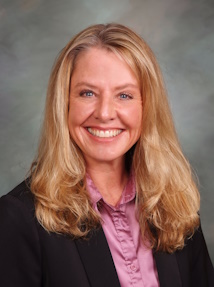
Rep. Elissa Campbell
Sponsored bills
Maddy summaryThis bill (SF 47) allows cities, towns, counties, and school districts in Wyoming to establish a system of public recreation (like parks and community facilities) by either having their local government serve directly as the governing board or appointing a separate board of at least five members. It specifies that if the local government acts as the board, it is exempt from certain administrative rules, and outlines how vacancies on appointed boards must be filled. The bill also clarifies that jointly established recreation systems require at least one representative from each participating local government on the board. The changes take effect July 1, 2025.
Maddy summaryHB 22 updates Wyoming law to include certified water and wastewater operators as official "emergency responders" for homeland security planning. It requires local governments to coordinate with these operators in developing their emergency response plans, ensuring water system continuity during crises. The bill amends two statutes: one mandating coordination in local homeland security plans (W.S. 19-13-108) and another expanding the definition of "emergency responders" (W.S. 35-9-152(a)(i)). This directly affects certified water/wastewater operators and local jurisdictions responsible for emergency planning. The law takes effect immediately upon enactment.
Maddy summaryThis joint resolution (SJ 3) commemorates the 100th anniversary of Nellie Tayloe Ross becoming the first woman governor of the United States in 1925. It formally recognizes her historic achievement and legacy through a symbolic resolution passed by the Wyoming Legislature. The bill has no policy provisions or direct impact on citizens; it serves only as a ceremonial acknowledgment. Wyoming's legislature will transmit copies of the resolution to federal officials as part of the commemoration. This is a purely symbolic measure with no legislative or financial effects.
Maddy summaryHB 178 increases Wyoming employees' time off to vote from one hour to two hours during election hours (polling hours) for primary, general, or special elections to fill a U.S. House of Representatives seat. It ensures employees do not lose pay for this time off when they cast a legal vote, applying to all eligible voters except those with three or more consecutive nonworking hours during polling. The bill modifies existing law (W.S. 22-2-111) to clarify these provisions and takes effect July 1, 2025. This directly affects Wyoming workers participating in federal elections who need to vote during standard work hours.
Maddy summaryThis bill requires Wyoming's Department of Environmental Quality to conduct water quality testing before limited mining operations begin if the department believes drinking water sources might be impacted. It applies specifically to small-scale mining (15 acres or less) for materials like sand, gravel, or limestone, where operators must notify state agencies and nearby landowners 30 days in advance. The department may delay operations to complete required testing, and the Environmental Quality Council must create implementing rules. The law updates existing notification requirements for these operations without changing their basic scope.
Maddy summaryHB 263 creates a state program to provide financial assistance to Wyoming cities, towns, and special districts for improvements to public water and wastewater systems. The program covers upfront planning costs, local matching funds, repayment of other loans, and regional system integration, with eligibility requiring projects to align with existing state water programs or charge consumer rates. Funding comes from borrowing up to $50 million annually from the legislative stabilization reserve, to be repaid using future revenue distributions. The State Loan and Investment Board administers applications, reviews projects based on population, repayment ability, and system efficiency, and reports annually to legislative committees. This directly affects local governments managing community water infrastructure.
Maddy summaryHB 326 appropriates $79 million from Wyoming's general fund to remodel the state veterans' home in Buffalo, Wyoming. The bill specifies that federal funds received for veterans' home facilities must first replace general fund spending and then reduce the state appropriation dollar-for-dollar. It sets a total project cost cap of $103.85 million, covering the $79 million state appropriation plus other authorized funds (including federal funds and prior appropriations). The remodeling project must be completed within the allocated budget, with unspent funds reverting to the general fund upon completion.
Maddy summaryHB 58 requires the Wyoming Board of Land Commissioners to provide written notice to county commissioners at least 60 days before approving new mineral leases or lease extensions on state lands or state school lands. County commissioners must then be given an opportunity to submit public comments on the proposed lease in writing or at a meeting. The bill applies only to new leases and extensions starting on its effective date, leaving existing leases unaffected. This change aims to increase local government involvement in mineral leasing decisions.
Maddy summaryWyoming's HB 99 amends trespass laws to clarify that people do not commit criminal trespass or game/fish trespass when accidentally touching or passing through private land while traveling between two adjacent parcels they're authorized to access - specifically when the parcels share a common corner or are immediately connected. The bill directly affects landowners and individuals traveling across private property for legitimate access to adjacent parcels (e.g., ranchers moving between properties). It creates a clear exception for incidental contact during this specific travel, removing ambiguity about whether such movement violates trespass laws. The change applies only to travel between authorized parcels and does not permit hunting, fishing, or other activities on private land without permission. The law takes effect July 1, 2025.