

Maddy summaryHB 57 prohibits Wyoming counties and municipalities from banning or restricting fireworks use or possession between noon and midnight on July 4, except during an open fire ban. It also explicitly allows fireworks in state parks, campgrounds, and similar public areas during that same time window, unless an open fire ban is active. The bill amends existing state laws to remove local restrictions specifically for July 4, while maintaining other fireworks regulations outside this timeframe. It does not alter rules for fireworks displays outside July 4 or for other public safety concerns.
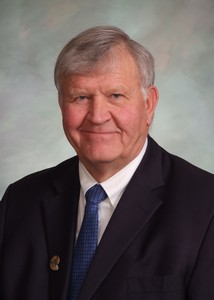
Rep. Lloyd Larsen
Sponsored bills
Maddy summaryHB 74 proposes a procedure for Wyoming county clerks to address frivolous legal filings. It authorizes clerks to temporarily hold or reject filings they deem frivolous (lacking legal/factual basis or filed for improper purposes like harassment), after seeking a district court order. If the court declares a filing frivolous, the clerk must reject it, refund any filing fees within 10 days, and add a "frivolous" notation to previously filed documents. This bill would make frivolous filings legally ineffective, directly affecting individuals submitting such documents and county clerks managing court records.
Maddy summaryHB 216 prohibits animal control facilities in Wyoming from euthanizing pets using methods like gas chambers, carbon monoxide, or nonanesthetic gases. Instead, facilities must use injection methods (intravenous, intraperitoneal, or intracardiac after unconsciousness) for all pets, including dogs, cats, and other companion animals. The bill requires facilities to adopt training policies for staff performing euthanasia and maintain records of training, with violations classified as misdemeanors punishable by fines up to $5,000 for repeat offenses. It applies specifically to animal control facilities handling stray, surrendered, or neglected household pets, excluding livestock. The law takes effect July 1, 2025.
Maddy summaryHB 253 revises Wyoming's construction lien law by changing the timing for preliminary notice requirements. It requires subcontractors and material suppliers to send a notice within 30 days of starting work on a project (before final payment to the general contractor) to preserve their lien rights. Failure to send this notice will bar lien claims, except when the general contractor failed to provide required information under §29-2-113. The bill affects contractors, subcontractors, and material suppliers working on construction projects in Wyoming and takes effect July 1, 2025.
Maddy summaryHB 297 allocates $143.26 million in state funds for wildfire recovery in Wyoming, directly affecting state agencies, private landowners, and communities. It provides $1 million for wildfire suppression contingency, $30 million for emergency fire accounts, and $100 million for restoring vegetation and habitats on private/state lands, plus $10 million for watershed infrastructure repairs. The bill creates a steering committee (with legislative, agency, and industry members) to review grant applications and recommend fund use, bypassing standard grant processes for these wildfire-related projects. All funds are sourced from the general fund, with repayment provisions for prior borrowing and a 2026 termination date for the committee.
Maddy summaryHB 45 creates a property tax exemption for single-family homes in Wyoming, directly affecting homeowners with residential structures. The exemption covers increases in a home's value above 5% of the previous year's assessed value, meaning homeowners pay tax only on growth exceeding that threshold. However, the exemption doesn't apply if the value increase comes from new construction, additions, or if the property was purchased in the prior year. The law requires tax assessment notices to include exemption details and applies to tax years starting January 1, 2024.
Maddy summaryWyoming's HB 64 modifies electrical safety regulations by changing how inspection fees are distributed and clarifying inspector certification requirements. It directs 95% of collected fees (previously 60%) to fund additional state electrical inspectors, while only 5% (previously 40%) goes to the general fund. Local governments seeking to enforce electrical codes must ensure inspectors hold certification from the International Code Council or International Association of Electrical Inspectors and are licensed as journeyman or master electricians by the state. The bill takes effect July 1, 2024, and directly affects electrical inspectors, local governments, and building owners requiring inspections.
Maddy summaryThis bill creates a new legal right for vulnerable adults in Wyoming to sue anyone who exploits them. It allows vulnerable adults (or specific representatives like guardians, family members, caregivers, or nursing facilities) to seek compensation for actual damages, punitive damages, and attorney fees. The law applies to exploitation cases and permits lawsuits in any appropriate court. It takes effect on July 1, 2024.
Maddy summaryThis bill requires Wyoming's Department of Health to pay behavioral health service claims in the same manner as before a prior redesign, ensuring providers are reimbursed after billing private insurance or third parties. It mandates the department to collect data on payment claims and report findings to a legislative committee by September 2025, aiming to identify potential savings from improved third-party billing practices. The bill updates eligibility criteria for "indigent general access clients" to exclude those with insurance covering mental health or substance use treatment after July 2026, limiting coverage to low-income residents without such insurance. It directly affects behavioral health providers, the state health department, and qualifying low-income residents seeking mental health or substance use disorder treatment.
Maddy summaryHB 203 creates a property tax exemption for single-family residential properties in Wyoming, covering the first $200,000 of value in 2024 and $1 million annually thereafter. To offset lost local revenue, it adds a 2% sales tax (raising the total rate to 6%) effective July 2024. Funds from this tax are distributed to counties based on their lost property tax revenue from the exemption, with any remaining funds used for sales tax refunds to businesses paying severance and sales taxes. The bill directly affects homeowners with qualifying properties and local governments reliant on property tax revenue.