

Maddy summaryHB 115 requires blood donation centers to ask donors if they've received a COVID-19 or mRNA vaccine during their lifetime. Blood from vaccinated donors must be clearly labeled, and in non-emergency situations, transfusion recipients can request blood based on the donor's vaccination status if available. The bill applies to blood collectors, donation centers, and patients receiving transfusions. It takes effect July 1, 2024.
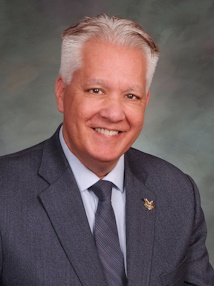
Rep. Chris Knapp
Sponsored bills
Maddy summaryHB 160, the "Protect Firearms Rights Act," prohibits Wyoming state and local governments from implementing or enforcing extreme risk protection orders (ERPOs), which are court orders restricting firearm access for individuals deemed a danger to themselves or others. The bill directly affects Wyoming residents who might otherwise be subject to such orders, while explicitly excluding existing protection orders (e.g., domestic violence orders) and mental health hospitalization orders from this prohibition. Key provisions include preempting conflicting local laws, banning state/local use of funds or personnel to enforce ERPOs, and defining ERPOs to exclude specific existing legal mechanisms. The law takes effect July 1, 2024, and is currently in the introduction stage (received February 12, 2024).
Maddy summaryHB 159 prohibits unauthorized fees for advising on veterans benefits, directly affecting veterans seeking benefits and third-party advisors (like claim assistants). The bill requires written fee agreements meeting federal standards, mandates clear disclosures that free government services exist (including Wyoming Military Department and county agencies), and bans guarantees of specific benefit outcomes or pre-disagreement fees. It also prohibits excessive fees and requires advertising disclosures about free alternatives. Violations are treated as deceptive trade practices under Wyoming law.
Maddy summaryHB 161 amends Wyoming law to change how vacancies in county commissioner seats, other county elected offices, and state legislature positions are filled. If a county board fails to appoint a replacement within the required timeframe, a qualified voter can petition the district judge to fill the vacancy. The judge must appoint one of three qualified candidates submitted by the county central committee, or, if the committee fails to provide names, a person from the same political party as the previous officeholder (or any qualified person if no party was represented). This process applies to all affected offices starting July 1, 2024.
Maddy summaryHB 217 directs how Wyoming can use leftover federal funds from the American Rescue Plan Act (ARPD) to address pandemic-related needs. It specifies funding allocations for state agencies, including $10 million for workforce programs, $22 million for outdoor recreation grants, $35 million for transportation communications systems, and $13 million for health department staffing. The bill sets conditions for spending these funds, requires reporting on their use, and ensures unspent ARPD funds revert to the federal government. It primarily affects Wyoming state agencies and local governments receiving these funds for pandemic recovery efforts.
Maddy summaryWyoming's HB 167 proposes a legal process for the state to declare federal laws unconstitutional and "nullify" them, based on the bill's argument that such actions violate the U.S. Constitution's separation of powers and Tenth Amendment. It creates new statutes (W.S. 9-14-301-305) requiring the state to issue formal "orders of nullification" after a legislative petition and review process, with duties assigned to the Secretary of State and legislative leaders. The bill directly affects Wyoming's state government by establishing procedures for challenging federal actions it deems unconstitutional, though it does not change federal law or impact citizens directly. Currently inactive (last action: "H Did not Consider for Introduction" on 2024-02-17), it remains a procedural framework without enacted policy effects.
Maddy summaryHB 99 prohibits Wyoming state agencies and recipients of state funds from using public money to purchase products or services made with child labor or slave labor. The bill defines "child labor" as work by anyone under 18 violating U.S. or state labor laws (including foreign labor that would violate U.S. law) and "slave labor" as forced work under threat of penalty. Exceptions include juvenile justice programs, correctional industry programs, and specific statutes. The state budget department must create implementing rules, with the law taking effect July 1, 2024, for most provisions.
Maddy summaryHB 124 repeals Wyoming's law (W.S. 35-4-106) that authorized the Department of Health to require smallpox vaccinations. It removes the state's legal authority to mandate such vaccinations, effective July 1, 2024, while allowing existing requirements to remain valid until that date. This is a procedural repeal of an outdated provision, as smallpox has been eradicated globally and no longer poses a public health threat in Wyoming.
Maddy summaryWyoming's HB 190 requires schools to notify parents about student health changes, name/pronoun adjustments, and well-being questionnaires, while prohibiting classroom instruction on sexual orientation or gender identity for K-12 students. The bill mandates parental consent for school health services and prohibits schools from restricting parental access to student records or discouraging parent involvement in student welfare decisions. School staff violating these provisions face disciplinary action, and schools may be subject to civil penalties of up to $5,000 per violation. The law directly affects K-12 students, parents/guardians, and school staff, with implementation set for the 2024-2025 school year. It also establishes legal remedies for parents alleging violations by schools or staff.
Maddy summaryHB 201 requires Wyoming's State Auditor to publish detailed vendor payment information on the auditor's public website. It mandates posting, within 30 days of payment, the date, vendor name, state agency, total amount, and payment description for all payments made over the previous five fiscal years. This applies to all state payments made on or after July 1, 2024, directly affecting state agencies and vendors receiving public funds. The bill aims to increase transparency by making vendor payment data accessible for public inspection and download.